

Why Are Walnuts a Popular Food Worldwide?
Why are walnuts a popular food worldwide? Their appeal begins with a simple contrast: a crisp bite, a mild bitterness, and a rich, earthy aroma. They work in breakfast bowls, breads, salads, sauces, and desserts. A small handful can add texture to oatmeal; chopped walnuts can give a soft loaf a welcome crunch. Familiar, yet versatile.
Nutrition researcher Dr. Penny Kris-Etherton has studied walnuts and heart health. In paraphrase, her research highlights a distinctive feature: walnuts provide plant-based omega-3 fat, known as ALA. That is one reason Walnut Food attracts attention beyond its flavor. Walnuts also contain fiber, protein, and unsaturated fats. Still, nutrition depends on the whole eating pattern, not one ingredient. And portion size matters.
Their worldwide popularity also reflects practicality. Walnuts store well when kept sealed and cool, and they can be eaten raw or cooked. They suit both sweet and savory dishes, crossing kitchens and traditions with little fuss. But they are not perfect for everyone. Tree-nut allergies are serious, and walnuts are energy-dense. Their taste can also turn bitter if they become rancid. That detail is easy to overlook. This outline explores how flavor, nutrition, convenience, and culinary adaptability help explain walnuts’ broad appeal—and where simple enthusiasm needs a little care.
What Defines the Walnut and Its Place in Global Food Culture?
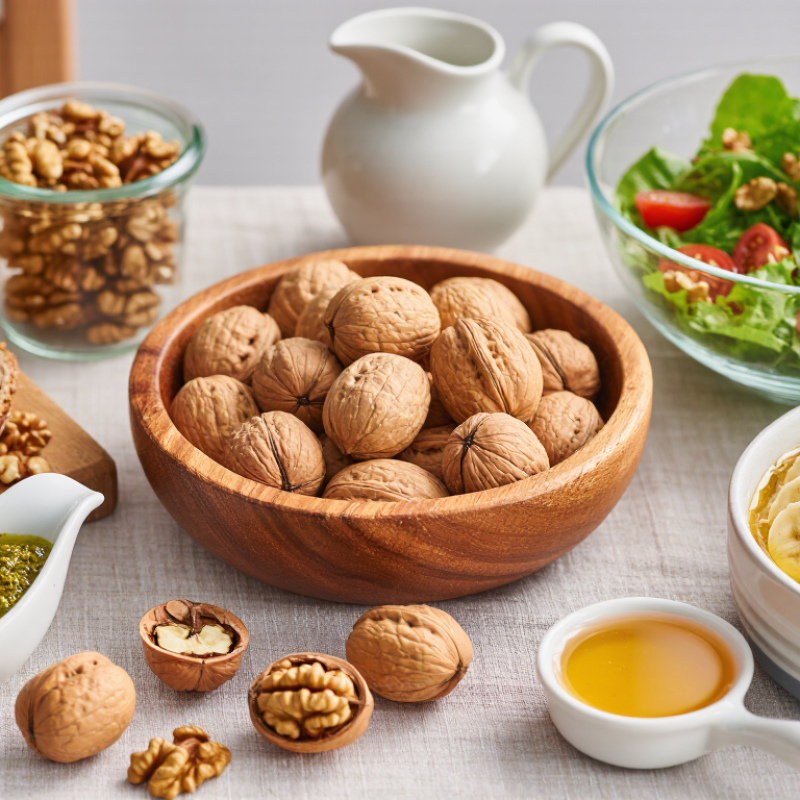
A walnut is the edible kernel inside the hard shell of a fruit, not a true botanical nut. Its two pale lobes have a thin, slightly bitter skin and a rich, earthy taste. The Food and Agriculture Organization’s FAOSTAT database records roughly 3.8 million tonnes of walnuts harvested worldwide in 2022, showing how widely this crop is grown.
A global crop, with local meanings.
In parts of the Middle East and Central Asia, walnuts appear in filled pastries and sauces; elsewhere, cooks fold them into breads, salads, and sweets.
Their appeal is practical as well as cultural.
A 28-gram serving provides about 185 calories, 4.3 grams of protein, and 1.9 grams of fiber, according to USDA FoodData Central. The same serving contains about 2.5 grams of plant-based omega-3 fat, alpha-linolenic acid. These numbers help explain why a small handful can add richness and crunch to a meal.
They do not tell the whole story, though. Walnut varieties differ in size, flavor, and bitterness, and storage can dull their aroma.
That detail is easy to overlook.
A walnut in a warm cupboard may taste very different from one freshly cracked at the table.
Where Are Walnuts Grown? USDA FAS Estimates 2.7 Million Tonnes in 2023/24
Walnuts grow across temperate regions, from China and the United States to Chile, Türkiye, and Iran. USDA Foreign Agricultural Service estimates place global walnut production at about 2.7 million metric tonnes in 2023/24, on an in-shell basis. That figure reflects a crop year, not a single calendar year. The distinction matters. Orchards need suitable winter chill, warm growing seasons, and careful water management; harvest dates therefore vary by region. In California, for example, shaking trees sends ripe nuts onto orchard floors, where they are gathered and dried.
USDA FAS’s Tree Nuts: World Markets and Trade report tracks production and trade across major producing countries. FAOSTAT’s crop-production database offers another way to examine national output, though reporting years and measurement methods can differ. These datasets help explain why walnuts appear in markets worldwide: production is spread across several regions, while storage and trade extend availability beyond local harvests. Still, a global estimate can make the crop look more uniform than it is. Weather, orchard age, and harvest conditions vary sharply from one growing area to another. The numbers are useful, but not perfectly tidy.
Why Are Walnuts a Popular Food Worldwide? — Where Are Walnuts Grown? USDA FAS Estimates 2.7 Million Tonnes in 2023/24
| Topic | Dimension | Fact or Data | Context |
|---|---|---|---|
| Global production | 2023/24 estimate | About 2.7 million metric tonnes | USDA Foreign Agricultural Service estimates world walnut production at approximately this level for the 2023/24 marketing year, on an in-shell basis. |
| Major growing countries | Commercial production regions | China, the United States, Chile, Turkey, and Iran | These countries are among the established walnut-producing regions. Production volumes vary by season and source. |
| Growing conditions | Climate and location | Temperate regions with suitable winter chilling and warm growing seasons | Walnut trees are cultivated across parts of Asia, Europe, North America, and South America. |
| United States production | Main producing state | California | California is the principal walnut-growing state in the United States. |
| Nutrition | Energy per 100 g of raw walnuts | 654 kcal | USDA FoodData Central lists this value for raw English walnuts. |
| Nutrition | Protein per 100 g of raw walnuts | 15.23 g | Walnuts contribute plant-based protein to meals and snacks. |
| Nutrition | Total fat per 100 g of raw walnuts | 65.21 g | Most of the fat is unsaturated; the USDA database reports about 9.08 g of alpha-linolenic acid (ALA) per 100 g. |
| Nutrition | Dietary fiber per 100 g of raw walnuts | 6.7 g | Fiber is one of the nutrients that contributes to walnuts’ nutritional value. |
| Everyday use | Culinary versatility | Used in snacks, baking, salads, sauces, and other dishes | Their distinctive flavor and crunchy texture make walnuts easy to use in both sweet and savory foods. |
What Nutrition Does a 28 g Serving Offer? USDA Data Show 2.5 g of ALA
Why Are Walnuts a Popular Food Worldwide?
A 28 g serving of walnuts—about a small handful—provides roughly 185 calories and 2.5 g of alpha-linolenic acid (ALA), according to USDA food-composition data. ALA is an essential plant-based omega-3 fat. The same serving also offers protein and fiber, though amounts can vary slightly with the product and measurement. That matters: handfuls are easy to overestimate, especially when snacking straight from a large bowl. Walnuts are nutrient-dense, but they are not a magic food or a substitute for a varied diet.
Tips: Measure 28 g once to see what it looks like in your usual bowl. Add chopped walnuts to oatmeal or plain yogurt for a crisp texture. Store extras sealed in the refrigerator; their natural oils can develop stale flavors over time.
The ALA figure is useful, but it needs context. Walnuts provide ALA, not the same omega-3 fats found in some seafood, and the body converts only part of ALA into other forms. Still, their mild bitterness and tender crunch work in both sweet and savory dishes. I sometimes find a small portion more satisfying than expected, though appetite and meals differ. Let nutrition data inform your choices, not dictate them.
How Do Cuisines Worldwide Use Walnuts in Sweet and Savory Dishes?
Across cuisines, walnuts move easily between dessert and dinner because their earthy flavor works with sweetness, herbs, and spice. In Persian cooking, ground walnuts simmer with pomegranate molasses in fesenjan, forming a thick, tangy sauce often served with poultry. Georgian cooks use walnuts in satsivi, a spiced sauce commonly served with chicken, and in herb-filled vegetable dishes. Preparation changes the texture: finely ground nuts thicken sauces, while chopped kernels add a distinct crunch. The contrast matters.
In Chinese baking, walnuts can fill flaky pastries or add richness to soft breads, though recipes vary between regions and households. Across parts of the Middle East and Mediterranean, they appear in syrup-soaked sweets, where their slight bitterness balances the sugar. Italian walnut sauces for pasta may combine the nuts with bread, milk, or cheese. Toasting deepens their aroma, but burnt kernels quickly taste harsh. Their oils can also turn rancid, so airtight, cool storage helps preserve flavor. This is not a complete map, and the sweet-versus-savory distinction is imperfect: many dishes comfortably cross that line.
Why Are Walnuts a Popular Food Worldwide?
Their rich flavor and nutrient density make walnuts a versatile ingredient in sweet and savory cooking.
Per 100 g of raw English walnuts: fat 65.2 g, protein 15.2 g, and carbohydrates 13.7 g. Carbohydrates include 6.7 g of dietary fiber. These figures help explain why walnuts add richness and texture to dishes, from cakes and pastries to salads, sauces, and grain dishes. Source: USDA FoodData Central.
How Do Storage and Global Trade Keep Walnuts Available Year-Round?
Walnuts are harvested seasonally, yet they remain available in shops throughout the year. Careful drying after harvest lowers moisture and helps prevent spoilage. Cool storage helps. Whole walnuts keep their quality longer because the shell protects the kernel from air and light. Shelled kernels need tighter packaging and cooler conditions, since their oils can gradually develop stale flavors. Not perfectly, though: warmth and long storage can still reduce freshness.
Global trade fills the gaps between harvests. Walnuts grow in several regions, and harvest timing varies with climate and hemisphere. Exporters can ship stored crops to markets between local harvest seasons, helping maintain a steady supply. Along the way, sorting removes damaged nuts, while moisture and temperature checks help protect quality. Refrigerated transport may be used when conditions call for it, but careful handling matters at every stage. A bag on a warm shop shelf may not taste as fresh as one kept cool at home. Small details matter. Trade makes year-round availability possible, but it cannot make every kernel equally fresh. Checking for intact shells, clean packaging, and a mild, nutty smell offers a practical way to judge quality.