

Why Choose an Eye Shadow Palette for Your Brand?
Choosing an Eye Shadow Palette can give a beauty brand more than a collection of colors. It can create a compact story, from the first shade a customer touches to the final look they share. A well-planned palette may simplify product discovery, support coordinated makeup routines, and strengthen recognition through thoughtful color design.
In product development, the strongest decisions usually begin with customer research and practical testing. Brands should review shade preferences, skin-tone suitability, texture performance, and packaging durability. A palette that looks attractive online must also open smoothly, protect powders, and remain clear on a crowded retail shelf. Small details matter. A reliable manufacturer should provide ingredient documentation, safety data, stability information, and appropriate quality checks. These records help teams make responsible claims and meet applicable cosmetic requirements in target markets.
Still, an Eye Shadow Palette is not automatically the best choice. It may increase development costs, require more complex inventory planning, and leave unpopular shades unused. That risk deserves attention. A smaller palette might serve customers better than a large one with repeated colors. Brands should compare production minimums, sampling results, expected usage, and customer feedback before committing. The “perfect” palette rarely appears in the first draft. It may need fewer shades, stronger contrast, or better usability after real testing. With transparent sourcing, documented evaluation, and a willingness to revise, brands can build a palette that feels distinctive without sacrificing trust. That balance is the real opportunity.
What an Eye Shadow Palette Includes and How It Works
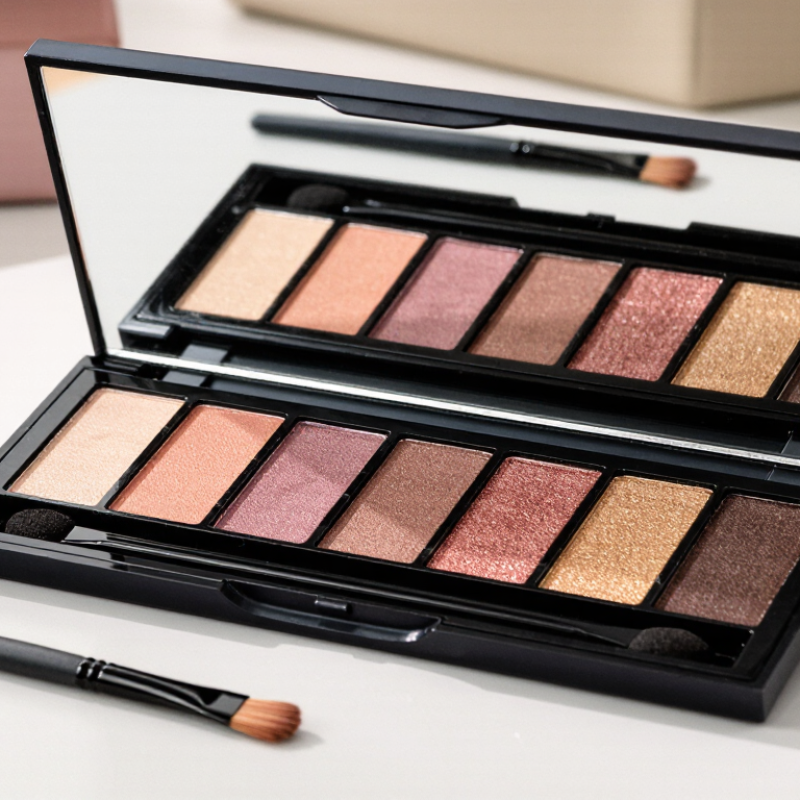
An eye shadow palette combines several coordinated shades in one compact format. A typical palette includes matte, satin, shimmer, or metallic powders. Each finish reflects light differently and changes the final look. Some palettes also contain a mirror and a small applicator. These details affect daily convenience, product cost, and packaging expectations.
The palette works through shade placement and layering. A light matte color can soften the lid, while a deeper shade adds definition near the lash line. Shimmer shades usually perform better when pressed onto the skin. A clean brush helps prevent muddy transitions.
For reliable use, the formula should blend evenly, show consistent color, and create limited fallout. Ingredient information, batch details, and a reasonable after-opening period also support customer confidence.
From product development experience, shade balance matters more than adding many colors. A palette with twelve similar browns may look impressive but offer limited creative value. I have also seen shimmer shades vary under different lighting. That weakness deserves honest testing. Brands should assess color payoff, blendability, packaging strength, and user feedback before final production. A small trial group can reveal issues that laboratory checks miss. Skin comfort still varies, so clear usage guidance and patch-testing advice remain important. A well-planned palette feels practical, not merely decorative.
Key Benefits of Adding Palettes to Your Brand
Why Choose an Eye Shadow Palette for Your Brand?
Key Benefits of Adding Palettes to Your Brand
An eye shadow palette can turn several single purchases into one practical routine. Customers can find a base shade, crease color, and evening accent in one compact case. That convenience supports trial, gifting, and repeat use. According to Grand View Research’s 2024 analysis, the global eye makeup market was valued at approximately USD 15.6 billion in 2023. It is expected to grow steadily through 2030.
Palettes also give product developers more room to show technical skill. A balanced selection should consider pigment payoff, blendability, fallout, texture, and wear time. Matte shades need controlled texture, while shimmer shades require secure adhesion and careful particle selection. Shade testing under daylight matters. Bathroom lighting can hide uneven blending. Packaging space creates another benefit. Clear shade names and simple usage guidance can help newer users feel more confident.
But more shades do not always mean more value. Some colors may remain untouched. That can increase waste and weaken customer trust. McKinsey’s State of Beauty report expects the global beauty market to approach USD 590 billion by 2028, yet growth does not remove the need for thoughtful assortment planning. Small consumer tests, wear trials, and regional color research can reveal practical gaps before production. A useful palette should feel complete, not crowded. That distinction is easy to miss.
Why Choose an Eye Shadow Palette for Your Brand?
A palette consolidates multiple shade options into one retail unit, improving assortment efficiency and customer convenience.
The comparison is based on the number of retail units required to offer the same shade count: one palette contains all listed shades, while individual eye shadows require one unit per shade.
How to Match Palette Design With Your Target Market
An eye shadow palette can turn a simple product into a clear visual statement. Its design should reflect the people who will use it, not only current color trends. A professional audience may prefer matte neutrals, slim packaging, and a clean layout. A younger market might respond to brighter shades, playful shapes, and mirror-friendly details. The palette must feel familiar before customers even open it.
Study your target market’s daily habits. In humid regions, sturdy pans and a secure closure can matter more than decorative finishes. For frequent travelers, a compact case with a useful mirror may be more practical. Shade selection also needs evidence. Review customer feedback, local makeup tutorials, and sales data before finalizing the color story. A warm beige may suit one audience, while muted mauve feels more relevant to another.
Small details influence trust. Test the palette under natural light, store lighting, and phone-camera conditions. Check whether printed colors match the actual shadows. I have seen attractive prototypes fail because the lettering was too small or the hinge felt weak. That mistake is easy to repeat. A first design should be treated as a question, not a finished answer. Let real users handle it, apply the shades, and explain what feels confusing. Their hesitation may reveal more than a polished presentation.
Essential Factors in Formula, Packaging, and Production
Why Choose an Eye Shadow Palette for Your Brand?
Formula, packaging, and production determine whether an eye shadow palette earns repeat use. A strong formula should blend smoothly, build color evenly, and limit excessive fallout. Pigment intensity matters, but comfort matters more. The texture should feel soft without becoming dusty. Formula testing should include stability, microbial safety, shade consistency, and compatibility with different skin types. A perfect first sample is uncommon. Careful revisions often create the more reliable result.
Packaging must protect the formula during shipping, storage, and daily handling. Check pan adhesion, hinge strength, closure security, and mirror clarity. The compact should feel comfortable in one hand. Materials also need compatibility testing, especially when oils or volatile ingredients are present. Production planning requires documented specifications, approved samples, batch records, and clear quality checks. Inspect shade weight, surface finish, labeling, and contamination risks before release. Small process gaps can become expensive defects later.
Tips: Request multiple formula samples, not one. Test them under warm and cool lighting. Ask for stability data and production tolerances. Review a filled package before approving large quantities. Keep one retained sample from every batch. It supports traceability when questions arise. One detail is easy to miss: applicator performance can change the perceived formula quality. Listen to makeup artists and testers, then adjust the brief when evidence challenges your original idea.
How to Build a Distinctive and Profitable Palette Collection
Why Choose an Eye Shadow Palette for Your Brand?
Building a distinctive and profitable palette collection requires more than attractive shades. It requires evidence, testing, and disciplined product planning. Grand View Research valued the global eye makeup market at approximately $18.1 billion in 2023. The same report projects continued growth through 2030, supported by product innovation and rising beauty participation.
Start with a clear customer problem. A compact palette might serve commuters, while a larger palette can support artists and enthusiasts. Use shade families with practical roles: a soft base, a buildable transition tone, a defining depth, and one memorable accent. Circana reported that U.S. prestige makeup sales grew strongly in 2023, showing continued demand for expressive color and premium performance. Yet market growth does not guarantee success.
Small details matter. Test fallout on different skin tones, not only studio models. Check whether the mirror works in dim bathroom light. Measure pan size, packaging weight, and repeat-purchase potential. A distinctive palette should look recognizable before customers open it. It should also feel easy to use.
The difficult part is restraint. Ten similar browns can weaken a collection. A bold color may attract attention but remain untouched. I would not assume social media interest equals lasting sales. Pilot batches, customer interviews, and reorder data can expose uncomfortable gaps. According to McKinsey’s beauty industry analysis, consumers increasingly expect value, quality, and personalization, so every shade must justify its place. Even one poorly performing color deserves a serious review.