Why Choose a Louvered Roof Gazebo for Outdoor Spaces?
Outdoor living becomes more useful when comfort does not depend on perfect weather. A Louvered Roof Gazebo can create a flexible retreat above a patio, deck, or garden seating area. Its adjustable roof blades open for sunlight and close during light rain. That simple movement changes how the space feels. Morning coffee stays bright. Afternoon meals feel cooler. Evening gatherings gain shelter.
From practical installation experience, the best results begin with accurate measurements and honest expectations. Aluminum louvers usually offer durability, while powder-coated finishes can help resist everyday exposure. Integrated gutters may guide rainwater toward posts, reducing dripping near furniture. Ventilation also matters. Slightly opened louvers can release trapped heat beneath the roof. However, performance depends on design quality, anchoring, drainage, and local weather conditions. Strong winds require careful engineering.
Details matter.
A reliable choice should include clear product specifications, tested hardware, and installation guidance from qualified professionals. Check the frame dimensions, roof angle, warranty terms, and maintenance requirements before purchasing. A motorized system may feel effortless, but its wiring needs proper protection and service access. Manual controls can be simpler and easier to maintain.
This structure is not perfect for every property. It can cost more than a basic pergola, and neglected drainage may create avoidable problems. Snow loads, coastal air, and frequent storms deserve special attention. Homeowners should also confirm local planning requirements before installation. The right Louvered Roof Gazebo balances shade, ventilation, appearance, and long-term practicality. Sometimes, a smaller structure performs better. That is worth considering.
What Is a Louvered Roof Gazebo?
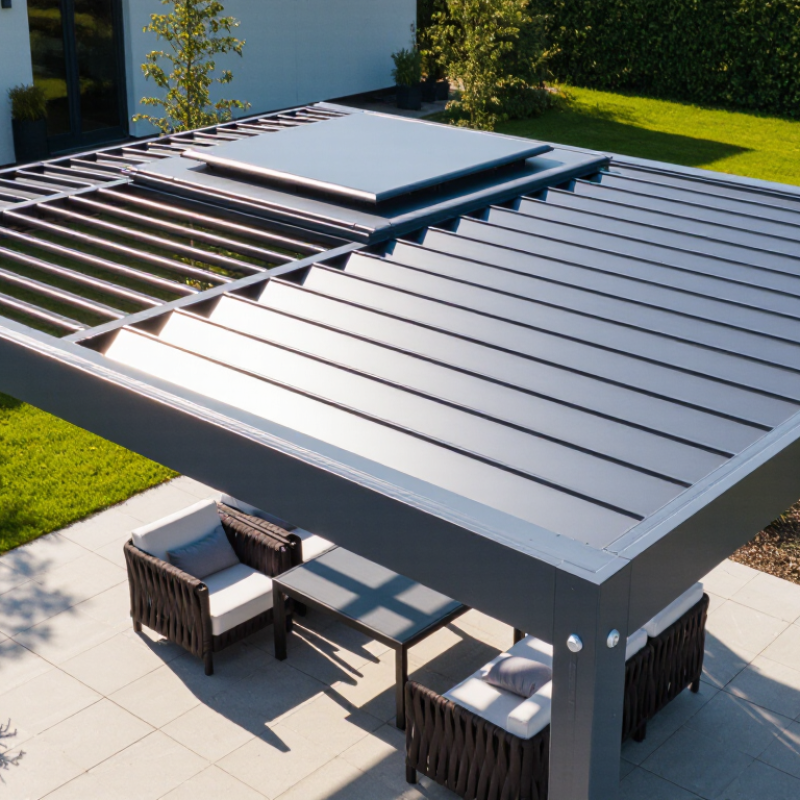
A louvered roof gazebo is an outdoor shelter with adjustable horizontal slats, called louvers. These slats rotate to control sunlight, airflow, and rain exposure. Some systems use a hand crank, while others use a motorized control. When the louvers close, overlapping panels guide water toward built-in gutters and downspouts. They do not create a fully enclosed room.
The structure usually combines aluminum posts, reinforced beams, and weather-resistant roof panels. Its main value is flexibility. Open the roof on a cool morning, angle the louvers during strong afternoon sun, or close them during light rain. The result feels more controlled than a fixed pergola. However, performance varies. A small gap can still admit wind-driven rain, and drainage may overflow during intense storms.
Market data supports growing interest in adaptable outdoor spaces. Grand View Research valued the global outdoor furniture market at approximately 22 billion dollars in 2022 and projected continued growth through 2030. The Freedonia Group’s outdoor furniture research also identifies weather resistance and multifunctional design as important buying factors. These reports concern broader outdoor products, not gazebos alone, so their figures should not be treated as gazebo sales.
Before installation, check local permits, foundation requirements, and the structure’s tested wind rating. ASCE 7 load guidance can help engineers assess site-specific wind and snow conditions. A louvered roof is useful, but it is not magic. Careful drainage design still matters.
How Does a Louvered Roof System Work?
A louvered roof gazebo uses adjustable slats to control sunlight, airflow, and rain. The slats rotate through a hand crank or motorized mechanism. When open, they create gaps above the seating area. Warm air rises through these gaps, making the space feel less enclosed on bright afternoons.
When rain begins, the louvers rotate into a closed position. Their overlapping edges guide water toward hidden channels. These channels connect to posts or downspouts, directing water away from furniture and walking areas. The system works best when the roof is correctly leveled and the drainage paths remain clear of leaves.
Not completely waterproof.
In practice, performance depends on seal design, installation quality, and wind exposure. Strong gusts can push rain through small gaps, even with closed louvers. A qualified installer should check the frame, drainage slope, fasteners, and local weather conditions. Motorized versions usually include limit controls, but power loss can leave the roof partly open. A manual override is useful in that situation.
Regular care is simple but important. Clear debris from channels, inspect moving joints, and rinse salt or dust from the slats. I would not treat the roof as maintenance-free. A small blockage can create dripping near a post, while neglected hinges may become noisy or stiff. The best setup balances shade, ventilation, drainage, and realistic expectations about changing weather.
Why Choose a Louvered Roof Gazebo for Outdoor Spaces?
A louvered roof system uses adjustable blades to control sunlight, ventilation, and weather protection. The chart shows the idealized geometric roof opening as the louvers rotate from fully closed to fully open.
The aperture values are calculated from the normalized sine relationship between louver angle and roof opening: 0° represents closed louvers, while 90° represents fully open louvers. Actual daylight, airflow, and rain performance varies with blade geometry, roof orientation, wind, and weather conditions.
Key Benefits for Outdoor Living Spaces
Why Choose a Louvered Roof Gazebo for Outdoor Spaces?
A louvered roof gazebo makes outdoor living more flexible. Its adjustable slats can open for sunlight or close during light rain. This control helps families use patios during changing weather. On a bright afternoon, tilted louvers reduce glare while allowing natural airflow. Open the roof after rain, and damp air can escape more quickly. Better ventilation can also make outdoor dining feel less crowded.
Comfort is only one benefit. A well-planned gazebo creates space for meals, reading, remote work, or quiet conversations. It can protect furniture from direct sun and reduce fading over time. Integrated drainage channels guide rainwater away from seating areas. That small detail matters when guests are nearby. The structure also gives a patio clearer purpose without building a permanent room.
It is not magic. Strong wind, heavy snow, and poor installation still create risks. Professional measurements should consider local weather, roof pitch, drainage, and foundation strength. In practical use, people often leave the louvers open too long, exposing cushions to sudden rain. I have found that simple habits help: close the roof before leaving and inspect moving parts regularly. Aluminum can resist rust, but fasteners and hinges still need attention. A gazebo may require more maintenance than expected, especially near salt air. That trade-off deserves honest consideration before installation.
Materials, Design Options, and Custom Features
Why Choose a Louvered Roof Gazebo for Outdoor Spaces?
Materials and design choices shape a gazebo’s comfort, lifespan, and maintenance needs. Powder-coated aluminum resists rust and keeps the structure relatively light. Stainless-steel fasteners add strength around hinges and drainage points. Timber offers warmth, but it needs regular sealing and careful moisture control. That detail is often underestimated.
Grand View Research estimates the global pergola market will expand at about 5.9% annually from 2023 to 2030. This growth reflects stronger demand for adaptable outdoor living areas. A louvered roof supports that flexibility. Rotating slats can block strong sunlight, release trapped heat, or guide light rain away. Custom options may include integrated LEDs, privacy screens, rain sensors, ceiling fans, and concealed gutters. However, extra mechanisms mean more inspection points. More features are not automatically better.
Tips: Check local wind exposure before choosing slat size and post dimensions. Ask for corrosion-resistant hardware, drainage drawings, and warranty terms. Test the roof controls manually. Electronic controls can fail. Plan furniture placement before installation, especially near posts and downspouts. The American Society of Landscape Architects reports that outdoor rooms remain a major residential design preference, but climate should guide every specification. A coastal site may require stronger coatings. A shaded garden may need fewer motorized features. The best design is practical, not merely impressive.
Factors to Consider Before Choosing One
Why Choose a Louvered Roof Gazebo for Outdoor Spaces?
Choosing a louvered roof gazebo requires more than comparing sizes and appearances. Consider how the structure will handle your local weather. Strong wind, heavy rain, and intense sunlight each require different design priorities. Aluminum frames usually resist moisture, but coatings and fasteners still need inspection. A stable foundation matters, especially on uneven ground.
Think about daily use before choosing the roof system. Adjustable louvers can create shade during lunch and open the sky at night. However, motorized parts need dependable power and occasional maintenance. Manual controls may be simpler, but they can feel inconvenient on larger roofs. Check the drainage path, because poorly directed water can stain paving or collect near posts. I have seen attractive structures fail because owners ignored runoff.
Tips:
Measure furniture, walking space, and door clearance before ordering. Leave room for airflow around the gazebo. Ask for verified load ratings and clear maintenance instructions. Check local building requirements before installation. A professional site assessment is useful for windy or sloped locations. Do not assume every surface is suitable. Timber decking, concrete, and soil may require different anchors. Also, consider evening lighting, privacy, and insect protection while planning the layout. Small details often decide whether the gazebo feels comfortable or merely impressive.