

Why Are Bathroom Sink Faucets So Expensive?
Why Are Bathroom Sink Faucets So Expensive? The price can seem surprising when two fixtures look almost identical beneath bright showroom lights. Yet a faucet is more than its handle and polished finish. Its cartridge, metal body, coating, testing, and warranty all affect what buyers pay. Installation can add another cost, especially when the new faucet does not fit the existing sink or plumbing.
There is a measurable difference behind some higher-priced models. The U.S. Environmental Protection Agency’s WaterSense program sets a maximum flow rate of 1.5 gallons per minute for labeled bathroom faucets, compared with the federal standard of 2.2 gallons per minute. That is a potential reduction of about 30 percent. The figure does not mean every premium faucet saves money, though. Actual savings depend on household use, water rates, and product performance.
Richard Trethewey, a longtime plumbing and heating expert on This Old House, offers a useful way to think about fixture choices: “The best faucet is the one that fits the plumbing, the sink, and the way you use the room.” That practical principle matters. A durable ceramic cartridge or corrosion-resistant finish may justify a higher price, but branding alone does not prove better value. Look for clear specifications, replacement-part availability, and a meaningful warranty. Then compare the complete cost, not just the shiny box price. Some expensive faucets earn their price. Others may simply look the part.
Price Anatomy: How Materials, Machining, Finishes, and Retail Markups Add Up
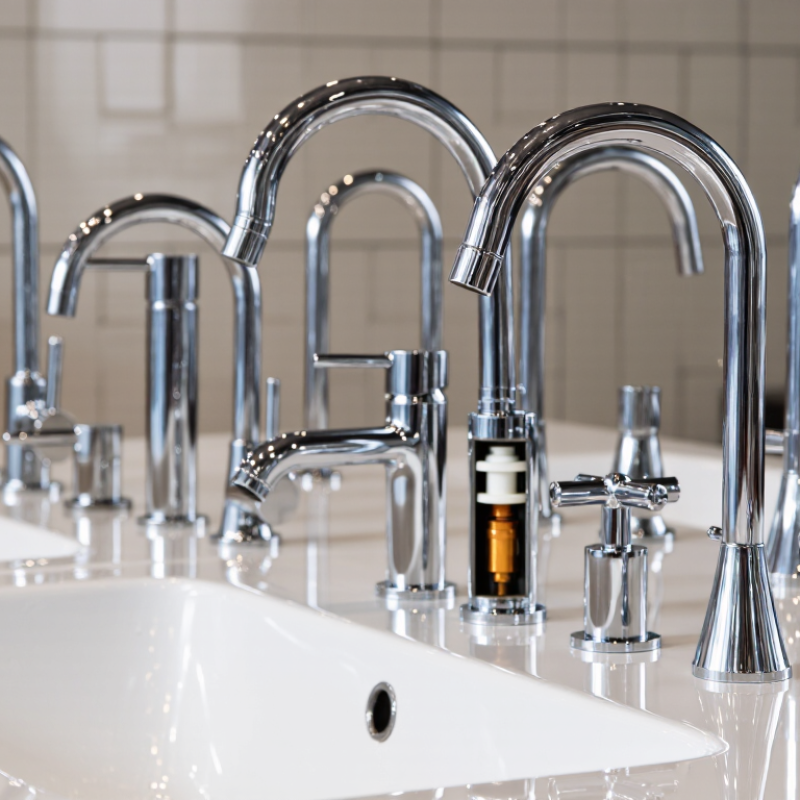
A bathroom faucet looks simple until you handle its parts. Brass bodies cost more than thin, lightweight alloys, and heavier construction can resist wear better. But material alone does not guarantee quality. Internal cartridges, seals, and connection threads matter too. Small details add up.
Machining shapes the spout, valve seats, and water passages. Tighter tolerances help parts fit and reduce leaks, but they require careful production and inspection. A smooth handle should move without wobbling. That takes time. Finishes add another layer: polishing, plating, or protective coatings can involve several steps. A glossy surface may hide uneven work, so appearance is not proof of durability.
Retail pricing also covers packaging, shipping, storage, customer support, and the seller’s margin. Different sales channels can produce different prices for similar faucets. There is no single markup formula. It is worth checking what the faucet is made from, how its cartridge can be replaced, and what the warranty actually covers. I used to judge value mostly by weight; that was too simple. A heavy faucet can still have mediocre internals, while a modest-looking model may be carefully engineered. Price gives clues, not guarantees.
Precision Engineering: How Faucet Cartridges Control Flow and Prevent Leaks
Why Are Bathroom Sink Faucets So Expensive?
Precision Engineering: How Faucet Cartridges Control Flow and Prevent Leaks
A faucet cartridge is a small part with a demanding job. It mixes hot and cold water, adjusts flow, and closes the water path when you turn the handle. Inside, ceramic discs or carefully fitted seals move against each other. Their surfaces must be smooth and aligned; tiny flaws can cause drips or stiff operation. That precision takes skilled manufacturing and inspection.
The cartridge also affects how a faucet feels. A well-made mechanism can turn smoothly and hold its setting, even after years of daily use. Manufacturers may test cartridges for pressure, wear, and leakage, adding time and cost. Materials matter, too: durable components can resist corrosion and repeated movement. Still, a high price alone does not prove a cartridge will last longer. Design, installation, and water conditions all play a part.
Tips: Turn the handle gently; forcing it can wear seals sooner. If a faucet drips, check for debris or a worn cartridge before replacing the whole fixture. Follow the faucet’s service instructions, since cartridge designs vary. A small repair can be frustrating, and the right replacement is not always obvious.
Compliance Costs: The 0.25% Weighted-Average Lead Limit for Plumbing Products
Why Are Bathroom Sink Faucets So Expensive?
A faucet’s price can reflect more than its shape, finish, or handle design. In the United States, applicable requirements limit lead in wetted plumbing surfaces to 0.25% weighted average. That figure is not a simple limit for every individual part. It accounts for the surfaces that contact drinking water. A manufacturer may need to adjust an alloy, test a sample, and keep records showing the product meets the standard. That takes time. It also takes money.
Small details matter. A narrow channel inside a faucet body can be as important as the visible spout. Material suppliers may need to provide consistent specifications, while testing and certification add costs before products reach store shelves. When a design changes, some checks may need repeating.
Compliance is not the only reason for a high price; machining, coatings, cartridges, packaging, and distribution contribute too. The connection is easy to miss. A polished faucet does not show the paperwork or lab work behind it. And compliance costs do not guarantee flawless performance; buyers should still consider durability, repair parts, and clear product documentation.
Water-Efficiency Design: EPA WaterSense Faucets Are Limited to 1.5 gpm
A bathroom faucet can cost more when its design must control flow without making handwashing feel weak. The U.S. Environmental Protection Agency’s WaterSense specification limits private-use bathroom sink faucets to 1.5 gallons per minute at 60 psi. That is below the federal maximum of 2.2 gpm for standard faucets. Less water, but not a dribble.
The engineering is in the details: aerators mix air into the stream, while internal passages help maintain a usable spray at lower flow. EPA says WaterSense-labeled faucets use at least 20 percent less water than standard models. Its WaterSense savings estimates put the typical household’s faucet savings at about 700 gallons per year. Small changes add up.
There is a trade-off. A low-flow faucet may feel different if the household is used to a forceful stream, and performance can vary with water pressure and aerator condition. EPA’s WaterSense faucet specification includes testing for flow and spray performance, not just water use. That testing, along with tighter components and finish requirements, can contribute to cost. Still, the label is not a promise that every faucet will feel perfect at every sink. A quick test at home matters.
Why Are Bathroom Sink Faucets So Expensive?
Water-efficiency design: comparing maximum flow rates
At 60 psi, the federal maximum flow rate for bathroom faucets is 2.2 gallons per minute (gpm). EPA WaterSense-labeled faucets are limited to 1.5 gpm—about 32% less. This chart compares flow limits, not prices; faucet costs can also vary with materials, finish, and construction.
Sources: U.S. Department of Energy faucet standard; EPA WaterSense bathroom faucet specification.
Brand, Warranty, and Distribution: How They Shape the Final Price
A bathroom faucet’s price often reflects more than its metal and finish. Established manufacturers may charge for design development, quality checks, and replacement parts kept available for years. That support has value. But a familiar name alone does not prove a faucet will last longer; compare the cartridge type, material specifications, and repair options.
Warranty terms can also shape the price. A longer warranty may cover certain defects, yet exclude finish wear, installation damage, or labor. Read the actual conditions, not just the headline. If a cartridge leaks after several years, readily available parts can save a plumber’s visit from becoming a full replacement. Still, warranty claims can involve paperwork and delays. That is worth considering.
Distribution adds another layer. A faucet may pass through a manufacturer, importer, wholesaler, and showroom before reaching a household. Each step can add handling, storage, and service costs. A locally stocked model may cost more but arrive with accessible parts and clearer support. Online pricing can be lower, though delivery, returns, or missing components may narrow the difference. Compare the full installed cost, and ask who handles a warranty claim. Sometimes the cheaper option is sensible; sometimes the price difference buys support you may actually need.