China Top Non Powered Amusement Equipment Suppliers
China has a broad manufacturing base for playground structures, climbing frames, slides, rope courses, and other Non Powered Amusement Equipment. Choosing a supplier takes more than comparing prices or polished catalog photos. Buyers need to examine materials, fabrication quality, installation support, and the supplier’s ability to provide clear product documentation.
Details matter. Check how welds are finished, whether timber edges are smooth, and how exposed metal parts resist corrosion. Ask for drawings, material specifications, maintenance guidance, and references for comparable projects. Confirm that equipment can be adapted to the site and that its design addresses the requirements of the destination market. A persuasive website is not proof of long-term performance.
Play itself deserves thoughtful design. Play researcher Dr. Stuart Brown has said, “The opposite of play is not work; it’s depression.” His observation speaks to why inviting, varied play spaces matter, though no single product can guarantee a positive experience. This guide introduces China-based suppliers and the factors worth comparing, including customization, quality controls, communication, and after-sales service. Look closely. Ask specific questions. Request evidence where claims seem broad. Supplier information may leave important gaps, and this overview cannot replace independent checks or project-specific review. Use it as a starting point, then verify the details that will shape your site, budget, and maintenance plan.
Understanding Non-Powered Amusement Equipment in China
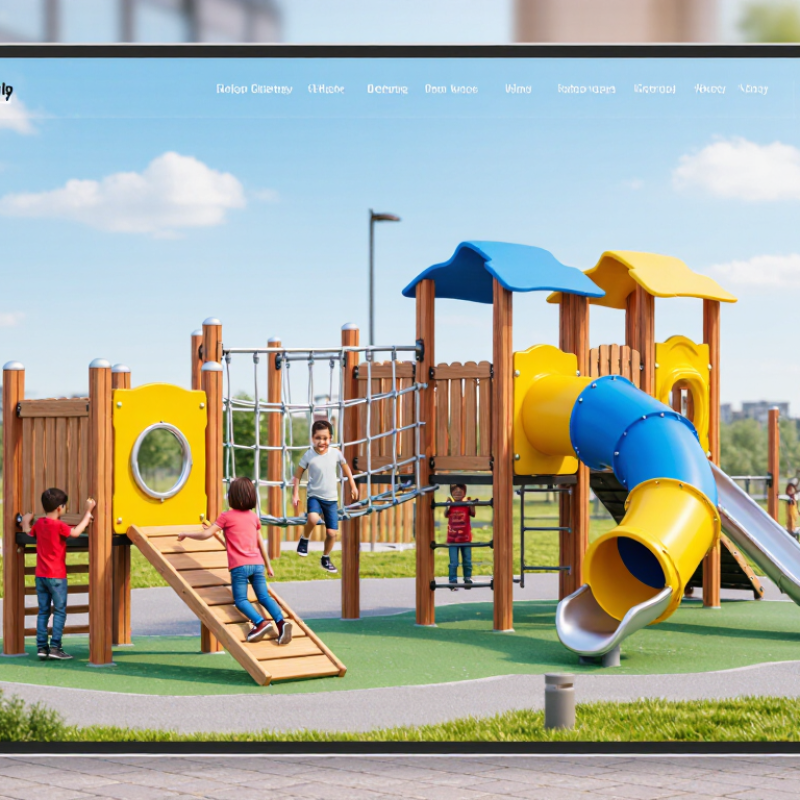
Non-powered amusement equipment includes slides, climbing nets, rope bridges, balance beams, and sensory play panels. It uses children’s movement rather than motors, making layout and supervision central to the experience. In China, suppliers serve parks, schools, resorts, and community spaces. Buyers should assess age range, site dimensions, surface drainage, and expected daily use before choosing a design. A narrow climbing passage may look exciting, but it can create a bottleneck during busy periods.
The market context is growing. Grand View Research estimated the global playground equipment market at about US$6.8 billion in 2023. This figure covers playground equipment worldwide, not China alone. It signals wider investment in play environments, but does not confirm a supplier’s quality. Ask for material specifications, load-test documentation, installation drawings, and maintenance guidance. Inspect welds, rope connections, exposed edges, and gaps where fingers or clothing could catch. Small details matter. A polished brochure is not evidence of long-term performance.
Tips: Request a sample surface or finish, then check it after exposure to sun and rain. Confirm that inspection intervals and replacement parts are clearly documented. If a layout feels cramped on paper, it will probably feel worse with children moving through it.
Main Equipment Types and Their Applications
Non-powered amusement equipment turns open space into active play without motors or complex controls.
Core types include slides, swings, seesaws, climbing frames, and rope nets. Slides suit compact schoolyards; climbing structures support balance and upper-body strength. Swings and seesaws work well in parks, though they need clear safety zones. Rope courses fit larger recreation grounds, where varied routes can serve different skill levels.
The application should shape the equipment mix.
Schools often need durable, age-separated play zones, while public parks benefit from varied routes and inclusive access. Indoor family centers may favor compact climbers and soft-play obstacles. Scale matters.
Grand View Research valued the global playground equipment market at USD 8.3 billion in 2022 and projected 6.3% annual growth from 2023 to 2030. The World Health Organization recommends an average of 60 minutes of moderate-to-vigorous activity daily for children and adolescents.
Play equipment can support movement, but it cannot guarantee activity. That distinction is easy to overlook.
Designers should also consider shade, surfacing, sightlines, and routine inspections; these details are less exciting, yet often determine whether equipment stays usable.
How China’s Supplier Market Is Structured
China Top Non Powered Amusement Equipment Suppliers
How China’s Supplier Market Is Structured
China’s supplier market is best understood by production role, not by a single ranking. Some factories focus on one category, such as climbing frames, slides, rope courses, or outdoor fitness structures. Others combine metal fabrication, plastic processing, and surface finishing. Project integrators coordinate layout, installation, and multiple product types. The boundary between these groups can be blurry.
Demand helps explain this layered structure. Grand View Research estimated the global playground equipment market at about USD 6.25 billion in 2023, with a projected 6.3% compound annual growth rate from 2024 to 2030. This figure covers playground equipment broadly; it is not a China-only estimate or a measure of non-powered products alone. Still, it points to steady demand for durable, site-specific equipment. In practice, buyers should compare material specifications, load-test records, weld finish, and spare-part support—not just catalogue range. A polished catalogue proves little by itself.
Tips: Ask for drawings and inspection records for the exact model. Check how exposed steel is protected from rain, and who handles replacement parts. Small details matter. Supplier roles overlap, so verify responsibilities in writing.
Profiles of Leading Chinese Equipment Suppliers
Chinese non-powered amusement equipment suppliers often specialize in different parts of a project. Some focus on climbing frames, rope courses, and outdoor fitness structures. Others produce slides, obstacle elements, or themed play equipment. Their profiles may look similar online, but production capacity and engineering support can differ considerably.
A useful supplier profile explains materials, fabrication methods, and project experience. Look for clear details about steel finishes, fasteners, load testing, and installation guidance. Photos of completed projects help, but they do not prove consistent quality. Ask for inspection records and drawings for the specific equipment under consideration. Small details matter. A poorly placed handhold can affect how children use a climbing route. Suppliers with in-house design teams may adapt layouts to site dimensions, though customization can add time and cost. Not every supplier is equally strong in every category.
Tips: Request a sample drawing, material specifications, and a realistic production schedule. Confirm who handles packing and installation advice. Compare responses, not just prices. A polished catalogue is useful, but it is only a starting point. It can still leave important questions unanswered.
How to Evaluate Suppliers and Plan Procurement
China Top Non Powered Amusement Equipment Suppliers: How to Evaluate Suppliers and Plan Procurement
Choosing a supplier takes more than comparing quotations. The TEA/AECOM 2023 Theme Index reported 244.6 million visits across the world’s 25 most-attended theme parks, up 23.1% from 2022. This figure does not measure demand for non-powered equipment directly, but it shows why operators need durable, well-planned attractions. Ask shortlisted factories for material specifications, load calculations, weld inspection records, surface-treatment details, and recent production samples. For playground-style structures, request test documentation against the relevant edition of ASTM F1487 or EN 1176, as applicable to the destination market. A certificate folder can look complete. It may still miss inconsistent production.
Plan procurement around the site, not a catalogue image. Share layout dimensions, expected user ages, climate, ground conditions, and access for delivery vehicles. Compare the quoted scope line by line: foundations, installation guidance, spare parts, packaging, and warranty exclusions. Request a sample or arrange an independent pre-shipment inspection, then check that inspected components match the approved drawings. Confirm production milestones and shipping buffers in writing; custom colors and replacement parts can add time. Keep a modest contingency. It is easy to underestimate installation delays, and even experienced buyers sometimes do. Ask how the supplier handles defects after delivery, and get response times and replacement procedures documented before paying a deposit.
Suggested supplier evaluation framework: prioritize safety and compliance, followed by product quality and durability. Adjust the weights to match project requirements, local regulations, and site conditions. These are planning weights, not industry survey results.