
What Are the Top Natural Perfume Ingredients?
Natural perfume ingredients begin with materials that carry a clear sense of place: bergamot peel, crushed rose petals, earthy vetiver, or warm cedarwood. Their appeal is not only their scent. Harvest season, soil, and extraction method can shift an ingredient’s aroma from one batch to another. That variation gives natural perfumery character, but it also makes formulation less predictable.
The market is growing, though the figures depend on how researchers define “natural.” Grand View Research’s 2024 natural-fragrance market analysis estimated the global market at about US$2.7 billion in 2023 and projected continued growth through 2030. These are market estimates, not proof that every botanical material is sustainable or safer. Useful context comes from technical guidance, too: ISO 16128 provides criteria for calculating natural-origin content, while IFRA Standards offer safety guidance for fragrance materials and their intended uses. Neither turns “natural” into a simple quality label.
So, what are the top Natural Perfume Ingredients? This guide looks at popular choices such as rose, jasmine, citrus oils, vanilla, sandalwood, and vetiver, and explains the notes they bring to a blend. It also considers sourcing, scent longevity, and practical formulation concerns. A bright citrus note can lift a composition; a resinous base can make it feel warmer. Small details matter. Natural does not always mean gentle, consistent, or automatically preferable. That distinction deserves a closer look.
What Counts as a Natural Perfume Ingredient?
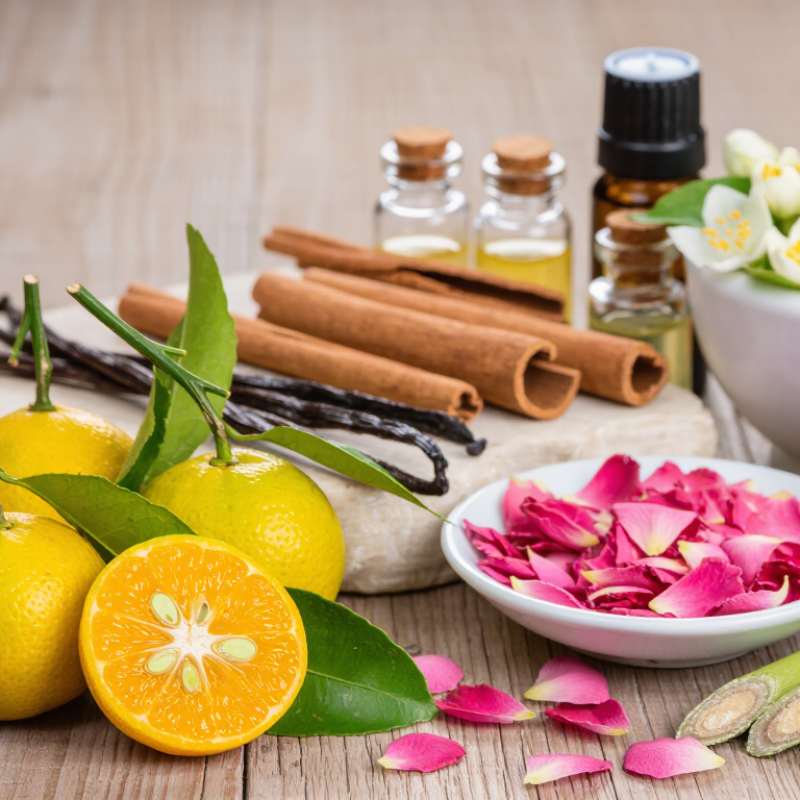
What counts as a natural perfume ingredient? Usually, it begins with material from a plant, such as a flower, leaf, peel, seed, wood, or resin. Distillation can capture the scent of lavender flowers; gentle pressure can release aromatic oil from citrus peel. Other materials, such as resins and flower extracts, may be obtained through different extraction methods. The source matters, but so does the process.
There is no single definition used by every perfumer or supplier. Some standards accept certain processing aids, while others set stricter limits. A natural-origin label alone may not explain how an ingredient was grown, extracted, or refined. Ask for its botanical name, plant part, and extraction method. Those details make a formula easier to assess.
Natural does not automatically mean gentle. Essential oils can contain potent aromatic compounds, and some people may react to them. Freshly opened materials can also smell different from aged ones; citrus notes, for example, may soften over time. The boundary is not always tidy. Even the word “pure” can leave questions unanswered. I would look for traceable sourcing and clear ingredient documentation, rather than relying on a reassuring label. A drop on a paper blotter may reveal texture and dry-down, but it cannot tell you everything about an ingredient’s safety or origin.
Which Floral Ingredients Are Common in Natural Perfumes?
Rose, jasmine, neroli, lavender, and ylang-ylang are familiar floral materials in natural perfumery. Rose and jasmine absolutes can add a dense, petal-like heart, while neroli brings a greener, citrus-floral lift. Lavender is often more herbaceous than people expect. That contrast can make a blend feel less like a bouquet and more like a garden after rain.
The commercial interest is growing, though market figures cover more than flowers alone. Grand View Research estimated the global natural-fragrance market at about US$3.3 billion in 2022 and projected 9.4% compound annual growth through 2030. This signals broader demand, not proof that floral extracts lead sales. In formulation, extraction method and material quality shape the result: an absolute may feel richer than a steam-distilled oil. Natural does not automatically mean gentle; some aromatic materials can irritate skin, so assess safety and use appropriate dilution.
Tips: Start with one floral note and add drops slowly. Smell the blend on a paper strip after several minutes; the opening can mislead. Small amounts matter. A floral accord can become cloying quickly, and that balance is easy to misjudge.
What Are the Top Natural Perfume Ingredients? — Which Floral Ingredients Are Common in Natural Perfumes?
| Floral Ingredient | Botanical Name | Typical Natural Extract | Characteristic Scent | Common Perfumery Role |
|---|---|---|---|---|
| Rose | Rosa damascena or Rosa centifolia | Essential oil or absolute | Rich, sweet, rosy, and sometimes lightly spicy or honeyed | A central floral note in rose, bouquet, and chypre-style compositions |
| Jasmine | Jasminum grandiflorum or Jasminum sambac | Usually an absolute | Intensely floral, sweet, warm, and often fruity or indolic | Adds depth and radiance to floral, oriental, and white-flower accords |
| Ylang-ylang | Cananga odorata | Essential oil, commonly fractionated by distillation | Sweet, creamy, exotic, and slightly fruity | Provides a lush floral heart and can soften citrus or woody notes |
| Neroli | Citrus aurantium (bitter orange blossom) | Essential oil, typically steam-distilled from flowers | Fresh, citrusy, green, and gently floral | Bridges sparkling citrus top notes and softer floral notes |
| Orange blossom | Citrus aurantium | Absolute or flower water; extraction depends on the product | Sweet, honeyed, floral, and softly citrus-like | Creates a rounded white-floral character in floral and oriental blends |
| Lavender | Lavandula angustifolia | Essential oil, usually steam-distilled from flowering tops | Herbaceous, clean, aromatic, and softly floral | Adds freshness and structure to aromatic, fougère, and herbal blends |
| Geranium | Pelargonium graveolens | Essential oil, typically steam-distilled from leaves and flowering material | Rosy, green, and slightly minty or citrus-like | Offers a fresh, leafy rose-like accent and helps connect floral notes |
| Tuberose | Agave amica (syn. Polianthes tuberosa) | Usually an absolute | Full-bodied, creamy, sweet, and heady | Forms a prominent white-floral heart in rich, long-lasting blends |
| Chamomile | Matricaria recutita or Chamaemelum nobile | Essential oil, typically steam-distilled from flower heads | Herbal, apple-like, and gently sweet; aroma differs by species | Adds a soft herbal-floral nuance to green, aromatic, and calming accords |
Note: Natural extracts can vary in aroma and composition according to species, growing conditions, harvest, and extraction method. Essential oils are commonly obtained by distillation, while delicate flowers such as jasmine and tuberose are often processed into absolutes.
How Do Citrus, Herbs, and Leaves Create Fresh Scents?
Citrus, herbs, and leaves give natural perfumes their brisk, outdoorsy character. A peel of lemon or mandarin can smell sparkling because its aromatic compounds evaporate quickly. That bright opening often softens within minutes. It is a fleeting effect, not a flaw. Some expressed citrus oils may increase sun sensitivity, depending on the fruit and processing, so skin products require careful safety assessment.
Herbs add sharper, greener detail. Crushed mint feels cool, while rosemary can smell woody and camphor-like. Basil brings a peppery edge. Leaves offer quieter textures: fig leaf can suggest green sap, and bay leaf can add a dry, savory note. These materials vary with harvest, storage, and extraction. The result is not always perfectly crisp; sometimes a green note turns unexpectedly bitter. That variation is worth noticing, rather than treating “natural” as a guarantee of consistency.
Tips: Smell a scent on a paper strip, then revisit it after ten minutes. Compare the opening with the dry-down. Store samples away from heat and direct light.
Which Woods, Resins, and Spices Add Warmth and Depth?
Natural perfume gains warmth and depth when woods, resins, and spices are layered with care. Cedarwood can suggest dry pencil shavings, while sandalwood often feels creamier and softer. Their aromas vary with the species, extraction method, and age of the material. A small amount can anchor brighter notes without hiding them. On a paper blotter, the wood may seem quiet at first, then become more noticeable as the scent develops.
Resins such as frankincense and labdanum bring a rounded, sometimes balsamic quality. They can help a blend feel smooth and lingering, though too much may make it heavy. Spices add contrast: cardamom can feel cool and aromatic, while clove and cinnamon tend to read warmer and sharper. Use them sparingly. The balance is not always neat; a spice that smells lively alone may dominate once paired with resin.
Tips: Test one material at a time on a blotter, then revisit it after an hour. Keep brief notes on amounts and how the scent changes. Natural ingredients can vary between batches, and “natural” does not guarantee skin compatibility. Follow the supplier’s dilution guidance and patch-test finished blends.
How Are Natural Perfume Ingredients Extracted and Evaluated?
Natural perfume materials are commonly obtained through steam distillation, cold pressing, or carbon-dioxide extraction. The method affects the scent. Steam can soften delicate floral notes, while pressing citrus peel preserves a bright, zesty character. A perfumer or quality specialist checks the harvest, storage conditions, and batch consistency; even a damp storehouse can alter an aroma. Extraction is not magic. Some results are simply less elegant than expected.
Evaluation combines sensory checks with laboratory measurements. A trained assessor may smell a blotter for freshness, balance, and off-notes, then compare results with chemical analysis such as gas chromatography. ISO 3515:2002 specifies quality ranges for lavender oil, including a relative density of 0.878–0.892 and a refractive index of 1.458–1.464 at 20°C. These figures help flag unusual samples, but they do not prove that an oil smells beautiful or suits every formula. Natural variation remains real.
Tips: Ask for the botanical name, plant part, extraction method, and batch analysis. Smell a diluted sample on paper, then revisit it after an hour. Tiny differences matter.
Related Posts
-
China Top 10 Coconut Scented Perfume Suppliers?
-
Understanding Organic Perfume: What Global Buyers Need to Know in 2023
-
How to Identify Top Tier Skin Cosmetics Manufacturers for Global Sourcing
-
Exploring the Best Scent Natural Options Beyond Traditional Fragrances
-
Why Does Fragrance Scent Matter to Global Buyers?
-
7 Tips for Choosing the Best Natural Scented Perfumes to Elevate Your Fragrance Game