2026 Top Artificial Leather Types for Global Buyers
Global buyers are reassessing Artificial Leather as design, durability, and environmental expectations continue to change. The best material is rarely the cheapest roll or the softest sample. It must fit the product, climate, production method, and expected service life.
Professor Richard P. Wool, a recognized expert in bio-based polymers and composite materials, has expressed a clear direction: “The future is green materials.” His view offers useful context, but it should not become a shortcut. Bio-based content does not automatically guarantee lower impact. Buyers still need verified data, traceable sourcing, and practical performance evidence.
This guide examines the leading Artificial Leather types for 2026, including polyurethane, PVC, microfiber, silicone, recycled-content, and emerging bio-based options. Each type behaves differently under heat, humidity, abrasion, flexing, and cleaning. A PU surface may feel refined on a showroom chair, while microfiber can provide stronger abrasion resistance in demanding interiors. PVC remains widely available and cost-effective, yet its environmental profile requires careful review.
Details matter.
Global procurement teams should request technical datasheets, composition information, abrasion results, hydrolysis testing, colorfastness reports, and relevant certifications. Supplier claims deserve verification. Even experienced buyers can overlook backing fabrics, coatings, adhesives, or end-of-life limitations.
There is no perfect option.
The most reliable choice balances appearance, lifespan, maintenance, price, and responsible manufacturing. This article helps buyers compare those trade-offs with clearer expectations, fewer assumptions, and a more realistic view of Artificial Leather in global markets.
What Is Artificial Leather and How Is It Classified?
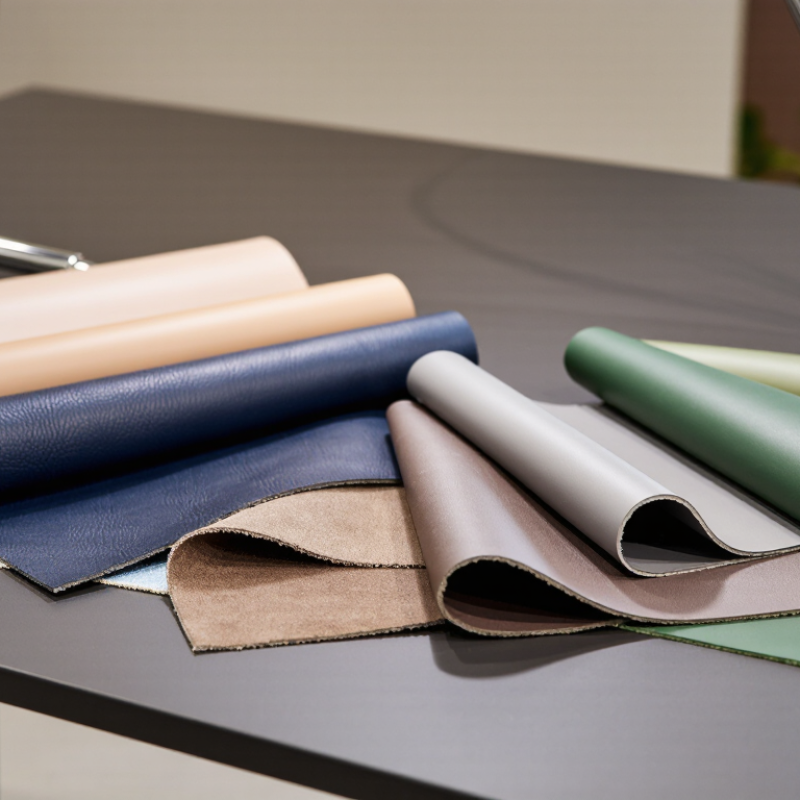
Artificial leather is a coated textile or synthetic sheet designed to resemble animal hide. It usually combines a fabric backing with a polymer surface. The backing provides shape and tear resistance. The coating adds color, grain, softness, and protection.
Manufacturers commonly classify it by polymer. Polyvinyl chloride leather is dense, economical, and highly water resistant. Polyurethane leather feels softer and bends more naturally. Microfiber synthetic leather uses very fine fibers and often offers better abrasion performance. Bio-based versions may replace part of the polymer with plant-derived content. They are not automatically biodegradable. That distinction matters.
Classification also depends on construction. A knitted backing stretches differently from woven polyester. A split backing can reduce cost but may weaken seam performance. Buyers should check coating thickness, backing composition, hydrolysis resistance, flex cracking, and color transfer. Ask for test methods, not only attractive samples. In practical sourcing work, a soft sample can still fail after repeated folding or humid storage. Real use exposes the gaps. Temperature, cleaning chemicals, and sunlight change performance, so specifications should match the final environment. A sofa, safety shoe, and vehicle interior need different grades. No single artificial leather is best for every application. Even eco claims require careful verification, because recycled content, durability, and end-of-life options are often measured separately.
Key Artificial Leather Types and Their Material Structures
2026 Top Artificial Leather Types for Global Buyers
Key Artificial Leather Types and Their Material Structures
Artificial leather is not one material. Its structure usually combines a textile backing, polymer coating, surface embossing, and protective finish. PVC leather uses a knitted or woven base coated with polyvinyl chloride, plasticizers, pigments, and stabilizers. It offers strong abrasion resistance and low cost, but may feel less breathable. PU leather uses polyurethane layers, often with micropores. This creates a softer hand and better flexibility for footwear, furniture, and vehicle interiors.
Microfiber leather has a denser three-dimensional structure. Ultrafine polyester or polyamide fibers form the base, while polyurethane fills and bonds the fiber network. This construction can imitate the firmness of natural hide more closely. Bio-based PU may include plant-derived feedstocks, but it remains partly synthetic. It should not automatically be called biodegradable. That distinction matters.
Grand View Research estimated the global synthetic leather market at nearly US$40 billion in 2023. IMARC Group reported a similar market scale, although its scope and calculation period differ. These differences deserve attention. Market numbers are not perfectly comparable. They can still indicate strong demand across footwear, furniture, automotive, and accessories.
Tips: Ask suppliers for coating thickness, backing composition, abrasion results, hydrolysis testing, and recycled content evidence. Request a physical sample. Surface appearance can hide weak bonding. In factory sampling, I have seen attractive finishes crack after repeated flexing. A cheaper structure may cost more through replacement. Supplier claims also need independent verification.
2026 Top Artificial Leather Types for Global Buyers
Key Artificial Leather Types and Their Material Structures
The chart compares representative densities of the main polymer families used in artificial leather. Artificial leather is generally built from a textile or microfiber backing, a polymer coating or foam layer, and a surface finish. PVC typically uses polyvinyl chloride over fabric, PU uses polyurethane over fabric, microfiber leather combines ultrafine polyester or nylon fibers with polyurethane, silicone leather uses a silicone surface layer, and TPO leather uses a thermoplastic olefin film or foam over a textile backing. Actual finished-product density varies with fillers, plasticizers, foaming, backing fabric, and coating thickness.
Performance Differences Across Major Artificial Leather Types
2026 Top Artificial Leather Types for Global Buyers
Performance Differences Across Major Artificial Leather Types
Polyurethane leather feels soft and flexible, making it suitable for furniture, footwear, and vehicle interiors. Its surface usually supports fine grain patterns and better breathability than PVC. However, hydrolysis can damage some PU coatings in hot, humid storage. Ask for accelerated aging data, not attractive showroom samples. PVC leather offers strong moisture resistance and consistent thickness. It is often easier to clean and more economical for heavy-use seating. Yet it can feel stiffer, trap heat, and crack after repeated cold-weather bending.
Microfiber-based PU leather provides a denser structure and improved tear resistance. It can resemble full-grain leather more convincingly under close inspection. The trade-off is higher cost and more demanding production control. Silicone leather tolerates heat, ultraviolet exposure, and frequent cleaning well. It suits medical, marine, and transport applications, although its surface can feel less natural. Testing still matters. A material can perform well in a laboratory but disappoint after poor stitching or weak backing fabric.
Bio-based leather substitutes may reduce fossil raw material use, but “bio-based” does not automatically mean biodegradable. Their performance depends on coatings, fillers, and reinforcement layers. Global buyers should compare abrasion cycles, flex resistance, seam strength, colorfastness, and odor results under relevant ISO or ASTM methods. Check samples from different production lots. Small differences matter. I have seen a soft sample fail quickly when exposed to moisture, friction, and daily sunlight. A balanced specification is safer than choosing the lowest price or the highest recycled-content figure.
Global Applications and Selection Criteria by End Use
Global buyers are choosing artificial leather by application, not appearance alone. Mordor Intelligence estimates the artificial leather market at USD 35.32 billion in 2025, with continued growth through 2030. That expansion covers automotive interiors, footwear, furniture, bags, and contract seating.
Automotive buyers need low odor, abrasion resistance, UV stability, and reliable bonding. A dashboard surface may face heat above 80°C, repeated cleaning, and daily friction. Furniture requires softer hand feel, flex resistance, and hydrolysis performance, especially in humid regions. Footwear needs controlled elongation and strong seam performance. For bags, surface grain, tear strength, and color transfer often matter more than extreme heat resistance. Verify claims through ISO 2411 adhesion, ISO 105-X12 crocking, and suitable accelerated-aging tests.
Material selection also depends on construction. Polyurethane coatings usually offer a softer touch and lower weight, while PVC can provide economical durability and easier cleaning. Neither option is automatically better. The substrate, plasticizer system, coating thickness, and finishing layer change the result. Fortune Business Insights identifies rising demand for lower-impact leather alternatives, yet environmental claims still require careful evidence. Request technical data sheets, restricted-substance declarations, and batch samples. A laboratory result may look impressive, but it cannot replace production trials. In my experience, small failures appear at folded corners first. Buyers should test the finished product, not only the roll.