

Top Air Cooled Chiller Unit Manufacturers for Global Buyers
Choosing an Air Cooled Chiller Unit is not just a matter of comparing capacity and purchase price. Global buyers must also consider climate, operating schedules, energy use, installation space, and access to replacement parts. A unit beside a sunlit factory wall may face very different conditions from one serving a cool, shaded warehouse. Details matter. So does the manufacturer’s ability to support the equipment after delivery.
Dr. William P. Bahnfleth is a recognized researcher in building energy and HVAC systems. A useful editorial principle, phrased in the spirit of his field rather than presented as a verified quotation, is: “Judge a chiller by how it performs in the system, not by its brochure alone.” This guide introduces manufacturers for buyers to assess, while recognizing that no single supplier suits every project. It will consider product range, engineering capabilities, efficiency information, customization, service coverage, and the clarity of technical documentation. Those points help teams ask better questions about ambient-temperature limits, sound levels, controls, and maintenance access. A polished specification sheet is useful, but it cannot replace project-specific checks. Shortlists can still miss things. Regional service capacity, for example, may deserve more attention than a low initial quote. The comparisons ahead are a starting point, not a substitute for engineering review. Buyers should verify current specifications and support arrangements directly with each manufacturer.
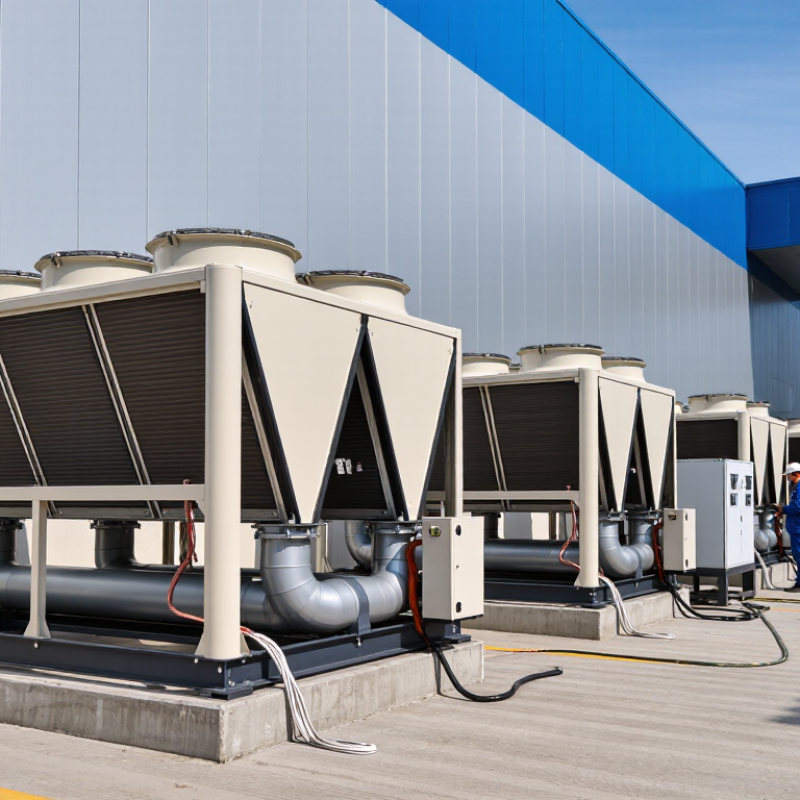
What Air-Cooled Chiller Units Are and How They Work
An air-cooled chiller removes heat from water and releases it into the outdoor air. In a typical system, warm return water passes through an evaporator, where refrigerant absorbs its heat. The compressor raises the refrigerant’s pressure and temperature, then the condenser coil transfers heat outdoors with help from fans. An expansion device lowers refrigerant pressure before the cycle repeats. The cooled water circulates to equipment or building air handlers.
No cooling tower is needed. That can simplify installation, especially where water access is limited. But outdoor conditions matter. On a hot afternoon, the condenser may reject heat less efficiently, and the unit can use more energy. Clear airflow around the coil is essential; walls, debris, or recirculated hot air can reduce performance. Small details count.
In practice, buyers should match capacity to the actual cooling load, not just a rough floor-area estimate. Check the required water temperature, expected outdoor temperatures, operating hours, and available electrical supply. Sound levels and service access also deserve attention. A chiller that looks adequate on paper may struggle during peak heat. Even experienced teams can misjudge that. Regular coil cleaning and checks for unusual vibration help catch problems early, though maintenance needs vary by site and operating conditions.
Top Air Cooled Chiller Unit Manufacturers for Global Buyers - What Air-Cooled Chiller Units Are and How They Work
| Data Dimension | What It Means | What Global Buyers Should Check |
|---|---|---|
| Unit type | A packaged refrigeration system that rejects heat directly to outdoor air through a condenser coil and fans. | Confirm that the selected configuration suits the site, climate, installation space, and cooling-load profile. |
| Refrigeration cycle | The compressor raises refrigerant pressure; the condenser releases heat outdoors; the expansion device lowers refrigerant pressure; and the evaporator absorbs heat from the chilled-water circuit. | Request the refrigeration schematic, operating sequence, and stated design conditions. |
| Cooling capacity | The rate at which the chiller removes heat, commonly specified in kW or refrigeration tons. | Compare capacity at the same entering-air temperature, chilled-water temperatures, flow rate, and operating conditions; do not compare nominal ratings alone. |
| Energy performance | Efficiency may be reported as a coefficient of performance (COP) or energy efficiency ratio (EER). Seasonal metrics account for performance across varying conditions where applicable. | Check the rating method, test conditions, part-load data, and whether fan and pump power are included. |
| Compressor and capacity control | Compressor technology and staging or speed control affect capacity modulation, starting current, operating range, and part-load behavior. | Review minimum stable capacity, electrical starting requirements, control functions, and serviceability. |
| Condenser and fans | The air-cooled condenser transfers refrigerant heat to ambient air. Fans move air across the coil, and coil design influences heat rejection and pressure drop. | Check airflow clearances, fan sound data, coil protection options, and suitability for local dust, salt, or pollution exposure. |
| Chilled-water conditions | The evaporator cools circulating water or, where designed, a water-glycol mixture for the connected building or process. | Confirm required supply and return temperatures, flow range, water quality, pressure limits, and freeze protection needs. |
| Refrigerant | Refrigerant choice depends on the unit design and is subject to changing environmental rules and safety requirements. | Verify local availability, applicable regulations, safety classification, technician training, and long-term service support. |
| Controls and connectivity | Controls monitor operating conditions, manage capacity, and provide alarms; communication options vary by model. | Check compatibility with the building management system, supported protocols, alarm access, and commissioning requirements. |
| Electrical supply | Voltage, frequency, phase, protection, and starting characteristics are determined by the unit configuration. | Match the nameplate requirements to the site supply and confirm local electrical compliance before ordering. |
| Certifications and testing | Applicable product, safety, and performance requirements differ by destination market and product category. | Request current certificates and test documentation relevant to the destination country and project specification. |
| Installation and service | Outdoor access, lifting provisions, maintenance clearances, spare parts, and local technical support affect lifecycle operation. | Evaluate installation drawings, warranty terms, parts lead times, service coverage, and maintenance documentation. |
Specifications and performance vary by model and test conditions. Buyers should verify all ratings, regulatory requirements, and operating limits against the manufacturer's current technical documentation.