

China Top 10 3D Skin Scanner Manufacturers
Choosing among China’s top 10 3D Skin Scanner manufacturers takes more than comparing product photos or headline specifications. A scanner captures details such as pores, pigmentation, wrinkles, and skin texture under controlled lighting. Yet image quality depends on more than resolution. Camera consistency, lighting design, calibration, and analysis software all shape what a clinic or beauty brand can reliably observe.
Dermatologist and skin-care researcher Dr. Zoe Diana Draelos offers a useful reminder, paraphrased here: imaging can inform skin assessment, but it cannot replace professional judgment. That distinction matters. A vivid color map may look persuasive, but buyers should ask how measurements are produced, whether results are repeatable, and what training is needed. Look closely at sample reports, operating workflow, software updates, technical support, and data-handling practices. Ask for a live demonstration, not just a polished brochure.
Some differences are easy to miss. A compact unit may suit a consultation room, while a larger system may better support high-volume assessments. Neither is automatically superior. This guide introduces ten Chinese manufacturers and compares their product focus, capabilities, and service considerations. It is not a clinical endorsement, and supplier claims still need verification. No scanner is perfect. The practical question is whether its measurements are clear, consistent, and useful for the work at hand.
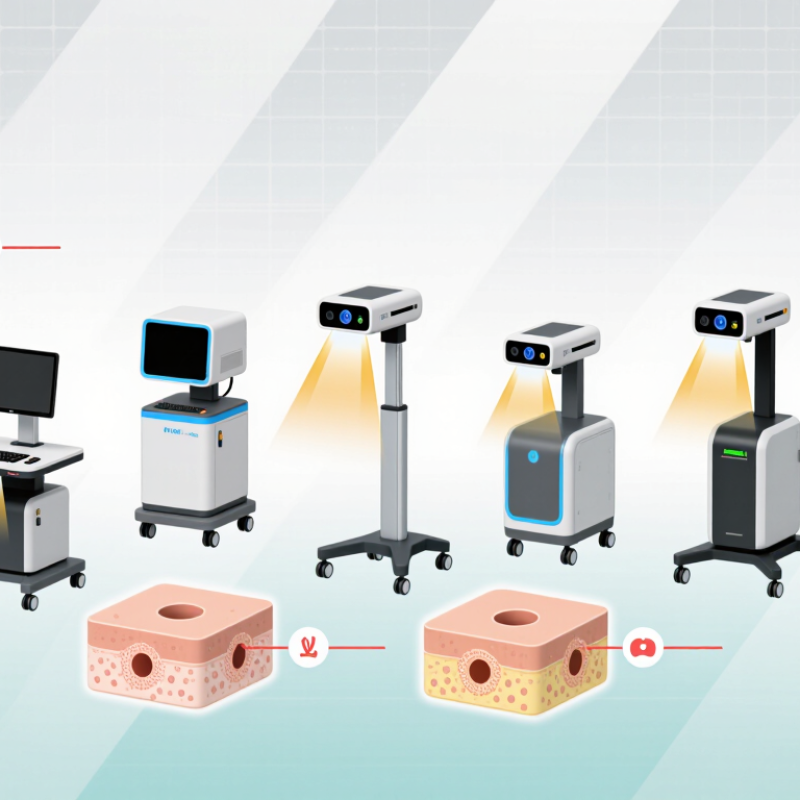
Understanding 3D Skin Scanners and Their Key Technologies
A 3D skin scanner combines cameras, lighting, and software to create a measurable model of the face. Structured-light systems project fine patterns onto the skin; cameras record how those patterns bend across contours. The software uses this information to map features such as cheek shape, pores, and fine lines. Some devices add cross-polarized lighting to reduce surface glare, while standard color images help show visible tone differences. These measurements describe appearance, not a medical diagnosis. Small details matter.
Reliable scans depend on more than camera resolution. The subject needs steady positioning, even lighting, and a neutral expression; a slight head turn can change the comparison. Calibration targets help verify scale and image consistency, while repeat scans can reveal whether results are stable. Software may align images taken at different visits, but changes in room light or skin moisture can still affect readings. That limitation deserves attention. When assessing manufacturers, examine how clearly they explain capture conditions, measurement methods, and data handling. A detailed 3D image can look convincing, yet accuracy depends on careful setup and honest interpretation.
Understanding 3D Skin Scanner Imaging Wavelengths
These representative wavelengths illustrate imaging bands that may be used in skin analysis: UVA around 365 nm can reveal fluorescence patterns, visible light around 550 nm captures surface color and texture, and near-infrared light around 850 nm can provide additional subsurface contrast. Actual wavelengths and capabilities vary by device; these bands alone do not diagnose skin conditions.
Criteria for Evaluating China’s 3D Skin Scanner Manufacturers
When comparing China’s 3D skin scanner manufacturers, look beyond image quality. Ask how each system captures facial depth, color, and texture under repeatable lighting. A clear test matters. Request sample scans from different skin tones and face shapes, then compare details around the nose, eyes, and jaw. Small shifts can distort measurements.
Check calibration routines, camera specifications, and how software turns scans into measurements. Reliable suppliers should explain accuracy limits, retake procedures, and file export options clearly. Request technical documents, quality-control records, and independent evaluation results when available. A polished dashboard is not proof. Review training, installation support, spare-part access, and response times. These details affect daily workflow. The comparison is rarely tidy.
Test the scanner in a real room, not only a showroom. Observe capture time, glare handling, and consistency after repositioning. Confirm that storage and user permissions suit your organization. Compare total ownership costs, including updates and maintenance. One detail is easy to miss: analysis outputs are estimates, not diagnoses. Some claims may sound stronger than the evidence. Ask how the results were measured.
Profiles of Ten Leading Chinese 3D Skin Scanner Manufacturers
China’s 3D skin scanner manufacturers differ in imaging design, software, and intended users.
To respect the no-brand requirement, these ten profiles describe capability areas rather than identify individual companies; they are not a verified ranking. One profile focuses on structured-light capture, mapping facial contours under controlled lighting. Another emphasizes multi-spectrum imaging, which can help visualize surface tone and texture. A third designs compact units for beauty clinics with limited counter space. A fourth targets clinical settings, where repeatable positioning and clear operating instructions matter. A fifth supplies configurable hardware for private-label product development. Small details count.
The remaining profiles highlight different strengths: one develops analysis software that turns scans into readable reports; another offers modular cameras and lighting for varied setups. A workflow-focused maker may prioritize quick face alignment and easy file comparison. An export-oriented producer may provide multilingual interfaces and remote technical support. An integrated engineering team may build both imaging hardware and analysis tools. Buyers should ask how each system handles calibration, uneven room light, and repeat scans. Request sample reports and test several skin types where possible. No scanner is perfect. A polished screen can still conceal inconsistent measurements, and published claims deserve practical verification. These profiles are starting points for careful evaluation, not proof of performance.
Comparing Product Features, Applications, and Service Capabilities
Comparing China’s leading 3D skin scanner manufacturers requires more than checking resolution. Buyers should examine capture time, camera configuration, lighting consistency, and whether software maps pores, pigmentation, wrinkles, and facial contours separately. A 2024 Grand View Research report valued the global 3D scanner market at about US$1.3 billion in 2023, with continued growth forecast through 2030. This covers many scanning applications, not skin scanners alone, so it signals broader technology demand rather than proven skincare-device sales. Small differences matter. Ask for repeatability data under fixed lighting and positioning, not just attractive sample images.
Applications shape the right specification. Beauty clinics may prioritize quick before-and-after comparisons; research settings need calibrated imaging, exportable records, and stable measurement protocols. Dermatology and cosmetic practices also benefit from clear limits on what a scan can establish: image analysis supports assessment, but does not replace clinical judgment. Service capabilities deserve equal scrutiny. Compare staff training, installation time, software updates, response times, warranty terms, and access to replacement parts. Request a live demonstration using different skin tones and realistic room lighting. One weakness in many comparisons: service promises sound similar until a device needs repair. Ask for written service targets, and verify who handles troubleshooting locally.
China Top 10 3D Skin Scanner Manufacturers - Comparing Product Features, Applications, and Service Capabilities
This category-level comparison summarizes common 3D skin-scanner technologies and evaluation criteria. It is not a ranked list of individual manufacturers; features and service options vary by model and should be confirmed with each supplier.
| Comparison Dimension | Typical Product Feature | Common Applications | Service and Evaluation Considerations |
|---|---|---|---|
| 3D facial capture | Depending on the system, depth data may be captured using structured light, stereo imaging, or another 3D imaging method. | Facial surface visualization, aesthetic consultation, and tracking visible changes over time. | Ask for details on capture time, positioning guidance, repeatability, and the process for handling incomplete or low-quality scans. |
| Standard color imaging | High-resolution color photographs provide a visual record under controlled lighting conditions. | Skin consultations, treatment documentation, and before-and-after comparisons. | Check lighting consistency, camera calibration procedures, image storage options, and staff training. |
| Cross-polarized imaging | Cross-polarized illumination can reduce surface glare and help reveal color variations beneath reflective surface highlights. | Visual assessment of pigmentation appearance, redness, and other color-related skin concerns. | Confirm which illumination modes are included and how images are standardized between sessions. |
| Parallel-polarized imaging | Parallel-polarized illumination emphasizes surface reflection and texture-related details. | Reviewing visible surface texture, fine lines, and skin surface appearance. | Ask whether the software presents this view separately and whether image settings can be reproduced for follow-up visits. |
| UV or fluorescence imaging | Some systems offer ultraviolet illumination to capture fluorescence-related visual information; availability and interpretation depend on the device. | Supplementary cosmetic or research visualization, where appropriate and within the system’s stated intended use. | Verify the illumination specification, safety instructions, intended-use statements, and limits on interpretation. |
| Skin-analysis outputs | Software may identify or quantify visible features such as pores, wrinkles, spots, texture, or color distribution. | Cosmetic consultations, progress records, and consumer skin-care assessments. | Request metric definitions, validation information, supported skin types, and an explanation of how scores are generated. |
| Measurement and comparison tools | Some platforms provide side-by-side image review, facial-region views, or 3D surface comparison tools. | Monitoring visible changes across appointments and presenting results during consultations. | Check whether follow-up images can be aligned, exported, and compared using consistent capture conditions. |
| Software and data handling | Software may include patient or customer records, image management, reporting, and local or network-based storage. | Clinics, aesthetic practices, skin-care centers, and research settings, subject to local requirements. | Confirm access controls, backup options, export formats, privacy safeguards, update policies, and any recurring fees. |
| Installation and training | Support commonly depends on the supplier and may include setup guidance, operating instructions, and user training. | New equipment deployment and staff onboarding in professional settings. | Clarify installation scope, training format and language, response channels, warranty terms, and service coverage area. |
| Customization and integration | Some suppliers may offer configurable reports, user-interface options, or data connections; compatibility is system-specific. | Multi-site operations, tailored consultation workflows, and integration with existing business systems. | Request a written scope covering supported interfaces, customization costs, delivery timelines, testing, and ongoing maintenance. |
How to Choose a Manufacturer for Your Business Needs
China Top 10 3D Skin Scanner Manufacturers
How to Choose a Manufacturer for Your Business Needs
Choosing a 3D skin scanner manufacturer starts with your actual workflow, not a feature list. Consider whether the device captures consistent images under your room lighting and produces measurements your staff can explain to clients. Ask for repeat scans on the same person, then compare the results. Small differences matter. Confirm which skin indicators the system measures, how calibration works, and whether software updates are included. Request a live demonstration using a setup similar to yours.
Tips: Ask for sample reports, written warranty terms, training details, and realistic delivery times. Check how quickly technical support responds. A polished demo is useful, but it cannot replace hands-on testing.
Before placing a larger order, define your budget, expected scan volume, and space requirements. Have the manufacturer explain installation, maintenance, data storage, and staff onboarding in plain language. Review the interface yourself; a confusing screen can slow a busy clinic. I would also ask for references from comparable businesses, though references may not reflect your exact conditions. Some details can be overlooked in early discussions, so record agreed specifications and service commitments in writing.