
7 Tips for Choosing a Clothing Donation Drop Off Bin
Choosing a Clothing Donation Drop Off Bin may seem simple. You find a container, open the lid, and leave a bag of clothes. Yet small details can affect whether those items reach a useful destination. A faded label, broken lock, or overflowing opening deserves attention. So does the operator’s identity.
Elizabeth L. Cline, a fashion-sustainability journalist and author, has often emphasized, “The most sustainable garment is the one already in your closet.” Her point adds useful perspective: donating should support responsible reuse, not simply remove unwanted clothing from your home. A reliable Clothing Donation Drop Off Bin should display clear ownership, accepted-item instructions, and a working contact number. It should also stand on a safe, well-maintained site.
This guide introduces seven practical tips for choosing the right bin. You will learn how to check the operator, inspect the container, and understand collection claims. You will also consider location, weather protection, accessibility, and donation transparency. A nearby bin is not automatically the best choice. Convenience matters, but accountability matters more.
Look closely.
A clean exterior can hide poor management. Likewise, a professional logo does not prove responsible handling. I have sometimes treated attractive signage as evidence of trust, which is an easy mistake. Better decisions require patience and a few simple questions. Who operates the bin? What condition must clothing meet? Where can donors request clarification?
These checks take only a minute. They can prevent confusion and encourage more useful donations. The following tips are designed for everyday donors who want practical guidance, clearer choices, and a more thoughtful approach to textile giving.
Identify the Clothing Donation Bin’s Operator and Purpose
7 Tips for Choosing a Clothing Donation Drop Off Bin
Tip: Identify the operator before opening the lid. Look for a legal organization name, contact number, website, and clear donation purpose. A professional operator should explain where clothing goes, who sorts it, and how unsuitable items are handled. The U.S. Environmental Protection Agency reported that Americans generated about 17 million tons of textile waste in 2018. Only around 14.7% was recycled. That makes accountability important, not decorative.
Tip: Read the wording on the bin carefully. “Clothing donations” may support resale, reuse, recycling, or a mixture of these activities. Ask whether the operator accepts damaged garments, shoes, and household textiles. Also check collection frequency. Overflowing bags near a bin suggest weak management. They may not prove misconduct, but they deserve questions. A clean site matters.
The Ellen MacArthur Foundation has reported that one garbage-truck load of textiles is landfilled or burned globally every second.
That figure shows why donation decisions need evidence. A donation bin is not automatically sustainable. I once viewed a familiar-looking container as trustworthy, but appearance proves very little. Verify the operator’s registration, public reporting, and stated destination for donations. Keep a screenshot of the information before donating. It sounds excessive. Sometimes it is. Still, small checks can prevent useful clothing from entering an unclear supply chain.
Check the Bin’s Location, Condition, and Accessibility
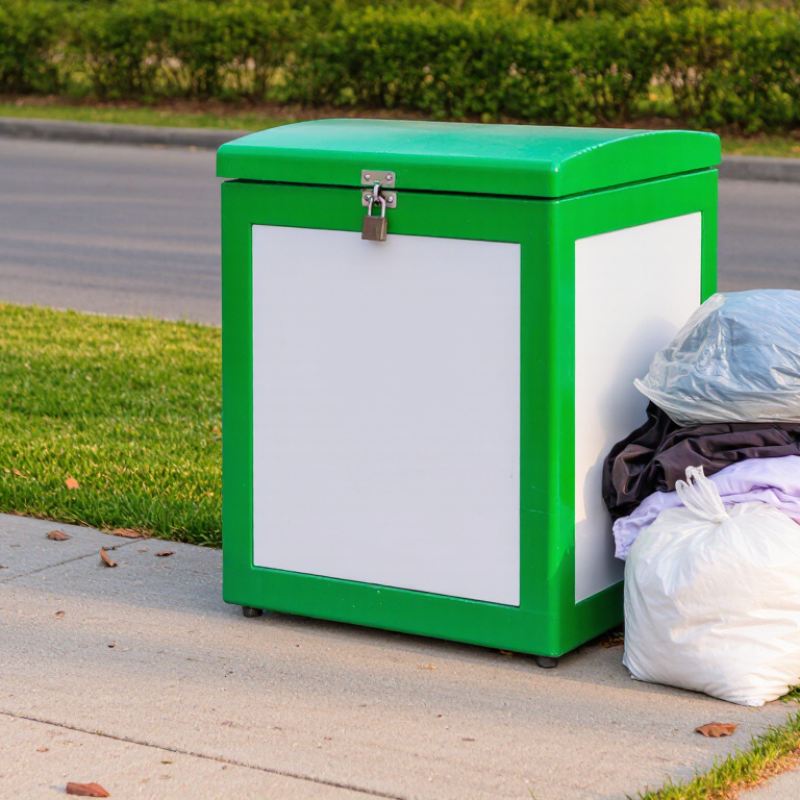
When choosing a clothing donation drop-off bin, inspect its location before carrying a full bag across town. A visible site near a community center, grocery area, or transit stop is easier to use regularly. Look for level ground, clear signs, and enough lighting during your planned visiting hours. Convenience matters more than a perfect intention.
Examine the bin itself. Its doors should close firmly, and its sides should feel stable rather than bent or loose. A clean, dry opening protects donated clothes from rain, dust, and pests. Check that the donation slot is reachable without climbing, stretching, or lifting heavy bags above shoulder height. Keep children away from moving lids and narrow openings. Choose daylight. Accessibility affects whether donations remain safe and usable.
I usually visit once in daylight, then reconsider the site after bad weather. That small test reveals puddles, blocked paths, or overflowing fabric. Still, I have trusted a tidy appearance too quickly; a neat bin can become full by evening. Look for a posted collection schedule or a responsible contact method. If the area feels poorly maintained, choose another location. Do not leave bags beside the container. They can become wet, scattered, or impossible to sort. Measure the bag size honestly, too. A bin may accept clothing, but its opening may not accept an overstuffed bundle.
Review Accepted Clothing Items and Donation Requirements
7 Tips for Choosing a Clothing Donation Drop Off Bin
Review accepted clothing items and donation requirements before driving over. A bin may accept clean shirts, trousers, coats, and paired shoes, but reject wet, moldy, stained, or torn items. Read the posted instructions carefully. Requirements differ by collection program.
Use a clear bag for dry clothing. Tie it securely. Keep shoes together with their laces or a small cord. Do not leave loose textiles beside a full bin. That creates confusion and may expose donations to rain.
The U.S. Environmental Protection Agency reported that Americans generated about 17 million tons of textile waste in 2018, with roughly 11 million tons sent to landfills. Small sorting decisions matter.
Check whether the bin accepts household linens, accessories, or only wearable clothing. Some programs require items to be reusable, while others accept damaged textiles for fiber recovery.
The Textile Exchange Materials Market Report 2024 recorded about 124 million tonnes of global fiber production in 2023, showing why responsible sorting deserves attention.
I have seen people donate thoughtfully but overlook dampness inside a bag. That mistake can spoil otherwise usable garments. Ask the operator when instructions seem unclear, and confirm the bin is serviced regularly. A clean site is not proof of perfect processing, either. Truthfully, donation labels can be incomplete.
Compare Collection Practices and Community Benefits
7 Tips for Choosing a Clothing Donation Drop Off Bin
Compare Collection Practices and Community Benefits
Tip 1: Inspect the bin before donating. A secure lid, dry floor, and clear collection schedule matter. Wet clothing often becomes unusable. The U.S. Environmental Protection Agency reported about 17 million tons of textiles generated in 2018. Only around 2.5 million tons were recycled. That gap makes careful collection important.
Tip 2: Read the destination statement. Reliable operators explain whether clothing supports resale, recycling, or material recovery. Vague wording deserves a second look. A clean bin does not prove a transparent supply chain. I have learned this through practical checks, and uncertainty still remains.
Tip 3: Compare community benefits, not only convenience. Look for evidence of local sorting jobs, repair training, affordable clothing access, or community funding. WRAP’s Textiles 2030 analysis found that extending clothing use by nine months can reduce carbon, water, and waste footprints by about 20–30 percent. Choose bins that encourage reuse before recycling.
Tip 4: Check accepted materials and collection frequency. Clear instructions prevent shoes, damp garments, and household waste from contaminating donations. Ask who manages overflow after storms or busy weekends. Small details reveal operational discipline. No label removes every risk, but documented practices make a better choice.
| Tip | Selection Criterion | What to Check at the Bin | Responsible Collection Practice | Community Benefit | Practical Rating |
|---|---|---|---|---|---|
| 1 | Confirm the operator and purpose | Look for a clearly displayed operator name, contact information, donation purpose, and local permit or authorization details where applicable. | Transparent operators explain who collects the clothing, how it is handled, and whether proceeds support a charitable or community program. | Clear information helps donors choose collection points that are accountable and aligned with local needs. | High importance |
| 2 | Review the accepted-item list | Check whether the bin accepts clean, dry clothing, shoes, accessories, household textiles, or only selected categories. | Specific acceptance rules reduce contamination and make sorting, reuse, and recycling more efficient. | Better-sorted donations are more likely to be reused or directed to textile-recovery channels instead of becoming waste. | High importance |
| 3 | Inspect weather protection and security | Choose a bin with a closed deposit slot, a stable structure, and protection from rain, snow, standing water, and unauthorized removal. | Dry, secure containers help preserve textile quality and reduce damage caused by moisture, mold, pests, or vandalism. | Usable clothing retains greater value, increasing the potential benefit to resale, reuse, or community distribution programs. | High importance |
| 4 | Compare collection frequency | Prefer a site with a visible service contact or collection schedule, and avoid bins that are repeatedly overflowing. | Regular servicing prevents bags from accumulating around the container and helps maintain safe access for donors and pedestrians. | Clean, accessible sites encourage continued participation and reduce litter-related costs for surrounding communities. | High importance |
| 5 | Consider location accessibility | Compare walking distance, parking, lighting, public-transit access, and whether the site is usable for people with mobility limitations. | Convenient placement in permitted, well-maintained locations supports safer and more consistent donations. | Accessible bins can broaden participation and make donation opportunities more equitable across neighborhoods. | Medium to high |
| 6 | Ask how textiles are sorted | Look for information about the sorting process, including pathways for wearable items, damaged textiles, shoes, and unusable materials. | A responsible system prioritizes reuse where practical and sends unsuitable textiles to appropriate recycling or recovery channels. | Sorting supports resource conservation, extends garment life, and can reduce the amount of textile material sent to disposal facilities. | High importance |
| 7 | Evaluate measurable community impact | Check for public information about donation volumes, funding allocation, local partnerships, employment, or service outcomes. | Impact reporting should distinguish collected weight from actual reuse, recycling, charitable funding, or community services delivered. | Evidence-based reporting helps donors support programs that provide tangible social, environmental, or economic value. | High importance |
Confirm Safe, Convenient, and Responsible Donation Options
7 Tips for Choosing a Clothing Donation Drop-Off Bin
Confirm safe, convenient, and responsible donation options before leaving a bag. Choose a bin on a well-lit site with clear access and stable ground. Check the surrounding area for broken glass, overflowing bags, or blocked walkways. Safety comes first.
Look for a weather-resistant container with a locked opening. A damaged lid can leave clothing wet and unusable. Read the posted acceptance list carefully. Some bins accept only clean clothing, shoes, and household textiles. Keep donations dry, bagged, and securely closed. Simple, but often missed.
Verify the operator’s name, contact details, and collection schedule. A responsible provider should explain where donations go, including reuse, recycling, or disposal pathways. Ask whether the bin is emptied regularly. Photograph the label if the information seems unclear. Convenience is not enough.
The U.S. Environmental Protection Agency reported that Americans generated about 17 million tons of textiles in 2018. Only about 2.5 million tons were recycled, while 11.3 million tons reached landfills. Choosing a transparent drop-off point can reduce careless diversion.
Avoid bins with vague ownership or no service number. Look for permission from the property owner when possible. Never place donations beside a full container. That creates hazards and may expose fabric to rain. I still find unclear signage frustrating. Better verification prevents avoidable waste.