What Are Eyelash Extension Kits?
Eyelash Extension Kits are packaged collections of tools and materials used to apply individual lash extensions. A typical kit may contain lash fibers, tweezers, adhesive, under-eye pads, and cleansing supplies. Contents differ by brand, so the label matters. Some sets suit trained artists, while others are marketed for personal use. They are not all interchangeable.
The market offers useful context, but not a direct measure of kit quality. Grand View Research estimated the global eyelash extension market at US$1.62 billion in 2023 and projected a 6.6% compound annual growth rate from 2024 to 2030. That figure describes the broader extension market, not kit sales specifically. That distinction matters. It prevents a large market estimate from being mistaken for proof that every kit is safe or effective.
A closer look at a kit should include its intended user, component list, storage guidance, and clear product instructions. For example, check whether the adhesive is intended for lash extensions and how the maker says to use it near the eyes. Follow the product directions, and stop if discomfort or irritation occurs. A kit can look complete on a shelf yet leave important questions unanswered. That is worth noticing. This guide explains what these kits contain, how their components differ, and what to check before choosing one. It cannot replace individual professional advice.
What Defines an Eyelash Extension Kit?
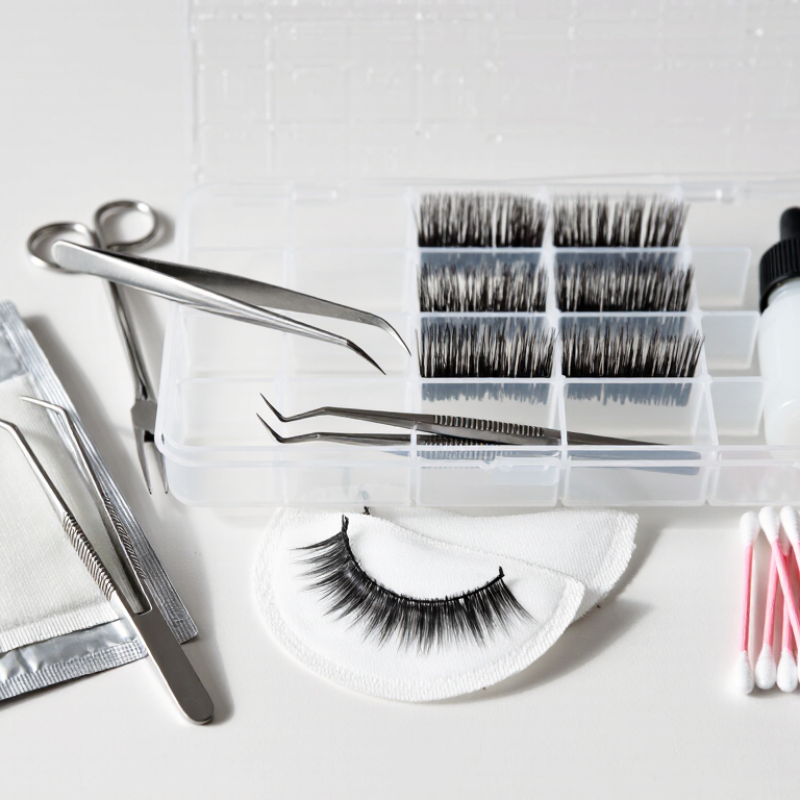
An eyelash extension kit is a collection of tools and materials used to attach individual extensions to natural lashes. It is not a single standardized product. Contents vary: one kit may include lash fibers in several lengths and curls, tweezers, under-eye pads, a spoolie, and adhesive. Another may omit adhesive or include cleanser and remover instead. The label can be confusing. Check the contents before assuming everything needed is included.
A useful kit is organized around a controlled application: separating one natural lash, placing an extension, and keeping the surrounding area clean. Fine-point tweezers help with placement; soft pads protect the lower-lash area. Adhesive, if included, should have clear directions and storage guidance. Small tools matter. Grand View Research estimated the global eyelash extension market at USD 1.6 billion in 2023, reflecting strong demand for lash services; that figure describes the broader market, not kit quality. A large kit is not automatically a better one. Examine the fiber options, tool condition, and ingredient information, and note that adhesives can irritate sensitive eyes. Even a tidy kit cannot replace careful technique, clean tools, or appropriate training.
Common Components and Their Functions
What Are Eyelash Extension Kits?
Common Components and Their Functions
An eyelash extension kit usually groups together tools and supplies for applying individual extensions. Lash trays hold fibers in different lengths, curls, and thicknesses, helping an artist create a chosen look. Tweezers separate natural lashes and place extensions with control. Under-eye pads protect the lower lid area, while gentle tape can help keep stray lashes out of the way. Small parts matter. A clean spoolie brushes through lashes and helps reveal gaps or crossed fibers.
Some kits also include cleanser or primer to remove surface oils before application, plus adhesive for attaching extensions. Adhesive is a specialized product, not ordinary cosmetic glue; it should be handled according to its instructions and kept away from skin and eyes. A remover may be included for professional removal, but pulling extensions off can damage natural lashes. A kit is not a shortcut. Safe results depend on hygiene, suitable products, and careful technique. Patch testing may help identify sensitivity, but it cannot rule out every reaction. Not every kit matches every user, and that deserves a closer look before application.
Common components and their functions: Lash trays hold the extension fibers; adhesive bonds extensions to natural lashes; tweezers isolate natural lashes and place extensions; under-eye pads or tape protect and separate lower lashes; cleanser or primer prepares lashes; and spoolies help brush and groom them. Kit contents vary.
The chart shows commonly available extension fiber diameters. The assortment in any particular kit may differ.
Types of Eyelash Extension Kits
What Are Eyelash Extension Kits?
Types of Eyelash Extension Kits
Eyelash extension kits vary by lash style and intended skill level. Classic kits usually contain individual extensions, adhesive, tweezers, and under-eye pads. They create a defined, one-extension-per-natural-lash look. Volume kits use lightweight fans of several fine extensions for a fuller effect. Hybrid kits combine classic lashes and volume fans, giving a textured finish. Small differences matter: curl, length, and thickness can change how the set looks and feels.
Kits also differ in who they are designed for. Professional kits may include multiple lash trays, precision tools, and products for a full application. Some require training and careful isolation of each natural lash. At-home cluster kits often use small pre-made lash groups and a different application method. They are not interchangeable. Check the instructions before using any adhesive near the eyes, and never place extensions on the waterline.
A kit can look simple on a product list. The work takes practice.
Adhesive fumes or ingredients may irritate sensitive eyes, and a patch test cannot rule out every reaction. Stop if burning, swelling, or persistent redness develops, and seek medical advice when needed. Choose a kit with clear ingredient details and instructions; vague directions are a reason to pause.
How Eyelash Extensions Are Applied with a Kit
What Are Eyelash Extension Kits?
How Eyelash Extensions Are Applied with a Kit
An eyelash extension kit usually contains lash fibers, adhesive, tweezers, cleansing supplies, and small brushes. Unlike a strip lash, each extension is attached to an individual natural lash. Grand View Research estimated the global eyelash extension market at USD 1.36 billion in 2022, with projected annual growth of 6.2% from 2023 to 2030. That figure signals demand, not proof of safety or good application. Small details matter.
Application begins with clean, completely dry lashes. The technician separates one natural lash with tweezers, then uses a second tool to place a single extension along it, leaving a small gap from the eyelid. Adhesive should not touch the skin or enter the eye. Each bond needs time to set before the next lash is isolated. Slow work helps prevent neighboring lashes from sticking together. Honestly, a fuller look is not always the wisest choice for fragile natural lashes. Follow the kit’s directions, work in a well-ventilated area, and stop if irritation develops. A patch test may help identify sensitivity, but it cannot guarantee an irritation-free result.