

Why Choose a Compliant Vape Store Europe for Global Sourcing?

Why choose a compliant Vape Store Europe for global sourcing? The answer begins with evidence, not attractive packaging. The European Commission’s Special Eurobarometer 539 reported that 3% of Europeans currently use e-cigarettes. That figure shows a defined market, but it also demands careful product governance.

A compliant supplier should provide traceable batches, accurate ingredient records, safety documentation, and packaging aligned with applicable European requirements. Product notifications, nicotine limits, warning labels, and child-resistant features require close review. Small details matter. A missing batch code can weaken an otherwise credible supply chain.

John Dunne, Director General of the UK Vaping Industry Association, has stated, “Vaping is not risk free, but it is significantly less harmful than smoking.” This statement supports responsible communication, not careless promotion. A serious Vape Store Europe should therefore verify claims, protect adult consumers, and maintain transparent records from factory to distributor.

The World Health Organization continues to emphasize strict oversight of novel nicotine products. That makes supplier due diligence essential for international buyers. Certificates alone are not enough. Buyers should inspect documentation, test consistency, and confirm that marketing avoids medical or exaggerated claims.

No sourcing system is flawless. That is precisely why regular audits matter. A compliant European partner can offer stronger accountability, clearer documentation, and more dependable quality control. The real advantage is trust—tested through everyday details, not promises.
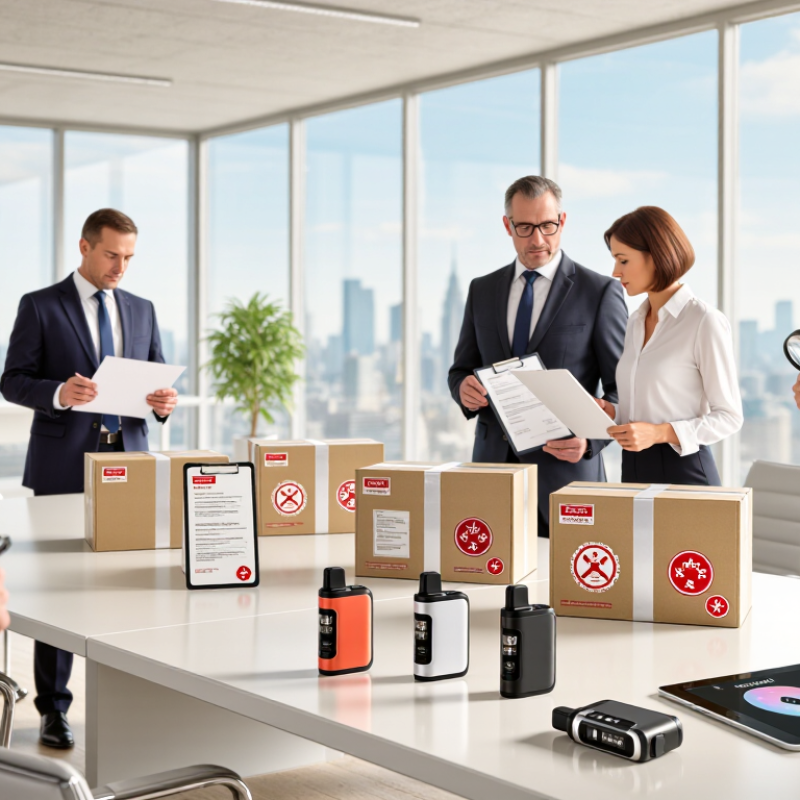
Why Choose a Compliant Vape Store Europe for Global Sourcing?

What Makes a European Vape Store Compliant?

Why Choose a Compliant Vape Store Europe for Global Sourcing?
What Makes a European Vape Store Compliant?

A compliant European vape store treats documentation as seriously as product quality. Under Directive 2014/40/EU, nicotine e-liquids must not exceed 20 mg/ml. Tanks are limited to 2 ml, while refill containers may hold up to 10 ml. Products also require child-resistant packaging, ingredient disclosure, health warnings, and regulated product notifications.

Look for evidence, not polished promises. A reliable supplier should provide batch records, laboratory test results, safety data sheets, and traceable manufacturing details. The European Commission’s 2021 report on the Tobacco Products Directive highlighted uneven implementation across member states. Therefore, compliance cannot be assumed across every European market. Country-specific checks remain essential.

The paperwork matters.

Packaging should match the approved product. Labels should remain readable after handling, not only inside a showroom. Independent testing can verify nicotine strength, contaminants, and liquid composition. Still, testing is not a perfect shield. Rules change, documents expire, and translation errors sometimes survive internal reviews. Experienced buyers should recheck notifications and national requirements before each shipment. Compliance is an ongoing working habit, not a permanent badge.

How European Vape Regulations Protect Buyers and Businesses

Why Choose a Compliant Vape Store Europe for Global Sourcing?

European vape regulations protect buyers and businesses through documented controls, not attractive packaging alone. Under the Tobacco Products Directive 2014/40/EU, nicotine products face limits on strength, container size, and refill capacity. Products also require child-resistant packaging, health warnings, and safety information. These details matter during sourcing.

The European Commission’s Special Eurobarometer 506 (2021) reported that about 3% of surveyed Europeans currently used electronic cigarettes. This measured market supports careful oversight rather than uncontrolled expansion. A responsible store should verify supplier records, product notifications, batch references, and age-control procedures. Buyers can request compliance files before approving a shipment. That simple step prevents expensive surprises.

Compliance is not glamorous. It is also not perfect. Rules differ outside the European market, so exporters must check the destination country separately. The European Chemicals Agency’s guidance on classification, labelling, and packaging adds another practical layer for mixtures and containers. In real sourcing work, I would inspect labels under warehouse lighting, compare batch codes, and retain invoices for traceability. Small errors can still happen. A missing warning panel or unclear language may delay customs clearance and weaken customer trust. Reliable European sourcing therefore depends on evidence, trained staff, and honest product communication, not promises alone.

Why Choose a Compliant Vape Store Europe for Global Sourcing? - How European Vape Regulations Protect Buyers and Businesses

Regulatory Dimension Verified European Requirement Protection for Buyers Protection for Businesses Sourcing Checkpoint
Legal framework The core EU framework is Directive 2014/40/EU, commonly known as the Tobacco Products Directive (TPD), together with national implementing laws. Creates a common baseline for product safety, information, packaging and market access across EU countries. Provides a recognizable compliance structure for suppliers serving multiple European markets. Confirm both EU-level requirements and the specific rules of the destination country.
Nicotine concentration Nicotine-containing e-liquids generally may not exceed 20 mg/ml under the TPD framework. Reduces the risk of products being supplied with concentrations above the established EU limit. Makes product specifications easier to screen before import, listing or distribution. Verify nicotine strength on labels, technical files, laboratory documents and purchase specifications.
Cartridge and tank capacity Disposable cartridges and tanks for nicotine-containing products generally have a maximum capacity of 2 ml. Limits the quantity of nicotine liquid available in a single device or cartridge. Helps prevent non-compliant oversized formats from entering regulated sales channels. Check filled volume, technical drawings, packaging statements and batch documentation.
Refill container capacity Nicotine refill containers generally may not exceed 10 ml. Supports controlled handling, storage and sale of nicotine-containing liquid. Provides a clear packaging specification for procurement and quality-control checks. Confirm the nominal fill volume and ensure the container format matches the destination market.
Child-resistant and tamper-evident design Nicotine-containing refill containers must be child-resistant and protected against leakage; packaging must also be tamper-evident. Reduces accidental access by children and helps reveal whether packaging has been opened or altered. Lowers product-liability and complaint risks when validated packaging is used. Request packaging test evidence, leak testing records and samples from the production batch.
Health warnings Nicotine-containing products require a prescribed health warning stating that nicotine is highly addictive. Gives consumers standardized risk information before purchase and use. Reduces the risk of missing mandatory consumer information on retail packaging. Check wording, visibility, language version, placement and print durability for each market.
Product notification Manufacturers and importers generally must submit required product information to the relevant national authorities before products are placed on the market; the TPD provides a six-month period before placement for notified products. Improves regulatory visibility of ingredients, emissions, toxicological information and product design. Creates a documented route for lawful market entry and product traceability. Ask for notification status, submission records and confirmation that the correct national authority was used.
Ingredients and emissions information Regulated products require information on ingredients, nicotine content, emissions and toxicological data as part of the notification process. Supports more informed purchasing and helps authorities assess product risks. Improves supplier transparency and supports consistent quality assurance. Obtain a current ingredient list, safety data, test reports and batch-level quality records.
Advertising and promotion EU rules restrict certain cross-border advertising and sponsorship of electronic cigarettes and refill containers, while national rules may impose additional limits. Helps limit exposure to promotional claims that may be misleading or targeted at inappropriate audiences. Reduces the risk of non-compliant marketing campaigns and platform restrictions. Review product claims, online content, influencer activity and country-specific advertising rules.
Age restrictions EU tobacco-control rules establish a framework that prohibits sales of tobacco products to minors; individual countries apply their own age-verification and enforcement procedures to e-cigarette sales. Supports responsible retailing and reduces access by underage customers. Encourages documented age-check procedures and reduces enforcement exposure. Confirm the minimum sales age, identity-check process and delivery requirements in each destination country.
Cross-border compliance EU-wide rules provide a baseline, but taxation, flavors, packaging, registration, environmental obligations and retail restrictions can differ by country. Reduces the chance that buyers receive products legal in one country but restricted in another. Helps importers plan country-specific documentation, labeling and logistics before shipment. Use a destination-country compliance checklist rather than relying only on an EU-level declaration.
Documentation and traceability A compliant supply chain should retain product specifications, test evidence, batch details, supplier records and market-placement documentation. Makes it easier to investigate quality issues, recalls or authenticity concerns. Supports audits, controlled recalls and faster responses to regulator or customer inquiries. Request a complete compliance dossier and verify that documents match the exact product and batch.

Regulatory note: European requirements can change, and national laws may be stricter than the EU baseline. Always verify current rules with the competent authority in the destination country before importing, selling or distributing vaping products.

What Product Standards Should Global Buyers Verify?

Global buyers should treat compliance as a product-quality test, not a paperwork exercise. The EU Tobacco Products Directive requires notified products, health warnings, ingredient disclosures, and strict nicotine limits. Verify each product’s notification status, packaging artwork, batch code, and traceability records. The liquid container should meet child-resistant and tamper-evident requirements. These details matter when cartons travel through several markets.

Battery safety deserves equal attention. Ask for test reports covering short-circuit protection, overcharge protection, thermal performance, and transport safety. Relevant evidence may include IEC 62133-2 testing and UN 38.3 transport documentation for lithium batteries. Request independent laboratory reports, not only supplier declarations. The WHO Global Report on Trends in Tobacco Use, published in 2024, estimated 1.25 billion adult tobacco users in 2022. That scale increases the need for consistent controls, but market size does not prove product reliability. A clean certificate can still hide weak batch control.

Tips: Compare the report’s model number with the physical device. Check the test laboratory’s accreditation and report date. Sample sealed cartons, measure nicotine concentration independently, and inspect warning text under bright light. Keep photos, invoices, and batch records together. I would also test a second shipment; one successful inspection is not enough. Suppliers may resist this step. That resistance is useful evidence. Review local rules before resale, because EU compliance alone may not satisfy every destination market.

How Compliance Supports Reliable International Sourcing

Why Choose a Compliant Vape Store Europe for Global Sourcing?

Compliance supports reliable international sourcing because it creates a clear trail from product selection to delivery. A responsible European vape store should provide current product specifications, safety documentation, batch records, and lawful packaging details. These records help purchasing teams compare suppliers with confidence. They also reduce delays caused by missing customs information or unclear labeling. In practice, a well-organized file can save several days during a shipment review.

Reliable sourcing depends on more than attractive prices. Buyers should check age-restriction procedures, ingredient disclosures, testing records, and traceability systems where applicable. Clear communication matters too. A professional supplier explains which documents apply to each destination, rather than making broad promises. Requirements can change, and even experienced teams sometimes overlook a small language or labeling difference. That weakness deserves regular review. No process is perfect.

Tips: Request a recent compliance file before placing a large order. Match every product code with its batch record and packaging sample. Confirm delivery terms in writing. Keep inspection photos, invoices, and test documents together. A short quarterly review can reveal repeated errors early. Ask direct questions. Vague answers are useful warnings.

How to Evaluate a Compliant Vape Supplier in Europe

Why Choose a Compliant Vape Store Europe for Global Sourcing?

How to Evaluate a Compliant Vape Supplier in Europe

Evaluating a European vape supplier requires more than checking product photos. Ask for traceable batch records, ingredient lists, safety documentation, and clear packaging specifications. A reliable supplier should explain how products meet applicable European requirements and the rules of your destination market. Request samples before placing a large order. Inspect the label closely. Check warnings, usage instructions, language accuracy, and recycling information.

Documentation should match the physical products. Compare batch numbers on cartons, containers, and test reports. Independent laboratory results can support quality claims, but they should be current and easy to verify. Ask how the supplier handles age-restricted sales, customer data, product recalls, and restricted destinations. Written procedures matter. So does staff knowledge.

Visit the warehouse when possible. Look for clean storage areas, organized inventory, and controlled temperature conditions. Ask how complaints are recorded and how quickly defects are investigated. A polished website proves very little. In my experience, small inconsistencies often reveal larger process gaps. I once overlooked a minor translation error during an initial review. It later showed why every market needs a local compliance check. No supplier is perfect, and neither is every audit. Keep written questions, compare answers, and reassess the relationship when regulations or product specifications change.