How to Choose an X Ray Protection Apron
Choosing an x ray protection apron is a practical safety decision, not a simple comparison of labels. Weight, coverage, fit, and the work performed all matter. A heavy apron can feel burdensome during a long shift. One that gaps at the sides may leave areas uncovered. Small details count.
Medical physicist John R. Cameron’s work in radiation protection offers a useful principle, paraphrased here: “Choose protection for the procedure, fit, and wearer—not the label alone.” This is a paraphrase, not a verbatim quotation. It captures why an x ray protection apron should be selected with input from qualified radiation-safety professionals, using the manufacturer’s specifications and the facility’s procedures. Lead equivalence is one factor, but it does not describe comfort, garment condition, or suitability for every task.
Check the apron’s coverage while standing and moving. Look for clear sizing information, secure closures, and care instructions. Ask how the garment should be inspected and stored. A cracked or poorly fitting apron deserves attention, even if it looks acceptable at a glance. No apron is universal. And no label tells the whole story. Buyers can focus too much on a single specification; that is worth questioning. This guide will explain the details to compare, the questions to ask, and the signs that an apron may not suit its wearer or intended use.
Assess X-Ray Workload, Beam Direction, and Scatter Exposure
How to Choose an X Ray Protection Apron
Assess X-Ray Workload, Beam Direction, and Scatter Exposure
Choose an apron for the work actually performed. Record procedure types, weekly case numbers, fluoroscopy time, and typical beam settings. NCRP Report No. 147 identifies workload, beam-use patterns, and room occupancy as key factors in shielding assessments. These details help distinguish a busy fluoroscopy service from occasional portable imaging. Minutes alone can mislead. A short procedure may still involve frequent beam-on intervals.
Scatter comes mainly from the patient, so position matters. In fluoroscopy, the tube side often receives more scatter than the image-receptor side, but C-arm angles, patient size, and collimation change the pattern. Map where staff stand and turn during procedures. A front-protective apron may suit consistent positioning; wraparound coverage may be more practical when staff move or rotate. Check fit, overlap, and the stated lead-equivalent rating. Then review personal dosimeter readings and, where appropriate, ask a radiation-safety professional to assess local conditions. Geometry matters.
NCRP Report No. 160 estimated U.S. medical-imaging exposure at about 3.0 mSv per person in 2006. That figure describes population exposure, not an individual worker’s scatter dose; it should not determine apron thickness by itself. I would not treat any single number as a perfect proxy. Practical choices depend on measured exposure, procedure mix, and movement around the patient.
Compare 0.25, 0.35, and 0.50 mm Pb Lead-Equivalent Ratings
How to Choose an X Ray Protection Apron
The 0.25, 0.35, and 0.50 mm Pb-equivalent ratings describe tested attenuation, not a guarantee of protection in every setting. A 0.25 mm apron is lighter and may suit lower-scatter work when supported by a radiation-safety assessment. A 0.35 mm rating offers a middle ground. A 0.50 mm apron generally attenuates more, but adds weight across the shoulders and back. Small numbers matter here.
Choose for the procedure, beam conditions, coverage, and time worn—not the highest rating alone. A poorly fitted apron can leave gaps at the sides or sit awkwardly over the collarbone. Check whether front-only or wraparound coverage suits the work. Confirm the rating in the product documentation, and follow your facility’s radiation-safety guidance. The heavier option can feel reassuring, but reassurance is not a selection method. Comfort is not a substitute for protection, either.
Tips: Try the apron while standing and reaching. Check seams, closures, and storage instructions; arrange inspection if damage is suspected.
How to Choose an X Ray Protection Apron - Compare 0.25, 0.35, and 0.50 mm Pb Lead-Equivalent Ratings
| Lead-equivalent rating | Relative attenuation | Weight and comfort considerations | Typical selection considerations | What to check before choosing |
| 0.25 mm Pb | Lower attenuation than 0.35 or 0.50 mm Pb when compared under the same test conditions. | Often a lighter option when garment style, size, coverage, and materials are otherwise comparable. | May be considered where a lighter garment is a priority and the expected exposure conditions and local requirements support this rating. | Confirm that the rating and coverage are appropriate for the procedure, beam conditions, and applicable workplace rules. |
| 0.35 mm Pb | Greater attenuation than 0.25 mm Pb and less than 0.50 mm Pb under the same test conditions. | Typically involves a compromise between garment weight and attenuation; actual comfort depends on design and fit. | Can be considered for routine use when the required protection level, wear time, and mobility needs have been assessed. | Compare garment coverage, fit, fastening design, and the manufacturer’s stated test conditions—not the rating alone. |
| 0.50 mm Pb | Greater attenuation than 0.25 or 0.35 mm Pb under the same test conditions. | Often heavier than lower-rated versions of a comparable design, which may affect comfort during prolonged wear. | May be considered when a higher lead-equivalent rating is called for by the exposure assessment or applicable requirements. | Check whether the additional attenuation is needed for the intended use and whether the garment can be worn and fitted correctly. |
Important: Lead equivalence describes attenuation compared with a specified thickness of lead under stated X-ray beam test conditions; it is not the garment’s physical thickness. Attenuation depends on beam quality, and garment weight depends on its size, coverage, construction, and materials. Select protective apparel according to a qualified radiation-protection assessment and applicable local requirements.
Select Apron Coverage and Fit for the Procedures Performed
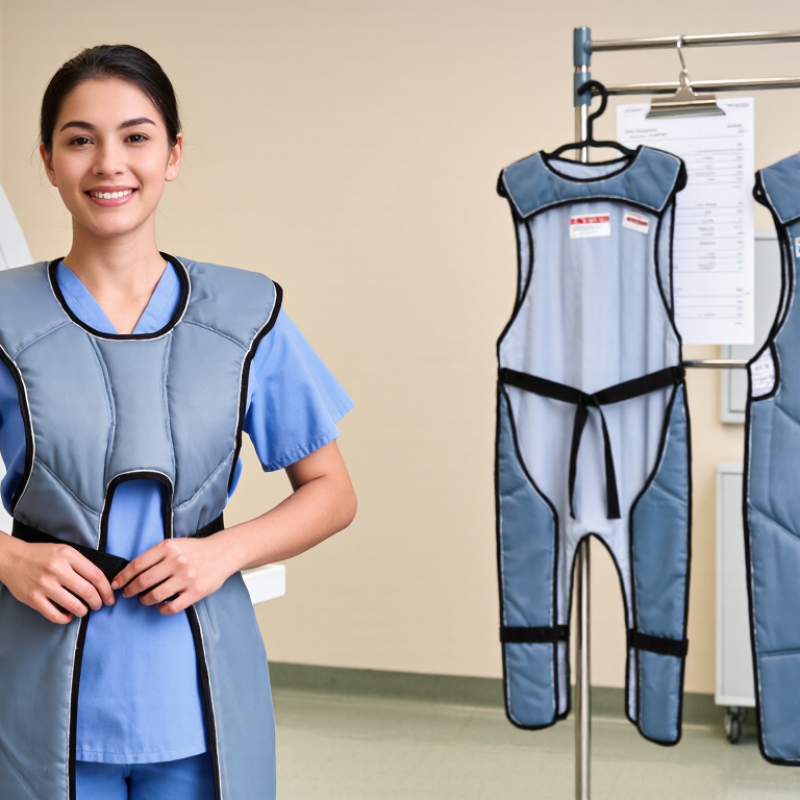
Choose apron coverage around the procedures and positions you actually perform. For fluoroscopy, note whether you face the X-ray source, turn frequently, or step beside the table. A front-only apron may suit consistent forward-facing work; wraparound coverage can protect more sides when you rotate. Add a thyroid collar when your work and local protection protocols call for one. Coverage must not obstruct movement or leave gaps when you reach across the table.
Fit matters. An apron should cover the torso while allowing you to walk, bend, and reach without pulling at the neck or waist. Check the fit while wearing your usual clinical clothing, then mimic a procedure: raise your arms, lean, and turn. An apron that shifts open at the side may offer less practical coverage than its label suggests. NCRP Report No. 160 estimated that average annual effective dose from medical procedures in the United States reached about 3.0 mSv in 2006, compared with 0.6 mSv in 1980. This is population-level patient exposure, not a staff-dose estimate or an apron specification; use it as context, not a sizing rule.
Tips: Check fit in motion. Confirm the selected coverage against your facility’s radiation-safety guidance, and inspect the garment for damage as instructed. A small compromise remains: more coverage can mean more weight, so comfort and protection both deserve a real-world check.
Check IEC 61331-3 Compliance, Materials, and Labeled Protection
An X-ray protection apron should have clear, traceable evidence of performance. Check its label and supporting documentation for compliance with IEC 61331-3; a product description alone is not enough. Look for the stated lead equivalence and the tube voltage used for testing, since protection claims relate to specific beam conditions. Labels matter. If the rating or test basis is unclear, ask the supplier or your radiation safety professional before purchase.
Aprons may use lead, lead-composite, or lead-free materials. Compare weight, flexibility, and fit for the length of time you wear it, but do not treat “lightweight” as proof of equal protection. Check that the front, seams, and closures sit properly, and inspect for cracks or creases under your facility’s procedures. A tidy outer cover can hide wear. That is easy to overlook. Follow the maker’s storage instructions, and avoid folding the apron if hanging storage is specified. No single apron suits every task, so match its labeled protection and coverage to your clinical use.
Choosing an X-Ray Protection Apron: Labeled Lead Equivalence
These are common nominal lead-equivalence labels, not a guarantee of identical attenuation in every X-ray beam. When selecting an apron, check its labeling and documentation for compliance with IEC 61331-3, and consider the examination’s beam quality, fit, and coverage. Follow the manufacturer’s instructions for inspection and care.
Inspect for Cracks and Follow the Manufacturer’s Storage Guidance
Before wearing an X-ray protection apron, check its full surface under good lighting. Look for cuts, pinholes, worn seams, or areas that feel unusually thin. Pay extra attention near the shoulders, waist, and edges, where repeated handling can cause wear. A smooth outer cover does not always mean the protective layer is intact. Handle it gently.
Cracks may be hard to spot. If you notice a crease, lump, or suspected defect, set the apron aside and follow your facility’s inspection procedure. Do not try to repair it yourself. A qualified person can determine whether it remains suitable for use. Visual checks are useful, but they cannot reveal every internal defect.
Storage matters too. Follow the manufacturer’s instructions, since designs and materials can differ. Many aprons should be hung on a broad, purpose-made hanger or stored flat, without sharp folds or heavy objects pressing on them. Never drape one over a narrow hook or chair back; that can create stress points over time. Small habits count. I have seen storage routines treated as an afterthought, and that is easy to regret. Keep the apron away from heat, moisture, and direct sunlight when the instructions advise it. Check its condition again after storage, before use.