

How to Choose the Right Earth Bar for Your Project

Choosing the right Earth Bar is a small decision with consequences across an entire electrical installation. It must provide a dependable point for connecting protective conductors, bonding links, and earthing conductors. The correct choice depends on the project—not on appearance alone. Conductor size, expected fault current, terminal count, enclosure space, and the installation environment all matter.

A useful principle, consistent with Peter Hasse’s published work on grounding and surge protection, is: “Treat the earth bar as part of the complete protection system, not as an isolated component.” This is an editorial summary, not a verified verbatim quotation. In practice, compare the bar’s material and finish, its rated capacity, and the range of conductors its terminals accept. A copper bar may suit many installations; a damp or corrosive location may call for additional attention to plating, enclosure protection, and compatible connections. Small details count. A terminal that does not fit the specified conductor can complicate installation and inspection.

This guide outlines how to assess those factors, check project requirements, and avoid common selection mismatches. It also considers access for testing and future maintenance. There is no universal “best” Earth Bar. Some project details may remain uncertain until the design is reviewed on site. That uncertainty deserves a second look, not a guess. Seek qualified engineering advice where ratings, local requirements, or installation conditions are unclear.
How to Choose the Right Earth Bar for Your Project

Understand the Earth Bar’s Role in the Grounding System

An earth bar is a common connection point for protective conductors, bonding conductors, and the grounding network. It helps keep exposed metalwork at similar electrical potential during a fault. Picture a metal enclosure, cable tray, and service pipe connected to one clearly identified bar. The bar does not replace the grounding electrode or protective devices. It links parts of the system so fault current has a deliberate path.

Connection quality matters. Loose terminals, corrosion, or an overloaded bar can undermine that path. IEEE Std 80-2013 models permissible body current for a 50-kg person as 0.116 divided by the square root of shock duration in seconds. This figure helps explain why fault-clearing time and touch voltage matter; it is not an earth-bar current rating. A common design blind spot is choosing a bar by appearance alone.

For selection, check the expected fault current and clearing time, conductor material and cross-section, terminal capacity, and installation environment. Confirm that the bar accepts every required connection without crowding, and follow the project’s applicable electrical standards. In damp or corrosive locations, suitable materials and protected connections deserve extra attention. A tidy layout helps inspection, but it cannot compensate for weak sizing. Recheck the design with a qualified electrical engineer, especially when equipment or fault levels change.

Identify Project Codes and Environmental Conditions

Before choosing an earth bar, identify the project’s governing electrical code and the edition named in the contract documents. Requirements can differ by location, building type, and installation purpose. Check the drawings, specifications, and inspection requirements together; a detail shown on one document may be missing from another. Details matter. Confirm the required conductor sizes, connection method, fault-current rating, and clearances with the project’s qualified electrical professional.

Then assess the actual environment. A dry plant room presents different demands from a damp basement, coastal site, or outdoor cabinet exposed to rain and salt. These conditions influence bar material, plating, enclosure protection, and hardware selection. Look for condensation, chemical vapors, dust, temperature swings, and vibration near the mounting point. Small details can matter. A bar may meet the electrical rating yet corrode where dissimilar metals touch, so check material compatibility and installation guidance.

Record the conditions rather than relying on “indoors” or “weatherproof” as complete descriptions. Note where the bar will sit, how conductors enter, and whether maintenance access remains clear. If a project specification conflicts with local requirements, pause and request clarification instead of guessing. I have seen that rushed assumption become rework; it is easy to overlook access until the enclosure is already crowded. Verify the final selection against approved project documents and the manufacturer’s technical data.

Determine Required Capacity, Size, and Material

An earth bar should be sized for the fault it may carry, not just the normal load. IEEE Std 80-2013 bases grounding-conductor thermal sizing on fault current and the time taken for protection to clear the fault. Confirm both values with the project’s protection study; a slow trip can demand a larger cross-section. A tidy drawing can hide this detail.

Choose dimensions only after checking thermal duty, connection count, and available space. Allow room for cable lugs, labels, and any test links, without crowding the terminations. The International Annealed Copper Standard (IACS) sets annealed copper at 100% IACS conductivity; typical electrical-grade aluminum is about 61% IACS. This comparison helps explain why aluminum bars may need more cross-sectional area for similar conductivity. It does not replace the manufacturer’s material data or engineering calculations.

Material choice also depends on the installation environment. Copper is often selected for compact installations; aluminum can reduce weight, but its joints need careful design. Check for moisture, corrosive fumes, and contact between dissimilar metals, which can accelerate corrosion. IEC 60364-5-54 provides guidance on earthing arrangements and protective conductors. Verify its requirements against the project specification and applicable local standards. One more check: confirm that every connected conductor and termination can withstand the specified fault duty.

Compare Connection Types and Mounting Options

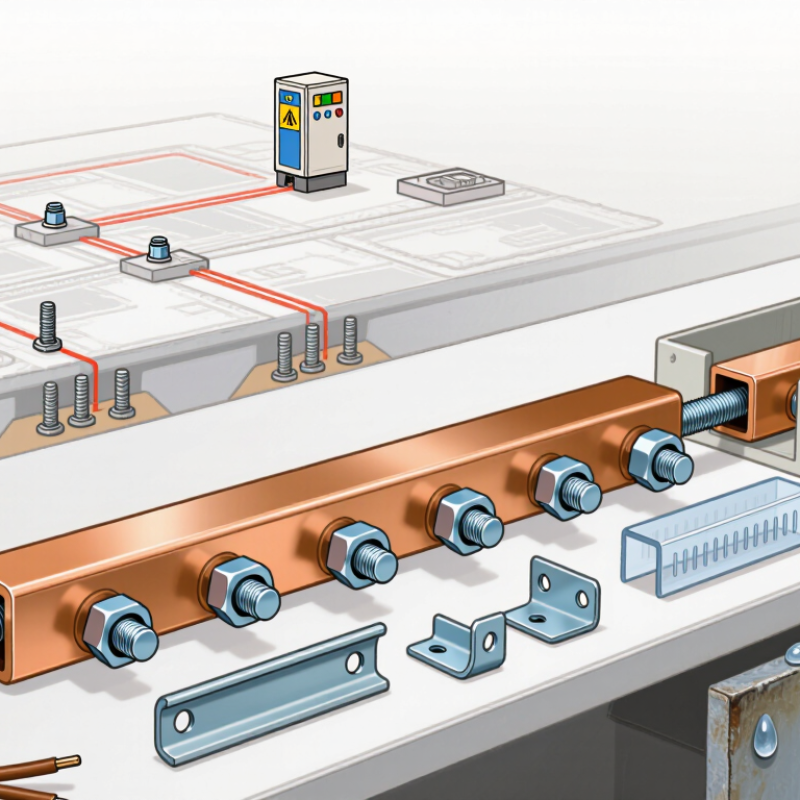
An earth bar is more than a row of terminals; its connection style affects installation and inspection. Stud-mounted bars accept ring lugs and can make conductor changes straightforward. But each lug needs space, and loose hardware can complicate maintenance. Tapped holes offer a compact, tidy arrangement when matching screws and conductor lugs are available. Clamp-style terminals can speed up wiring, though their approved conductor sizes may be limited. Check the bar’s current rating, material, and terminal capacity against the project requirements.

Mounting choices matter just as much. A backplate suits many enclosures and keeps the bar accessible, while DIN-rail mounting can simplify installation in compatible panels. Wall mounting may work where enclosure space is tight, but leave room for tools and future connections. A neat-looking position can still be awkward to service; check access twice. Confirm that mounting hardware creates a secure, continuous bond, and follow the manufacturer’s installation instructions.

Tips: Sketch the cable routes before choosing a bar. Check lug orientation, bend space, and clearance from the enclosure door. Small detail, real consequence. If several conductors must share one point, verify that the terminal is designed for that arrangement rather than assuming it will fit.

Check Compatibility, Certification, and Future Expansion

Choosing an earth bar starts with the actual installation, not just the number of terminals. Match its material and rating to the conductors, prospective fault current, and protective-device clearing time. Check terminal sizes, enclosure space, and whether copper-to-aluminium connections need compatible fittings. Corrosion matters too: damp plant rooms and coastal sites can shorten component life. Review test documents and applicable requirements, such as IEC 62561-1 for lightning-protection bonding components, where relevant. A certification mark alone does not confirm suitability for every application.

Plan for the next circuit, not only today’s drawing. The International Energy Agency’s 2023 report, Electricity Grids and Secure Energy Transitions, says annual grid investment needs to rise from about USD 300 billion to more than USD 600 billion by 2030. That forecast concerns grids broadly, not earth bars specifically, but it underlines why upgrade access matters. Leave spare terminals and physical clearance, while confirming the bar and enclosure can handle the added load. Extra space can feel wasteful. It often saves rework.

Tips: Before ordering, compare the project schedule, conductor sizes, fault-current study, certification records, and expansion allowance on one checklist. I still double-check the drawings against the site; small layout changes can make a neat specification impractical.