

How to Choose the Best Firefighter Challenge Coins?
Choosing the best Firefighter Challenge Coins starts with one question: what should the coin honor? A coin may mark service, a training milestone, a station anniversary, or a shared team identity. Its meaning is personal; its construction should still withstand daily handling. Look closely at the metal base, relief depth, enamel boundaries, edge treatment, and readable lettering. A crisp helmet outline or station number should remain clear at arm’s length. Small details matter. But more decoration is not always better.
The National Fire Protection Association’s 2023 report, U.S. Firefighter Injuries in 2022, estimated 65,650 firefighter injuries that year. That figure describes occupational risk, not coin demand or product quality. The distinction matters. It does, however, underline why recognition should be thoughtful and specific. A challenge coin cannot replace training, protective equipment, or organizational support. It can serve as a tangible reminder of service, belonging, and a moment worth remembering. For buyers, compare sample photos with physical samples, ask about plating and finish, and confirm proofs before production. Ask who approves artwork, how color variation is handled, and what replacement options exist. A design can look impressive on screen and feel crowded in hand; that is easy to miss. There is no perfect coin. The best choice balances a clear story, durable details, and a budget the department can explain.
Understanding the Purpose and Meaning of Firefighter Challenge Coins
Understanding the Purpose and Meaning of Firefighter Challenge Coins
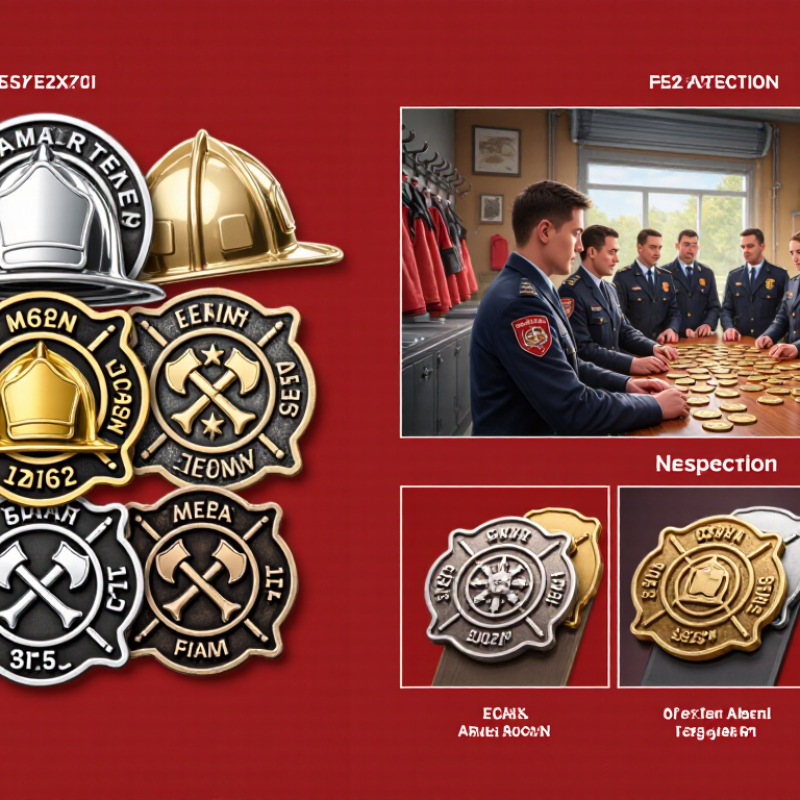
A firefighter challenge coin is more than a small metal keepsake. It can recognize service, teamwork, training, or a difficult call shared by a crew. Its symbols carry meaning: crossed tools may suggest readiness, while a station number can connect the coin to a specific team. The National Fire Protection Association’s 2022 U.S. Fire Department Profile estimated that departments responded to about 37.2 million calls that year; roughly two-thirds involved medical aid or rescue. That context matters. Firefighting includes much more than fires, so a meaningful design should reflect the work and people being honored, not rely on familiar flames alone. A coin cannot tell the whole story.
Tips: Ask recipients what symbols feel authentic to their crew. Check that names, dates, and station details are accurate before approving a design. Small errors can matter.
When choosing a coin, consider its purpose first: a retirement keepsake, a training milestone, or a token of appreciation may call for different wording and imagery. The National Fallen Firefighters Foundation emphasizes remembrance and honoring service; this makes respectful, specific details more fitting than dramatic decoration. Keep text readable at coin size, and choose durable materials suited to frequent handling. Experience varies between departments, and not every tradition suits every crew. That is worth discussing before ordering.
How to Choose the Best Firefighter Challenge Coins? – Understanding the Purpose and Meaning of Firefighter Challenge Coins
| Selection Dimension | What to Consider | Why It Matters | Practical Guidance |
|---|---|---|---|
| Purpose | Recognition, service milestones, training completion, memorial remembrance, or team identity | A coin’s purpose guides its wording, imagery, and level of formality. | Decide who will receive it and what achievement or shared meaning it should represent before choosing a design. |
| Meaning and symbolism | Department emblems, crossed tools, helmets, flames, ladders, or other locally meaningful symbols | Fire service symbols can express courage, readiness, service, and solidarity, but their meaning may vary by department or community. | Confirm that symbols and wording are appropriate to the recipient group and accurately reflect its traditions. |
| Personalization | Department or station name, event, date, unit number, motto, or recipient details | Specific details make the coin more relevant and help commemorate a particular service or occasion. | Check spelling, dates, abbreviations, and permissions for any official insignia before approving the artwork. |
| Shape and size | A traditional round coin or a custom outline; dimensions suited to the amount of design detail | The available surface affects readability, appearance, and ease of carrying. | Keep lettering and small details legible at the finished size, and ask for a scaled proof before production. |
| Material and finish | Common options include metal alloys with polished, antique, or colored finishes. | Material and finish influence weight, visual contrast, durability, and cost. | Compare sample finishes and ask how the coin should be cared for; avoid assuming that appearance alone indicates a specific metal. |
| Design clarity | Contrast, text size, spacing, and a manageable number of symbols | A coin is small, so crowded layouts and fine lettering can be difficult to read. | Prioritize the main emblem and message; review a digital proof at actual size. |
| Quantity and budget | Number of recipients, design or setup charges, unit price, shipping, and deadline | Total cost and production time depend on the project specifications and supplier. | Request an itemized quote and confirm minimum quantities, proofing steps, delivery timing, and reorder terms. |
| Respect and appropriateness | Accuracy of names, ranks, dates, memorial references, and official imagery | Coins may carry personal and organizational significance, especially when honoring service or remembrance. | Have relevant department representatives or honorees review sensitive details and obtain permission to use protected insignia. |
Choosing tip: Start with the story the coin should tell, then balance symbolism, readability, durability, and budget. Final specifications and production options vary by maker.