How to Choose the Best Freeze Dried Cat Treats in 2026?
Choosing the right Freeze Dried Cat Treats can feel simple until every package makes a different promise. One bag lists chicken hearts, while another contains fish, liver, or several added ingredients. Your cat may also reject a treat that looks perfect on paper. Cats can be surprisingly opinionated.
This guide explores how to compare Freeze Dried Cat Treats in 2026 with practical, evidence-informed criteria. We will examine ingredient quality, protein sources, processing methods, texture, calorie density, and manufacturing transparency. A clear label matters. Look for named animal ingredients, limited additives, and feeding guidance that matches your cat’s size and health needs. Treats should support a balanced diet, not quietly replace it.
Small details matter. A dry cube can crumble inside a pocket during training. Strong fish aromas may attract one cat and disturb another. Some products are convenient, but their pieces may be too large for kittens or older cats. Ask your veterinarian about treats if your cat has allergies, kidney disease, diabetes, or digestive sensitivities. Professional advice remains more reliable than attractive packaging.
Not every popular product is ideal. Reviews can reveal freshness problems, yet personal experiences are not laboratory evidence. I will also question assumptions, including the belief that “natural” always means better. Sometimes the simplest ingredient list still needs closer inspection. By the end, you should have a clearer method for choosing safe, useful, and suitable treats for your individual cat. No rushed decisions. Read slowly.
Define Freeze-Dried Treats and Check AAFCO Nutritional Adequacy Claims
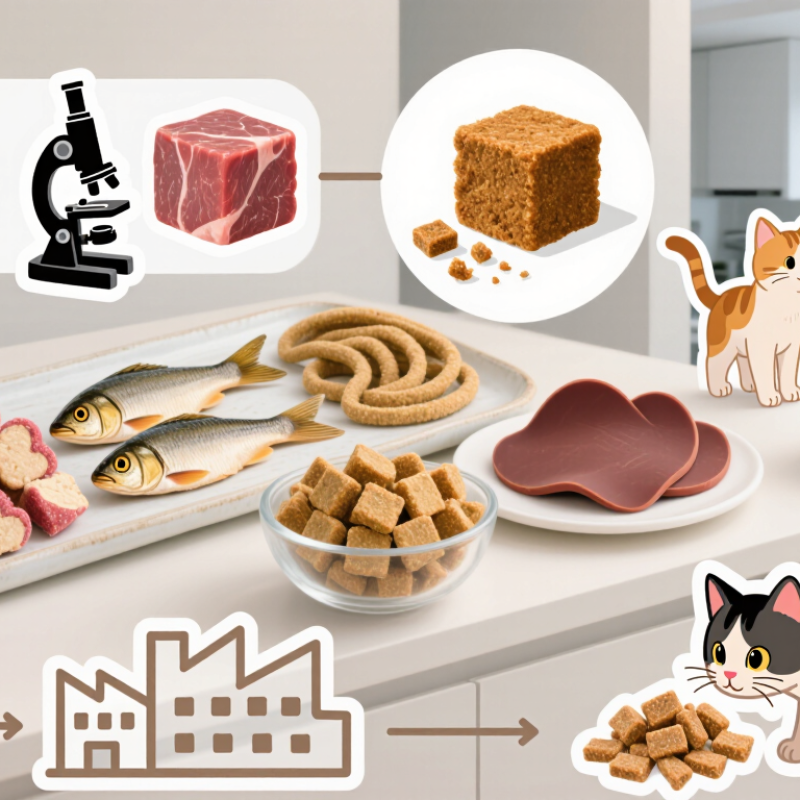
Freeze-dried cat treats are made by freezing ingredients, then removing moisture in a vacuum. This process preserves much of the original taste, texture, and aroma. It also creates a lightweight treat with a long shelf life. However, freeze-drying does not automatically destroy every harmful microorganism. Treats made from animal ingredients still need careful handling.
When choosing treats in 2026, read the AAFCO nutritional adequacy statement on the package. A statement such as “complete and balanced” means the food is intended to meet a cat’s nutritional needs for a specific life stage. Treats usually carry wording like “for intermittent or supplemental feeding only.” That wording matters. It means the product should not replace regular meals. AAFCO does not approve individual products, so do not treat its name as a quality guarantee. Check the ingredient list, calorie information, feeding directions, and manufacturer contact details. I once assumed a short ingredient list meant better nutrition. That is not always true.
Tips: Break larger pieces into small portions. Rehydrate them when your cat needs more moisture. Wash your hands after handling the treats. Store them in a sealed container and follow the package instructions. Introduce one new treat at a time, especially if your cat has digestive problems. Observe stool changes, itching, or vomiting. If anything seems unusual, stop feeding it and ask a qualified veterinarian. Good choices can still be imperfect. Individual cats respond differently.
How to Choose the Best Freeze-Dried Cat Treats in 2026
Freeze-dried treats are made by freezing raw or cooked ingredients and removing water under low pressure. Use the chart as a reference when checking whether a product makes an AAFCO nutritional adequacy claim.
The values show AAFCO adult-maintenance minimums on a dry-matter basis: 26% crude protein, 9% crude fat, 0.6% calcium, and 0.5% phosphorus. A treat should not be assumed to be a complete and balanced diet unless its label includes an appropriate AAFCO nutritional adequacy statement. Products labeled for intermittent or supplemental feeding are intended to complement, not replace, a complete cat food.
Reference: AAFCO Cat Food Nutrient Profiles; label values should be converted to dry-matter basis before comparison.
Compare Protein, Fat, Calories, and Moisture Using Guaranteed Analysis
Choosing freeze-dried cat treats starts with the guaranteed analysis, not the front label. That panel usually lists crude protein, crude fat, crude fiber, and moisture. Compare them on a dry-matter basis. Use this formula: nutrient percentage ÷ (100 − moisture) × 100. A treat showing 40% protein and 5% moisture equals 42.1% protein dry matter. If moisture reaches 40%, the same 40% label becomes 66.7%. This is a useful correction.
FEDIAF’s 2024 Nutritional Guidelines place adult-cat protein needs around 75 grams per 1,000 kilocalories, depending on life stage and formulation. That figure describes complete diets, not snacks. Treats should support, not replace, balanced meals. WSAVA’s Global Nutrition Toolkit recommends keeping treats below 10% of daily calories. Therefore, a 20-kilocalorie cube matters more for a small indoor cat than a 5-kilocalorie crumb. Check calories per treat, not only calories per 100 grams.
Freeze-drying preserves concentrated nutrients, but it does not make every recipe nutritionally equal. High fat can improve taste and raise calories quickly. Low moisture may help storage, yet fresh water must remain available. I would also inspect the serving size. Some labels look impressively meaty. Still, guaranteed analysis cannot reveal amino-acid quality, digestibility, or contamination risk. That limitation deserves honesty. For a cat with kidney disease, obesity, or food sensitivity, ask a veterinarian to interpret the numbers. Personal experience helps, but laboratory analysis and clinical context should lead.
How to Choose the Best Freeze Dried Cat Treats in 2026? - Compare Protein, Fat, Calories, and Moisture Using Guaranteed Analysis
Representative, non-branded guaranteed-analysis profiles for common freeze-dried treat formulas. Values are shown on an as-fed basis unless otherwise stated.
How to read the table: Guaranteed analysis lists minimum protein and fat levels and maximum fiber and moisture levels. A higher protein percentage does not automatically mean better quality; ingredient quality, digestibility, calories, and your cat’s health status also matter.
Dry-matter calculation: Protein on a dry-matter basis = protein percentage ÷ (100 − moisture percentage) × 100. This helps compare products with different moisture levels.
Calorie control: Freeze-dried treats are concentrated because most water has been removed. Use the package’s stated kcal/kg or kcal/treat when available, and keep treats at no more than about 10% of your cat’s daily calorie intake unless your veterinarian recommends otherwise.
Important: The figures above are representative reference profiles, not a substitute for the current guaranteed analysis printed on an individual package. Always rehydrate only as directed and provide fresh drinking water.
Assess Ingredients, Sourcing, Packaging, and Cat-Specific Safety Risks
Choosing the best freeze-dried cat treats in 2026 requires more than checking protein content. Read the ingredient list like a quality inspector. Named meats should appear clearly, without vague terms such as “animal derivatives.” AAFCO’s nutrient profiles guide complete diets, but treats are usually not nutritionally complete. Therefore, feeding directions still matter. Look for a transparent manufacturer, traceable sourcing, batch numbers, and a reachable customer-service address. “Made locally” sounds reassuring, yet it may not explain where the meat originated.
Safety deserves extra attention. Freeze-drying removes moisture, but it does not reliably eliminate every pathogen. In an FDA study of 196 raw pet-food samples, 15 tested positive for Salmonella and 32 for Listeria monocytogenes. Cats may tolerate certain bacteria better than people, but children, older adults, and immunocompromised household members face greater risks. Choose sealed, high-barrier packaging with an intact zipper or heat seal. Avoid swollen bags, torn edges, strong odors, or treats with unexplained moisture. My practical mistake was once trusting a premium-looking pouch without checking its lot code.
Tips: Select small pieces for controlled portions. Store treats cool and dry. Wash hands after handling. Discard leftovers if your cat develops vomiting or diarrhea. Check whether the package gives a clear “best by” date, storage instructions, and a recall contact. Some labels still leave questions unanswered. That is a warning, not a minor inconvenience.