

China Top 10 Vegetable Cutter Manufacturers in 2026?
Choosing a Vegetable Cutter manufacturer in China involves more than comparing prices or product photos. A machine that handles leafy greens may not cut firm carrots evenly. That sounds simple, but it matters on a busy production line. This guide introduces ten manufacturers relevant to buyers researching the market in 2026, with attention to product range, cutting capacity, construction, and service support.
A practical comparison should look closely at the details. Check the cutter’s blade options, feed-chute dimensions, adjustment range, and cleaning access. Ask whether the machine suits your target ingredients and daily output. For example, diced potatoes, sliced cabbage, and shredded carrots place different demands on a cutting system. Request current specifications, operating videos, and references where available. Verify claims directly with each supplier; company profiles and model names can change.
No single ranking will fit every buyer. A small food workshop may value a compact footprint, while a central kitchen may prioritize throughput and replacement-part availability. Price alone can hide important trade-offs. This overview is a starting point, not a factory audit or a guarantee of performance. The most useful shortlist comes from matching equipment to real production needs, then confirming the details before purchase.
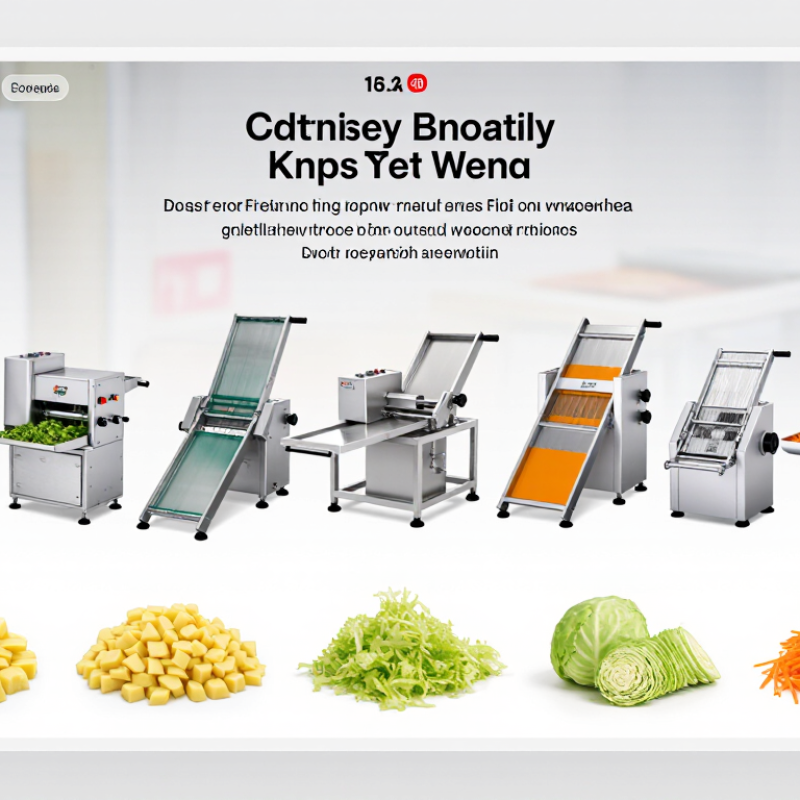
Vegetable Cutter Basics: Cutting Methods, Applications, and Rated Capacity in kg/h
A vegetable cutter is not defined by one blade or one output figure. Common cutting methods include slicing, dicing, shredding, and strip cutting. A slicing disc produces even rounds for cucumbers or potatoes. Dicing grids turn carrots and onions into cubes, though soft tomatoes may crush instead. Shredding suits cabbage and root vegetables; strip cutting is useful for fries or salads. Not always. Product firmness, size, and feed direction can change the result. A machine that handles cabbage well may struggle with sticky, ripe produce.
Applications range from small restaurant prep rooms to centralized food-processing kitchens. Rated capacity, shown in kg/h, helps estimate throughput, but it is not a guaranteed daily result. The figure may reflect a specific vegetable, cut size, and continuous feeding conditions. Actual output drops when operators sort produce, clear jams, change blades, or wash the unit. Compare ratings only when the test conditions are similar. Ask what product and cutting method were used for the stated capacity. A practical trial with your own vegetables can reveal more than a headline number. Measure usable cut product, not just the amount entering the hopper.
How to Evaluate Manufacturers: Output, Blade Materials, and Quality-System Evidence
A useful 2026 supplier comparison starts with repeatable output, not the largest number on a brochure. Ask manufacturers to cut the same vegetable at the same settings, then record kilograms per hour, slice thickness, waste, and stoppages. FAO’s 2023 assessment put global food loss at 13.2% in 2021, before retail. Efficient, consistent cutting cannot solve that problem alone, but poor yield can add avoidable waste. A short factory trial tells you more than a polished video.
Blade materials need evidence. Request the stated steel grade, hardness data, and a sample inspection for burrs, chips, and uneven edges. Confirm how blades are removed and cleaned; a sharp blade is useful only when operators can handle it safely. Ask for batch traceability and documented checks, not just a certificate on the wall. ISO 9001 evidence can indicate a quality-management system, but it does not guarantee every cutter performs well. That distinction is easy to miss.
Tips: Test hard and soft produce separately. Weigh usable cuts and scraps. Ask to see recent inspection records and the test conditions. If a supplier cannot reproduce its quoted capacity, pause and investigate. I would also revisit the evaluation after several weeks of use; one factory visit is only a snapshot.
China Vegetable Cutter Manufacturers: What to Evaluate in 2026
A practical evidence checklist for comparing production output, blade materials, and quality systems.
Each bar counts the evidence items listed for that evaluation area; it is not a manufacturer rating or market ranking. Verify rated capacity under stated test conditions, blade specifications and food-contact documentation, and current quality-system records such as certificates, traceability, and inspection logs.
Safety and Food-Processing Standards: ISO 12100:2010 and IEC 60204-1
In a 2026 supplier review, a vegetable cutter’s safety deserves as much attention as its cutting speed. ISO 12100:2010 provides a method for identifying machinery hazards, estimating risks, and reducing them. For a cutter, examine blade access, feed openings, cleaning tasks, jam removal, and unexpected restart. Ask how each hazard was assessed, rather than relying on a general safety statement. Small details matter. A guard may look sturdy but still be awkward to remove during cleaning.
IEC 60204-1 addresses electrical equipment on machinery. Review the wiring diagrams, emergency-stop arrangement, control circuits, and protection against electrical faults with a qualified person. Check what happens after a power interruption: does the machine restart automatically, or require a deliberate action? Request test records and clear maintenance instructions, then compare them with the equipment supplied. Documents help, but they cannot show every issue on the factory floor. A practical inspection should include operators’ reach, wet work areas, and the space needed to isolate power before servicing. Even a thorough checklist can miss a real-world snag. That is worth reflecting on when assessing any manufacturer.
China Top 10 Vegetable Cutter Manufacturers in 2026? - Safety and Food-Processing Standards: ISO 12100:2010 and IEC 60204-1
This table is a ten-point due-diligence framework for comparing vegetable-cutter suppliers. It does not identify or rank specific manufacturers, and it does not claim that any supplier or machine is certified or compliant. Request and independently verify supporting documents for each model.
| No. | Evaluation dimension | Relevant standard context | Evidence to request from the supplier | Verification outcome |
|---|---|---|---|---|
| 1 | Documented risk assessment | ISO 12100:2010 provides general principles for machinery risk assessment and risk reduction. | Model-specific hazard analysis covering intended use, foreseeable misuse, operating, cleaning, and maintenance tasks. | Verify for each model |
| 2 | Risk-reduction measures | ISO 12100:2010 describes a risk-reduction approach that considers inherently safe design, safeguarding, and information for use. | Design documentation showing identified hazards and the measures used to reduce associated risks. | Verify against the risk assessment |
| 3 | Access to blades and moving parts | ISO 12100:2010 is relevant to assessing mechanical hazards and selecting protective measures. | Drawings or inspection records for guards, covers, interlocks, and access points around cutting and feeding mechanisms. | Inspect the actual machine |
| 4 | Emergency-stop provisions | IEC 60204-1 covers electrical equipment of machines, including relevant control-system and emergency-stop requirements. | Electrical schematics, control descriptions, and functional test records for the emergency-stop system, where applicable. | Test and document |
| 5 | Electrical equipment and wiring | IEC 60204-1:2016+A1:2021 (Edition 6.1) sets general requirements for electrical equipment of machines. | Electrical drawings, component specifications, wiring details, and inspection or test records for the offered configuration. | Check against the supplied model |
| 6 | Isolation and maintenance safety | ISO 12100:2010 supports consideration of hazards during maintenance; IEC 60204-1 addresses machine electrical equipment. | Instructions and machine details for disconnecting energy sources, preventing unexpected start-up, and carrying out maintenance safely. | Review instructions and machine |
| 7 | Cleaning and food-contact suitability | ISO 12100:2010 concerns machinery safety; it is not, by itself, a food-contact-material certification. | Cleaning instructions and material declarations for food-contact parts; confirm applicable food-contact rules for the destination market. | Verify materials and local requirements |
| 8 | Operating instructions and warnings | ISO 12100:2010 includes information for use as part of the risk-reduction process. | Instructions for installation, operation, cleaning, foreseeable misuse, residual risks, and maintenance in the required language. | Review the final manual |
| 9 | Model-specific conformity evidence | Standards apply to the design and assessment scope stated in the relevant documentation; a certificate should not be assumed to cover every model. | Declarations, test reports, or certificates that identify the exact model, configuration, applicable standards, issuer, and validity or scope. | Authenticate and confirm scope |
| 10 | Production consistency and traceability | ISO 12100:2010 and IEC 60204-1 address machinery safety and electrical equipment, not a complete supplier-quality ranking. | Serial or batch traceability, inspection records, change-control procedures, and evidence that production units match the evaluated design. | Audit records and sample units |
China’s Top 10 Vegetable Cutter Manufacturers in 2026: Products and Capabilities
A useful 2026 comparison of ten Chinese vegetable-cutter manufacturers should examine more than catalog breadth. Product ranges may include manual slicers, batch-fed cutters, and continuous-processing lines for leafy vegetables, roots, and firm produce. Key differences show up in blade-change time, cut consistency, hourly capacity, and how easily operators can remove covers for cleaning. Ask suppliers to run your actual vegetables: a neat potato sample proves little about bruised tomatoes or wet cabbage.
FAO’s State of Food and Agriculture 2023 estimated that 13.2% of food was lost between harvest and retail in 2021. That figure covers the wider supply chain, not cutter performance, but it highlights why careful preparation matters.
For each manufacturer, request a documented test-cut result, food-contact material specifications, safety details, and a clear spare-parts plan. Check whether stated capacity reflects your required cut size and product condition; published throughput can be optimistic. Small details count. A machine that opens quickly and drains without trapped scraps may save more work than a higher headline speed. I would still verify cleaning time on site, because brochures rarely show the awkward corners.
How to Compare Suppliers: Throughput, Customization, Certifications, and Service Metrics
When comparing vegetable cutter manufacturers in 2026, look beyond advertised maximum output. Ask suppliers to test the same produce you use, such as firm carrots, leafy cabbage, or ripe tomatoes. Record kilograms processed per hour, cut-size consistency, and usable yield after trimming. A fast machine is not useful if it bruises delicate vegetables or creates excessive waste. Request a live demonstration or a sample-processing report. Real conditions matter.
Customization can include blade dimensions, feed openings, voltage, and washdown-friendly construction. Confirm that requested changes will not complicate cleaning or make replacement parts difficult to source. Review certificates against the machine model and intended market; do not rely on a certificate image alone. Check service response times, spare-part availability, warranty exclusions, and technician access. Details vary. Ask for these terms in writing. One point is easy to overlook: a supplier’s service promise means little without a named contact and a clear process for urgent breakdowns.
Tips: Send every shortlisted supplier the same test requirements and questions. Compare written answers in one sheet, including output, changeover time, cleaning time, and repair response. If a figure seems unusually precise, ask how it was measured. Your first comparison may still miss something; revise it after testing.