

China Top Coconut Perfume Manufacturers and Suppliers?
China Top Coconut Perfume Manufacturers and Suppliers? This question reflects a growing interest in China’s fragrance production capabilities. Coconut Perfume combines tropical sweetness with creamy, milky, and sometimes woody accords. Its appeal extends across personal fragrance, body care, candles, and home products.
Grand View Research valued the global fragrance market at approximately USD 50.85 billion in 2022. Its 2023–2030 analysis also projected steady annual growth. Other industry reports, including IMARC Group’s perfume market research, identify premiumization, online retail, and regional manufacturing as important market drivers. These figures cover broader fragrance categories, not coconut scents alone. That limitation matters.
China offers more than low-cost production. Established suppliers may provide fragrance compounding, private labeling, bottle sourcing, filling, and export documentation. Buyers should request IFRA conformity information, safety data sheets, allergen declarations, and batch traceability. ISO 22716 principles can also support better cosmetic manufacturing controls.
UN Comtrade data can help review China’s trade activity under HS 3303, covering perfumes and toilet waters. However, customs classifications rarely identify coconut notes separately. Therefore, trade figures cannot prove a supplier’s Coconut Perfume expertise. Samples reveal more. Observe the opening aroma, dry-down after four hours, oil clarity, spray performance, and packaging quality.
A supplier directory is never perfect. Some polished websites disclose little about production capacity or testing. This guide evaluates manufacturers through documented experience, formula development, quality systems, minimum order quantities, lead times, and communication. The strongest candidates should explain their process clearly, not merely promise competitive prices. Reliability requires verification, not assumption.
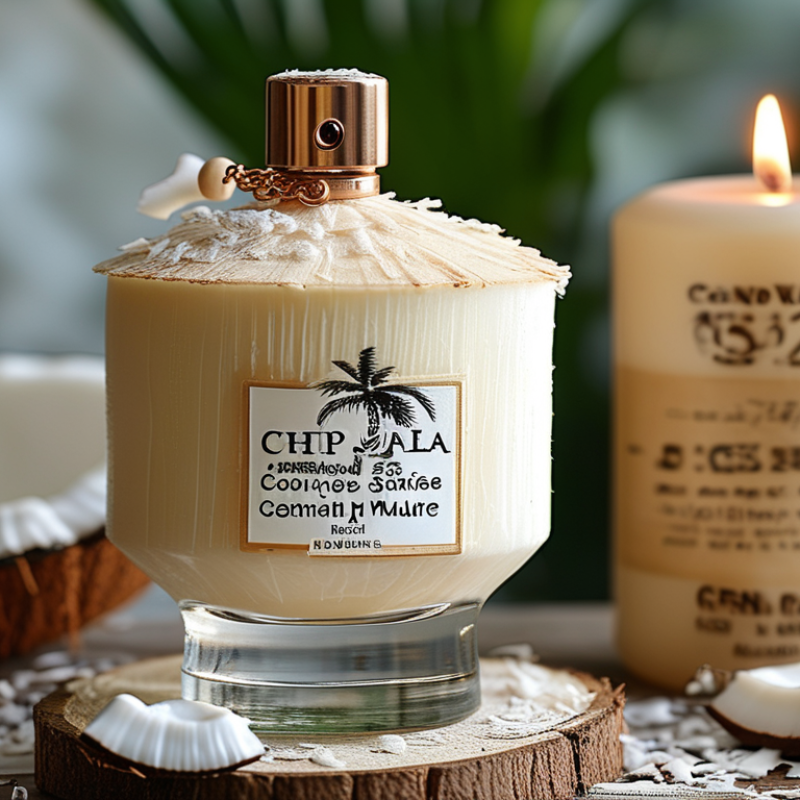
China’s Coconut Perfume Industry and Market Overview
China’s coconut perfume industry is expanding through personal fragrance, body mists, candles, and household scent products. Coconut appeals to consumers seeking creamy, tropical, and relaxing aromas. Demand rises during warmer months, but online sales keep the category active throughout the year.
Manufacturers commonly build coconut accords with aroma chemicals, natural extracts, or both. This approach improves stability because pure coconut materials can vary in strength and availability. Production activity is concentrated in major fragrance and cosmetics regions, including Guangdong, Zhejiang, and Jiangsu. Many suppliers offer OEM and ODM services, small trial batches, packaging support, and export documentation.
A careful buyer should request an ingredient list, safety data sheet, allergen information, and batch test records. IFRA guidance and destination-market labeling rules also matter. Supplier samples should be tested on skin and blotter paper for opening, dry-down, and lasting power. A pleasant first spray can fade quickly. That weakness deserves attention.
The market is not perfectly transparent. Some online listings describe “natural coconut” without explaining its actual composition. This can confuse buyers and weaken trust. Reliable suppliers usually provide clearer technical files, consistent batch numbers, and realistic claims. Pricing also varies widely because concentration, packaging, and minimum order quantities differ. A low quotation may exclude testing or customized artwork. Careful comparison remains essential.
| Market Dimension | Verified Data Point | Industry Interpretation | Public Reference or Data Status |
|---|---|---|---|
| Product Definition | Perfume and toilet water are classified under HS 3303. | Coconut perfume products are generally traded within the broader perfume and toilet-water category rather than under a separate coconut-perfume customs category. | Customs Classification UN Comtrade HS 3303 |
| Market Reporting | Public customs and industry statistics do not normally report “coconut perfume” as an independent market segment. | Market size, exports, imports, and supplier rankings for coconut-scented perfume must be estimated from broader fragrance, cosmetics, or HS 3303 datasets. | Not Separately Reported UN Comtrade and Chinese customs classification structure |
| Domestic Coconut Supply | Hainan is China’s principal coconut-growing region, supported by a tropical climate suitable for commercial coconut cultivation. | Hainan is the most relevant domestic origin for coconut-based ingredients, coconut-themed product development, and regional agricultural cooperation. | Verified Fact Hainan Provincial Department of Agriculture and Rural Affairs; FAOSTAT crop data |
| Raw-Material Dependence | China’s domestic coconut production is limited compared with the scale of domestic demand for coconut products, so imported coconuts and coconut-derived materials are important to the supply chain. | Manufacturers may need to manage import documentation, origin verification, quality testing, and price fluctuations for coconut oil, coconut milk, coconut water, and related materials. | Verified Industry Condition FAOSTAT production data; UN Comtrade coconut-product trade data |
| Common Coconut Odor Profile | Coconut fragrance accords are commonly described as creamy, milky, lactonic, sweet, tropical, and sometimes lightly toasted. | Finished perfumes often combine coconut notes with vanilla, amber, white musk, citrus, floral, marine, or woody accords to improve balance and lasting impression. | Fragrance Formulation Practice IFRA fragrance standards and professional perfumery terminology |
| Ingredient Supply Categories | Relevant suppliers generally fall into four groups: natural coconut materials, aroma-chemical suppliers, fragrance compound houses, and finished-product contract manufacturers. | Buyers should distinguish between a raw-material supplier, a fragrance-compound developer, and a factory capable of filling and packaging finished perfume. | Supply-Chain Structure Cosmetics and fragrance industry supply-chain practice |
| Natural Coconut Materials | Potential materials include coconut oil, coconut-derived emollients, coconut extracts, coconut water ingredients, and coconut-based surfactants. | These ingredients may contribute texture, skin feel, storytelling, or supporting sensory effects; they do not automatically provide a strong or long-lasting coconut perfume odor. | Ingredient Function Cosmetic ingredient technical documentation and INCI nomenclature resources |
| Odor Performance | Natural coconut materials and coconut aroma accords have different volatility, stability, allergen, and discoloration characteristics. | Supplier assessment should include odor blotter tests, skin compatibility testing, stability testing, color evaluation, and compatibility with alcohol, oils, and packaging materials. | Technical Evaluation Requirement IFRA guidance and cosmetic product stability-testing practice |
| Manufacturing Locations | China’s fragrance and cosmetics manufacturing base is distributed across several industrial regions, including Guangdong, Zhejiang, Jiangsu, Shanghai, and other coastal manufacturing areas. | Production location alone does not prove coconut-perfume expertise; buyers should verify formulation capability, filling equipment, quality systems, and export experience. | Manufacturing Geography China cosmetics industry and regional manufacturing-cluster information |
| Regulatory Framework | China’s cosmetics sector is governed primarily by the Cosmetics Supervision and Administration Regulation, effective from 2021. | Perfume products marketed as cosmetics must meet requirements covering product notification or registration, safety assessment, labeling, responsible-person obligations, and post-market supervision. | Regulatory Requirement National Medical Products Administration, Cosmetics Supervision and Administration Regulation |
| Product Classification | Ordinary perfume products are generally treated as general cosmetics when they do not make special-use claims. | Claims related to fragrance, freshness, or sensory experience are different from claims involving sun protection, hair dyeing, hair perming, or other special functions that may trigger different requirements. | Regulatory Classification National Medical Products Administration cosmetics regulations |
| Safety Documentation | Cosmetic products placed on the Chinese market require product safety information and compliant ingredient and labeling documentation. | Supplier qualification should include ingredient specifications, certificates of analysis, safety data sheets where applicable, allergen information, and traceability records. | Compliance Documentation NMPA regulations and China’s Cosmetic Safety Technical Specifications |
| Fragrance Safety Standard | IFRA Standards are widely used internationally as a voluntary industry safety framework for fragrance ingredients and fragrance compositions. | For export-oriented coconut perfumes, buyers should request the applicable IFRA certificate or conformity information for the intended product category and dosage. | International Practice International Fragrance Association Standards |
| Packaging Requirements | Perfume packaging commonly includes a glass bottle, pump or spray system, cap, secondary carton, and transport packaging. | Alcohol-containing perfume requires compatibility checks for glass, plastic components, coatings, adhesives, labels, and closure systems, together with transport and leakage testing. | Packaging Requirement Cosmetic packaging and dangerous-goods transport practices |
| Supplier Evaluation Criteria | Key evaluation factors include formulation capability, fragrance compliance, batch consistency, minimum order quantity, filling capacity, packaging sourcing, quality control, and export documentation. | A structured technical and commercial audit is more reliable than selecting a supplier solely by online product listings or general factory claims. | Procurement Framework Standard cosmetics and fragrance procurement practice |
| Public Supplier Ranking | There is no universally accepted public ranking of China’s “top coconut perfume manufacturers and suppliers.” | Supplier shortlists should be developed using verifiable evidence such as legal registration, production qualifications, audited capacity, sample performance, compliance records, and customer references. | No Official Ranking Public market-data availability assessment |
| Market Opportunity | Coconut is a recognizable tropical fragrance theme that can be used in perfume, body mist, hair fragrance, scented body care, and home-fragrance products. | Growth opportunities are more likely to come from differentiated scent profiles, clean-label positioning, tropical lifestyle concepts, seasonal launches, and coordinated product lines rather than coconut odor alone. | Product-Development Insight Fragrance-category product development practice |
Related Posts
-

How to Choose the Perfect Coconut Perfume for Your Unique Style
-
Global Market Trends for Best Coconut Perfume in 2025 Insights and Case Studies
-

The Future of Fragrance: Embracing Coconut Scented Perfume in Modern Aromatherapy
-

Mastering the Art of Choosing the Best Scent Perfume for Every Occasion
-
How to Choose the Best Organic Perfume for Your Unique Personality
-

Discover the Allure of Natural Scent in Modern Global Sourcing Solutions