

China Best Organic Panko Supplier for Global Buyers

Organic Panko is moving from a niche ingredient toward a practical option for international food manufacturers. Its appeal is clear: crisp texture, light color, and a cleaner ingredient story for breaded seafood, vegetables, and plant-based foods. However, global buyers need more than attractive packaging. They need verified organic certification, stable particle size, controlled moisture, and reliable shipment performance.

The FiBL and IFOAM Organics International report recorded global organic retail sales of approximately €135 billion in 2022. Organic farmland also reached about 96.4 million hectares. These figures show strong market confidence, although they do not measure Organic Panko separately. That gap matters. Panko demand can vary sharply by region, application, and food-service format. Published estimates should therefore be read carefully.

Amarjit Sahota, founder of Organic Monitor, has emphasized that “organic growth depends on credible standards and supply-chain transparency.” This principle fits Organic Panko sourcing closely. Buyers should examine wheat origin, processing controls, allergen management, packaging integrity, and certification validity. A dependable supplier should provide batch documentation, product specifications, and practical export experience. Small details matter. A crushed carton can damage a whole delivery.

The category is not flawless. Organic wheat availability, price changes, and inconsistent flake structure can create real pressure. Suppliers must acknowledge these weaknesses rather than hide them. China offers competitive processing capacity and extensive export infrastructure, but supplier evaluation remains essential. The strongest partner combines transparent evidence, responsive communication, and repeatable quality. That is the standard global buyers should expect from a China Organic Panko supplier.
China Best Organic Panko Supplier for Global Buyers

Organic Panko: Definition, Features, and Global Market Applications

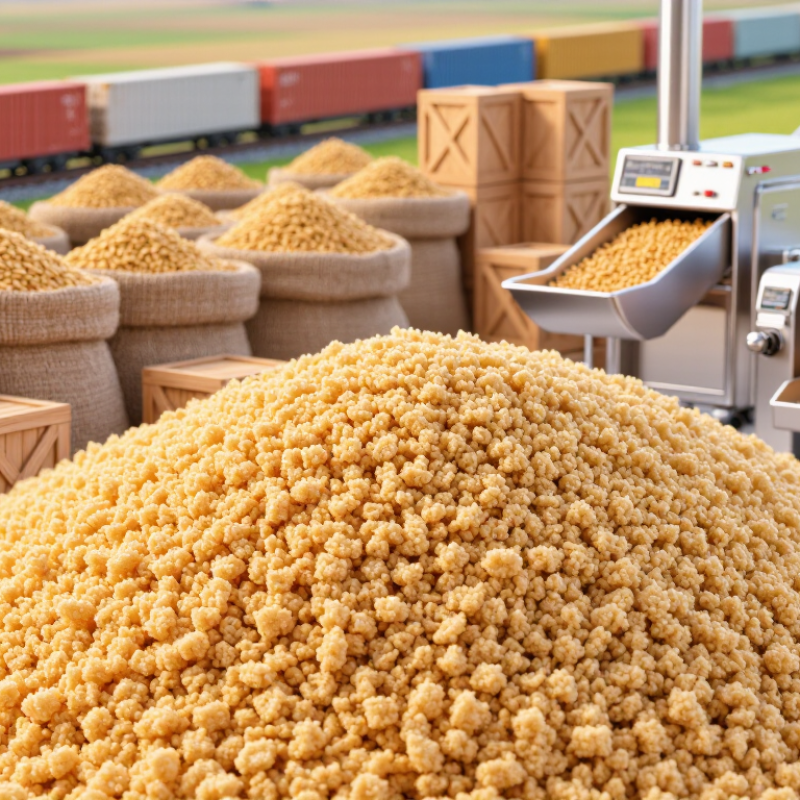
Organic panko is a coarse, airy breadcrumb made from organic wheat flour, water, yeast, and salt. Its flakes are larger than ordinary breadcrumbs, creating a crisp shell with a lighter bite. Production quality matters. Even small moisture changes can soften the texture.

In practical sourcing, buyers should check organic certificates, ingredient declarations, allergen controls, and batch traceability. Requirements differ across importing markets, so one certificate may not satisfy every buyer. Samples should be tested after frying, baking, and storage. The flakes may brown quickly, but results depend on oil temperature and coating thickness. This is where specifications alone can mislead.

Organic panko suits frozen seafood, poultry, tofu, croquettes, and baked vegetables. Foodservice kitchens value its visible flakes and consistent coverage. Retail packs often need strong moisture barriers, especially in humid shipping routes from China. Organic does not mean gluten-free, low-calorie, or allergen-free. That distinction is important. One practical weakness is cost: organic raw materials and careful segregation can raise the final price. Some buyers also expect identical color in every shipment, although wheat variation makes perfect uniformity difficult. Reliable suppliers should explain these limits clearly, provide production records, and adjust flake size for different applications.

Key Standards for Evaluating an Organic Panko Supplier

China Best Organic Panko Supplier for Global Buyers
Key Standards for Evaluating an Organic Panko Supplier

Choosing an organic panko supplier requires more than checking a certificate logo. The 2024 FiBL and IFOAM report valued global organic retail sales at €134.8 billion in 2022. This growth increases the need for reliable documentation and consistent production.

Request a valid organic certificate covering the actual panko facility, not only the exporting company. Check the certification scope, renewal date, ingredient list, and processing location. Suppliers should also explain wheat sourcing, yeast use, oil handling, and packaging materials. Organic claims must follow the buyer’s target-market rules, such as USDA organic requirements or European Regulation 2018/848.

Traceability matters greatly. A strong supplier can connect each shipment to a production batch, ingredient record, and laboratory report. Ask for moisture, microbiological, pesticide-residue, and allergen-control results. Particle size should remain stable, because uneven flakes can create weak coating performance and excessive oil absorption. Small details matter.

Food safety systems deserve careful review. Look for documented HACCP procedures, sanitation records, foreign-material controls, and independent audit results. The Global Food Safety Initiative reported thousands of recognized certified sites worldwide, showing how widely audited systems support buyer confidence. However, certification alone is not enough. I would still inspect the plant, test samples, and compare results across several shipments. A polished file can hide inconsistent production. That is where careful judgment becomes necessary.

Production, Certification, and Quality Control Processes

China’s organic panko sector serves buyers seeking traceable, clean-label ingredients. The FiBL and IFOAM 2024 report recorded €134.8 billion in global organic retail sales in 2022. That growth increases pressure on suppliers to prove every production step.

Reliable production starts with certified organic wheat flour and segregated storage. Operators should inspect incoming flour, record lot numbers, and control temperature and humidity. Dough is mixed, baked, cooled, and milled into flakes under documented conditions. Metal detection follows screening. A practical supplier also checks particle size, moisture, color, and microbiological safety for each batch. Texture matters. Crisp flakes should remain light and evenly shaped after frying.

Certification needs evidence, not attractive wording. Buyers should request valid organic certificates, scope statements, audit records, and transaction certificates. Certification must cover the actual facility and product category. Food safety systems based on HACCP principles and ISO 22000 requirements strengthen control, while laboratory testing can verify pathogens, pesticide residues, allergens, and contaminants. The Codex Alimentarius organic guidelines provide useful international reference points, but importing-country rules still require separate review.

No audit is perfect. Human sampling can miss variation. Suppliers should therefore retain sealed samples, investigate complaints, and document corrective actions. One weak point remains cross-contact during changeovers, especially when conventional and organic lines share equipment. Clear scheduling, validated cleaning, and independent verification reduce that risk. Global buyers should assess records, not promises.

Packaging, Shipping, and Import Requirements for Global Buyers

China Best Organic Panko Supplier for Global Buyers

Packaging, Shipping, and Import Requirements for Global Buyers

Reliable export planning starts with packaging that protects texture, certification, and traceability. Organic panko should sit inside a food-grade inner bag with strong moisture resistance. Outer cartons need clear lot numbers, net weight, origin, production date, and best-before date. Cartons should be tested against compression during pallet stacking. Small details matter.

For ocean shipping, moisture is the main concern. Desiccants can help inside sealed containers, but they do not replace dry storage. Use clean pallets, stable carton patterns, and container inspections before loading. A practical shipping file should include the commercial invoice, packing list, bill of lading, certificate of origin, organic certificate, and certificate of analysis when requested. Buyers should confirm whether destination authorities require extra documents.

Import rules can differ by country and product classification. Confirm the correct HS code with a customs broker before placing a large order. Check ingredient statements, allergen declarations, label language, organic claims, and permitted additives. Some markets may request facility records or border inspection documents. Do not assume one certificate works everywhere. That mistake is common. Leave enough shelf life for customs delays, warehouse handling, and retail distribution. A perfect plan can still miss a local labeling rule, so review a draft label with the importer before production.

China Best Organic Panko Supplier for Global Buyers - Packaging, Shipping, and Import Requirements for Global Buyers

Data Dimension Typical Requirement or Specification Global Buyer Considerations
Product Definition Organic panko is a coarse, light-textured breadcrumb made from organic wheat-based bread. Confirm whether the destination market permits the product to be marketed as “organic.”
Common Particle Sizes Fine: approximately 0.5–1.5 mm; medium: approximately 1.5–3.0 mm; coarse: approximately 3.0–5.0 mm. Particle-size tolerances should be confirmed by sieve analysis or an agreed product specification.
Typical Moisture Level Usually controlled at approximately 8–12%, subject to the agreed technical specification. Lower moisture generally supports crispness and storage stability, but the contractual limit should be confirmed before production.
Ingredient Declaration Typically includes organic wheat flour, water, yeast, salt, and other permitted ingredients if used. The final ingredient list must match the destination country’s labeling rules and the organic certificate scope.
Main Allergen Wheat and gluten are normally present unless a separately validated formulation is supplied. Allergen declarations and precautionary statements must follow the importing market’s regulations.
Retail Packaging Options Common formats include 200 g, 500 g, 1 kg, and 2 kg pouches or stand-up bags. Packaging should provide moisture and oxygen protection and be suitable for food contact.
Bulk Packaging Options Common commercial pack sizes include 10 kg and 20 kg food-grade lined bags or cartons. Use sealed inner liners and strong outer cartons or bags to reduce moisture exposure during transport.
Palletization Cartons are commonly stacked on pallets, stretch-wrapped, and protected with corner boards where required. Confirm pallet dimensions, maximum stack height, gross weight, and whether heat-treated pallets are required.
Shelf Life Commercial panko commonly has a shelf life of approximately 9–18 months when unopened and stored correctly. The actual shelf life must be supported by stability data and printed with the required date format.
Storage Conditions Store in a cool, dry, clean area, away from direct sunlight, pests, strong odors, and condensation. Avoid placing cartons directly against damp floors or walls during warehousing and transit.
Organic Certification A valid organic certificate and transaction or scope documentation may be required, depending on the market. The certificate should cover the product, processing site, ingredients, and intended export activity.
Food-Safety Documentation Typical documents include a specification sheet, certificate of analysis, allergen statement, microbiological results, and batch traceability records. Document requirements vary by buyer, product category, and importing authority.
Common HS Classification Often considered under HS heading 1905.90 for other bread, pastry, cakes, biscuits, and similar bakery products. The final tariff code may differ by country; confirm it with the importer or customs broker before shipment.
Import Label Elements Product name, ingredient list, allergen declaration, net quantity, lot number, date marking, storage instructions, origin, and responsible food-business operator details. Label language, nutrition format, units, organic wording, and importer information depend on the destination market.
Export Documents Commercial invoice, packing list, bill of lading or air waybill, certificate of origin when requested, and relevant health or organic documents. Document names and legalization requirements should be confirmed before cargo dispatch.
Typical Shipping Modes Ocean freight is generally used for larger consignments; air freight is used for urgent or smaller shipments. Select the mode according to volume, required delivery date, product shelf life, and landed-cost target.
Pre-Shipment Checks Verify approved artwork, product specification, batch coding, packaging integrity, loading photos, seal number, and document consistency. A pre-shipment inspection can help identify label, quantity, packaging, and moisture-control issues before export.

Note: Values shown are typical industry ranges and planning references. Final specifications, tariff treatment, certification, labeling, and import requirements must be confirmed for the specific destination country and shipment.

How to Select the Best Organic Panko Supplier for Your Business

Selecting the best organic panko supplier requires more than checking a low quotation. According to the FiBL and IFOAM Organics International 2024 report, global organic retail sales reached approximately €135 billion in 2022. This growth increases supplier pressure, but certification details still matter. Ask for a valid organic certificate, audit scope, renewal date, and product-level approval. A general factory certificate may not cover every panko line.

Review the raw material source, breading texture, moisture level, particle size, and frying performance. A reliable supplier should provide recent laboratory results for microbiological safety, pesticide residues, allergens, and heavy metals. Request batch traceability from grain intake to packed cartons. ISO 22000-based food safety controls can strengthen confidence, but paperwork alone cannot replace a factory assessment. Check storage rooms, pest controls, staff hygiene, and packaging seals. Small details often expose larger weaknesses.

Tips: Test three production batches, not one sample. Measure crispness after cooking and again after ten minutes. Confirm minimum order quantities, lead time, carton strength, and shipping conditions. Ask how the supplier handles rejected batches. The answer may reveal more than a polished presentation. I would also compare retained samples after delivery, because texture can change during storage. Suppliers sometimes promise uniform crumbs; real production may vary slightly. That variation should be measured, explained, and controlled.