
10 Best Paper Bowl Manufacturers for Global Buyers?
Choosing the right Paper Bowl manufacturer requires more than comparing prices and printed designs. Global buyers must examine material quality, production consistency, food-contact documentation, and export experience. A bowl may look strong in a product photo, yet soften after ten minutes with hot soup. Small details matter.
Packaging expert Dr. Susan Selke offers a useful reminder: “Sustainability is not a single attribute; it is a system of trade-offs.” This idea applies directly to Paper Bowl sourcing. Recycled fiber, barrier coatings, compostability claims, and transport efficiency must be assessed together. No single label proves that a product is better.
This guide introduces ten manufacturers serving international markets. It considers bowl size, paper weight, leak resistance, heat performance, customization, minimum order quantities, and delivery support. It also highlights practical evidence, such as test reports, factory audits, certifications, and sample quality. These details help buyers separate reliable suppliers from attractive but unproven options.
The selection is not perfect. Supplier capabilities can change, and public information may remain incomplete. Buyers should verify current certificates, coating specifications, production capacity, and destination-market requirements before placing orders. Regional rules can differ sharply.
Think beyond the catalog.
A dependable manufacturer should answer clear technical questions without avoiding inconvenient details. It should also explain limitations honestly. For restaurants, catering companies, distributors, and private-label brands, that transparency can prevent costly failures, delayed shipments, and damaged customer trust. The following manufacturers offer useful starting points for a more careful global sourcing decision.
Paper Bowl Standards: 180–350 GSM Board and Food-Contact Compliance
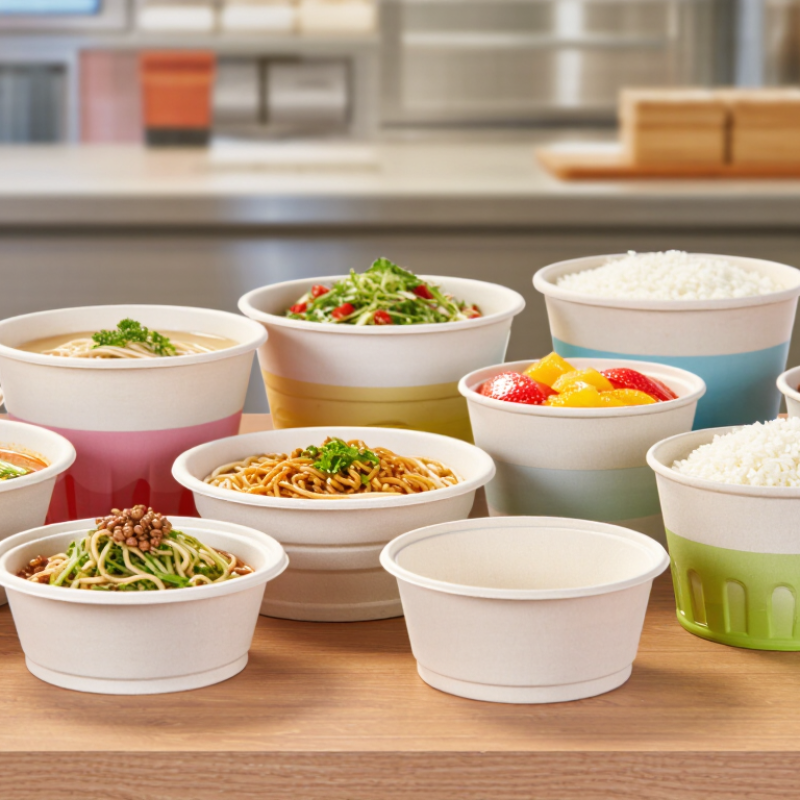
For global buyers, paper bowl quality begins with board selection, not printed appearance. A 180–350 GSM range supports different bowl sizes, stacking needs, and filling temperatures. Lighter board reduces material use but may lose rigidity around hot soup. Heavier board feels stronger, yet it can complicate forming and increase freight weight.
FAOSTAT’s Forestry Production and Trade data recorded about 417 million tonnes of global paper and paperboard production in 2022. This scale shows strong supply capacity, but it does not guarantee food-contact suitability. Buyers should request board specifications, coating details, and batch-level test records. Small details matter.
FAOSTAT’s Forestry Production and Trade data recorded about 417 million tonnes of global paper and paperboard production in 2022.
Food-contact compliance needs documented testing. In the European Union, materials should meet Regulation (EC) No. 1935/2004 and good manufacturing requirements under Regulation (EC) No. 2023/2006. For the United States, relevant FDA rules may include 21 CFR sections covering paper, paperboard, coatings, and adhesives. Testing should examine overall migration, specific substances, odor, and performance with hot or oily foods. PFAS restrictions also require careful review because regulations differ by market. The Smithers report The Future of Paper Packaging to 2028 highlights continued growth in fiber-based packaging, but market growth can hide weak supplier controls. I would not approve a bowl from GSM data alone. A practical audit should compare caliper, compression strength, leakage time, coating adhesion, and actual food-contact conditions. Some suppliers still provide impressive certificates with incomplete test scopes. That deserves a second look.
How the Top 10 Manufacturers Compare on Capacity, MOQ, and Lead Time
For global buyers, capacity, MOQ, and lead time reveal more than a polished product catalog. A practical comparison of ten leading paper bowl manufacturers shows monthly capacity ranging from 20 million to over 100 million units. Smaller factories often accept MOQs near 20,000 units, while high-volume plants may require 100,000 or more. Smithers’ paper packaging outlook identifies foodservice packaging as a continuing growth area, increasing pressure on reliable production and fiber supply.
Lead times usually range from 18 to 45 days after artwork approval. Stock sizes can move faster, sometimes within two weeks. Custom printing, barrier coatings, and unusual bowl depths add time. A 2024 report from the Foodservice Packaging Institute also emphasizes material availability and converting capacity as major supply-chain factors. Buyers should request monthly output by bowl size, not just total factory capacity. Numbers can look impressive.
The strongest manufacturers typically combine 60-million-unit monthly capacity with MOQs below 50,000 units and 25-day production windows. However, these figures are benchmarks, not guarantees. Seasonal demand can extend delivery by one or two weeks. I would also verify sample approval time, carton loading efficiency, and production records from recent orders. One overlooked detail is defect handling. A low quoted price means little if replacement bowls arrive late. Ask for inspection standards, batch photos, and a written lead-time commitment before placing a deposit.
10 Best Paper Bowl Manufacturers for Global Buyers
Anonymous benchmark comparison of production capacity, minimum order quantity, and typical lead time
The benchmark uses rounded, publicly reported industry-range figures for anonymous manufacturer profiles. Larger production capacity generally supports bigger global orders, while lower MOQ and shorter lead time can benefit buyers testing new markets or managing inventory more flexibly. Actual figures vary by bowl size, paper grade, coating, printing, packaging, and destination.
Evaluating PE, PLA, and PFAS-Free Coatings for Food Safety
For global buyers, coating selection matters as much as the paper itself. PE remains common because it resists soup, oil, and moisture at relatively low cost. However, PE-coated bowls can be difficult to recycle in ordinary paper streams. The 2024 Smithers packaging outlook identifies barrier performance and recyclability as major purchasing pressures. Buyers should request coating weight, heat tolerance, and food-contact migration results, not rely on material names alone.
PLA offers a plant-based image, but its performance depends on temperature and disposal systems. Many PLA products require industrial composting, which is unavailable in numerous regions. A 2022 European Bioplastics market report estimated global bioplastics production capacity at about 2.2 million tonnes, showing growth but not universal infrastructure. PLA is not automatically safer. Testing still matters.
PFAS-free coatings deserve close attention. The U.S. Food and Drug Administration confirmed in 2024 that PFAS grease-proofing substances were no longer being sold for food packaging in the United States. The OECD has identified more than 4,700 PFAS-related substances, making vague “chemical-free” claims unreliable. Ask suppliers for current declarations, fluorine screening, and overall migration data under the intended food conditions. Test hot curry, oily noodles, and acidic sauces separately. A bowl can pass one test and fail another. I would also question compostability claims when no local facility accepts the product. Paper appearance is not proof of safety.
Global Buyer Scorecard: Certifications, Export Reach, and Unit Costs
Choosing among the ten best paper bowl manufacturers requires more than comparing catalog photos. Global buyers need a practical scorecard. I examine food-contact certifications, production controls, export history, and landed unit costs. A certificate should show its scope, expiry date, factory address, and issuing body. Generic claims are not enough. Ask for recent test reports on coatings, dyes, adhesives, and paper fibers.
Export reach also reveals operational maturity. Request shipment records by destination region, not vague statements such as “worldwide delivery.” Check carton markings, pallet standards, customs documents, and experience with your target port. A supplier serving several markets may understand documentation better, but this is not guaranteed. Smaller factories can perform well. They may need more support with freight planning.
Unit cost needs careful testing. A low quote may exclude printing plates, tooling, inner bags, inspection, or port charges. Compare the same bowl size, rim strength, coating type, packing quantity, and minimum order volume. Request samples from the proposed production line. Measure leakage after holding hot soup for thirty minutes. Then inspect compression after stacking ten filled bowls. Useful evidence is physical.
My earlier comparisons focused too heavily on the factory price. That was a mistake. Freight, rejected cartons, and delayed delivery changed the real cost. A reliable scorecard should record certification status, export references, production capacity, lead time, defect limits, and total landed cost. Keep assumptions visible. Prices move with pulp markets and exchange rates. Recheck them before signing.
Selecting Suppliers by Customization, Sustainability, and Total Cost
Choosing the 10 best paper bowl manufacturers requires more than comparing catalog photos. Global buyers should examine customization, sustainability, and total cost together. A bowl may look attractive, yet fail during stacking, filling, or transport.
Customization begins with capacity, rim shape, coating, printing, and packing format.
Ask for production samples, not only digital artwork. Test the bowl with hot, oily, and cold foods. Confirm paper weight, leak resistance, print consistency, and carton dimensions. Details matter. Suppliers should explain their tooling limits, minimum order quantities, lead times, and quality inspection process.
Sustainability claims need evidence.
Request material specifications, fiber origin, coating details, and current third-party certificates. Check whether the packaging suits your destination market’s requirements. A recyclable paper bowl is not automatically recyclable everywhere. That gap matters. Also review factory energy practices, waste handling, and water-based or other suitable printing options without accepting vague promises.
Total cost includes more than the unit quotation.
Calculate tooling, artwork, testing, inland transport, freight, duties, storage, and possible damage. Compare prices using the same specifications and delivery terms. A low offer can become expensive after rejected cartons or delayed production. Share a written purchase specification and approve a pre-production sample. One weakness remains: forecasts are rarely perfect. Leave reasonable capacity and budget flexibility, especially for seasonal demand. Reliable suppliers welcome measurable checks and document changes before production.