7 Best Liner Plate Materials for Global Buyers?
Choosing the right Liner Plate Material can determine whether a mill runs smoothly or loses valuable production hours. Global buyers often compare wear life, impact resistance, installation time, and total ownership cost. The cheapest plate may become expensive after repeated shutdowns.
This guide examines seven widely used options: manganese steel, high-chrome white iron, rubber, polyurethane, ceramic, composite plates, and hardened alloy steel. Each material behaves differently under real operating conditions. A large ball mill handling sharp, heavy ore needs different protection from a smaller machine processing fine, abrasive sand. Temperature, moisture, feed size, mill speed, and discharge design also influence performance. Small details matter.
Field experience shows that laboratory hardness alone cannot predict service life. A supplier may report excellent abrasion results, yet the same plate can fail early under severe impact. Installation quality matters too. Uneven bolt tightening, incorrect gaps, or trapped material can damage even a premium lining. Buyers should request test data, dimensional drawings, traceability records, and references from similar plants. Independent inspection can strengthen confidence.
There is no universal winner.
Cost calculations should include freight, replacement labor, downtime, and disposal. Local support may matter more than a slightly lower quotation. Some recommendations remain uncertain without site data, and that limitation should be stated clearly. This article helps global buyers compare each Liner Plate Material realistically, balancing technical evidence with practical operating experience. The final decision should follow measured wear patterns, verified supplier claims, and the conditions inside the actual equipment.
What Liner Plates Are and Why Material Choice Matters
Liner plates are replaceable protective panels installed inside chutes, hoppers, mills, and transfer points. They absorb impact, reduce abrasion, and protect the main structure from costly wear. Their service life depends on more than thickness. Material choice controls how the plate handles impact, sliding friction, heat, noise, and moisture.
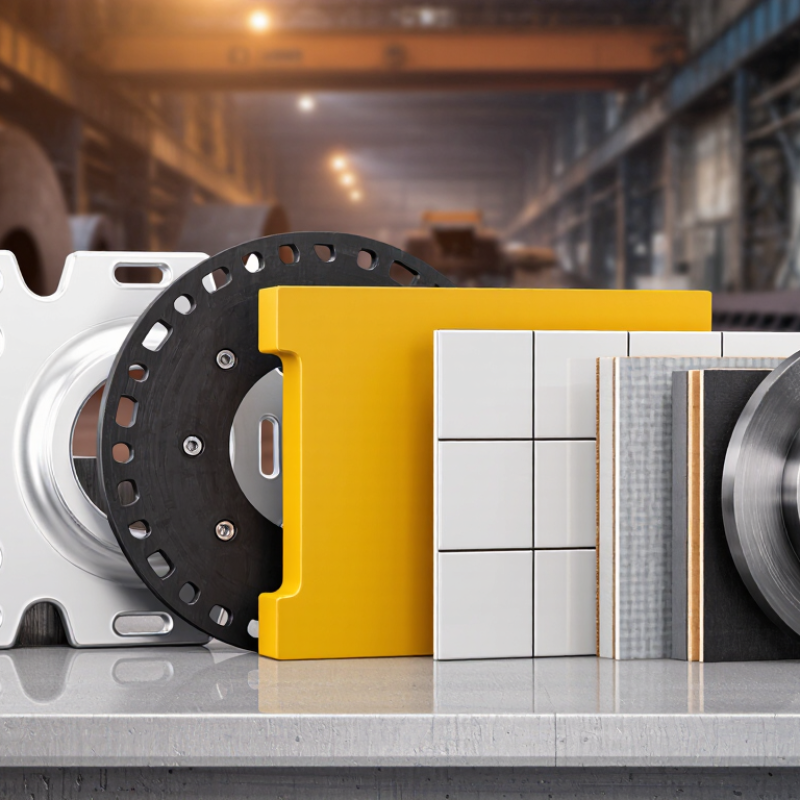
Common options include abrasion-resistant steel, manganese steel, chromium alloy, rubber, polyurethane, ceramic, and composite plates. Each material has a different working advantage. Steel suits heavy impact and sharp rock. Rubber helps reduce noise and manages wet, sticky materials. Ceramic offers strong abrasion resistance but may crack under severe impact. Polyurethane performs well where flexibility and lower weight matter. There is no perfect plate.
The right choice begins with site evidence. Measure material size, drop height, speed, temperature, moisture, and failure patterns. A plate that survives dry sand may fail quickly under large, angular stone. In field inspections, uneven bolt pressure often causes premature damage, even with excellent material. That detail is easy to miss. Buyers should request test data, chemical composition, hardness ranges, dimensional tolerances, and traceable quality records. Samples or small trial sections can reveal performance better than a catalogue claim. Cost also needs a wider view. A cheaper plate may require frequent shutdowns, while a higher-cost option may reduce replacement labor. Still, specifications should be checked carefully, because “long life” is not a universal promise.
7 Best Liner Plate Materials for Global Buyers
What liner plates are and why material choice matters
Liner plates protect chutes, hoppers, mills, crushers and other equipment from abrasion, impact and corrosion. This chart compares representative material densities, which affect plate weight, handling requirements and structural loading.
High-chromium white iron and chromium carbide overlay plates are commonly selected for severe abrasion. Manganese steel is preferred where heavy impact and work hardening are important. Alumina ceramic, rubber and polyurethane provide lightweight alternatives for specific wear, noise and impact conditions. Actual performance depends on grade, thickness, temperature, particle size, impact energy and operating environment.
Density values are representative engineering values in g/cm³ and may vary by grade, composition and manufacturing process.
Seven Leading Liner Plate Materials for Different Applications
Seven leading liner plate materials serve different wear conditions. Abrasion-resistant alloy steel suits chutes, hoppers, and crusher bodies. Its balance of hardness, weldability, and impact strength remains practical. Global crude steel output reached about 1.89 billion tonnes in 2023, according to World Steel Association data. That scale supports broad availability, but quality still varies by mill and heat treatment.
High-manganese steel hardens under repeated impact, making it useful for jaw crushers and railway crossings. The USGS estimated global manganese mine production at roughly 20 million metric tons in 2023. Chromium white iron offers excellent sliding-abrasion resistance, while Ni-hard performs well in pumps and grinding equipment. Ceramic liners, especially alumina-based grades, handle severe abrasion with low weight. They can crack under sharp impact. Rubber liners reduce noise and absorb impact in mills and transfer points. Polyurethane works well against fine particles, moisture, and moderate abrasion. It often weighs less than steel.
Material selection should follow measured conditions, not habit. ASTM wear-testing methods can support comparisons, but laboratory results rarely reproduce every field variable. In practice, feed size, moisture, impact energy, temperature, and bolt design change service life. I have seen a harder plate fail earlier when its support was poor. That detail is easy to miss. A buyer should request hardness data, chemical composition, impact values, thickness tolerance, and documented test results before approving a global shipment.
Key Factors Global Buyers Should Compare Before Purchasing
7 Best Liner Plate Materials for Global Buyers?
Global buyers should compare liner plates by working conditions, not material names alone. Common options include manganese steel, high-chrome iron, chromium alloy steel, rubber, polyurethane, ceramic, and composite plates. Each behaves differently under impact, abrasion, heat, moisture, and chemical exposure. A ceramic plate may resist severe abrasion, but repeated heavy impact can damage it. Rubber reduces noise and absorbs impact, yet it may soften under high temperatures.
Start with the material being handled. Large rocks demand impact resistance, while fine, sharp particles require strong abrasion resistance. Record feed size, drop height, operating temperature, moisture, and chemical contact. These details often reveal more than a hardness number. Also compare plate thickness, mounting method, dimensional tolerance, and replacement time. A liner that lasts longer but takes days to install may increase total operating costs.
Ask suppliers for test data from similar applications. Request hardness values, impact results, wear measurements, and temperature limits. Independent inspection can improve confidence when specifications differ between countries. Check certificates, traceability records, and export packaging before payment. Samples help, but small samples may not represent full production behavior. That is easy to overlook. My practical view is simple: compare service life per installed cost, not purchase price alone. Even experienced buyers can choose incorrectly when laboratory results replace real operating evidence.
7 Best Liner Plate Materials for Global Buyers? - Key Factors Global Buyers Should Compare Before Purchasing
Comparative guide for selecting wear liners according to abrasion, impact, corrosion, temperature, weight, and application requirements.
| Liner Material | Typical Hardness | Abrasion Resistance | Impact Resistance | Corrosion Resistance | Temperature Suitability | Approx. Density | Common Applications |
| Abrasion-Resistant Steel | Approx. 400–600 HBW, depending on grade | ★★★★★ | ★★★★☆ | ★★☆☆☆ | Suitable for many dry bulk applications; grade and heat treatment determine the usable range | Approx. 7.85 g/cm³ | Chutes, hoppers, conveyor transfer points, crushers, buckets, and mining equipment |
| Chromium Carbide Overlay Plate | Overlay typically about 55–65 HRC | ★★★★★ | ★★★☆☆ | ★★☆☆☆ | Suitable for elevated-temperature wear service; actual limit depends on overlay chemistry and substrate | Approx. 7.6–7.9 g/cm³ | Severe sliding abrasion in cement, steel, mining, power generation, and aggregate handling |
| Hadfield Manganese Steel | Approx. 180–220 HB initially; can work-harden to about 450–550 HB | ★★★★☆ | ★★★★★ | ★★☆☆☆ | Performs well in high-impact service; prolonged high heat can reduce mechanical performance | Approx. 7.8 g/cm³ | Jaw crushers, gyratory crushers, railway crossings, impact zones, and large rock-processing equipment |
| Stainless Steel | Common grades typically about 150–250 HB; varies by alloy and condition | ★★★☆☆ | ★★★★☆ | ★★★★★ | Good for hygienic and corrosive environments; high-temperature capability depends on stainless grade | Approx. 7.7–8.0 g/cm³ | Food processing, chemical handling, washdown areas, marine environments, and corrosive material systems |
| Ceramic Liner | Alumina is typically about 9 on the Mohs scale | ★★★★★ | ★☆☆☆☆ | ★★★★★ | Excellent for high-temperature applications when properly installed; thermal shock resistance varies by ceramic type | Approx. 3.6–3.9 g/cm³ for alumina | Fine-particle sliding wear, pneumatic conveying, chutes, cyclones, separators, and mineral processing |
| Rubber Liner | Typically about 60–80 Shore A, depending on rubber compound | ★★★☆☆ | ★★★★★ | ★★★★☆ | Usually best in approximately −40°C to 80–100°C service, depending on rubber type and formulation | Approx. 1.0–1.3 g/cm³ | Wet grinding mills, impact zones, noise-sensitive facilities, slurry handling, and moisture-rich applications |
| Polyurethane Liner | Typically about 80–95 Shore A, depending on formulation | ★★★★☆ | ★★★★☆ | ★★★★☆ | Commonly used from approximately −30°C to 80–100°C; specialty grades may provide wider ranges | Approx. 1.1–1.3 g/cm³ | Screen decks, chutes, fine-particle handling, wet processing, hydrocyclones, and noise-control systems |
Buyer comparison note: Ratings are general engineering comparisons, not universal specifications. Actual performance depends on material grade, thickness, heat treatment, particle size, moisture, impact energy, operating temperature, installation quality, and maintenance conditions. Always request certified technical data and application-specific wear testing before purchasing.