
China Best Cold Plunge Cooling Unit Supplier?
Choosing the right China Best Cold Plunge Cooling Unit Supplier requires more than comparing prices. A reliable supplier should understand water temperature control, filtration, sanitation, electrical safety, and long-term maintenance. These details affect every cold plunge session, from the first chilled fill to months of daily operation.
A qualified manufacturer usually provides clear technical specifications, factory photos, testing records, and responsive communication. Look for cooling capacity, temperature range, flow rate, noise level, energy use, and compatible tub sizes. Ask how the Cold Plunge Cooling Unit performs in warm rooms, because outdoor heat can reduce cooling efficiency. Request product samples or a live demonstration when possible. Real testing matters.
Not every supplier will offer perfect information. Some catalogs may simplify performance claims. That deserves careful review. Buyers should verify materials, warranty terms, replacement parts, installation guidance, and after-sales support before placing an order. Independent inspections can also reveal packaging weaknesses or inconsistent finishing. Small details matter.
This guide explores how to evaluate Chinese suppliers with practical, evidence-based criteria. It considers manufacturing experience, quality management, customization ability, export support, and communication reliability. A dependable partner should explain limitations honestly, not only highlight impressive numbers. The best choice may not be the cheapest unit. It should provide stable cooling, safe operation, transparent documentation, and support that remains available after delivery. That is where supplier confidence becomes measurable.
What Is a Cold Plunge Cooling Unit?
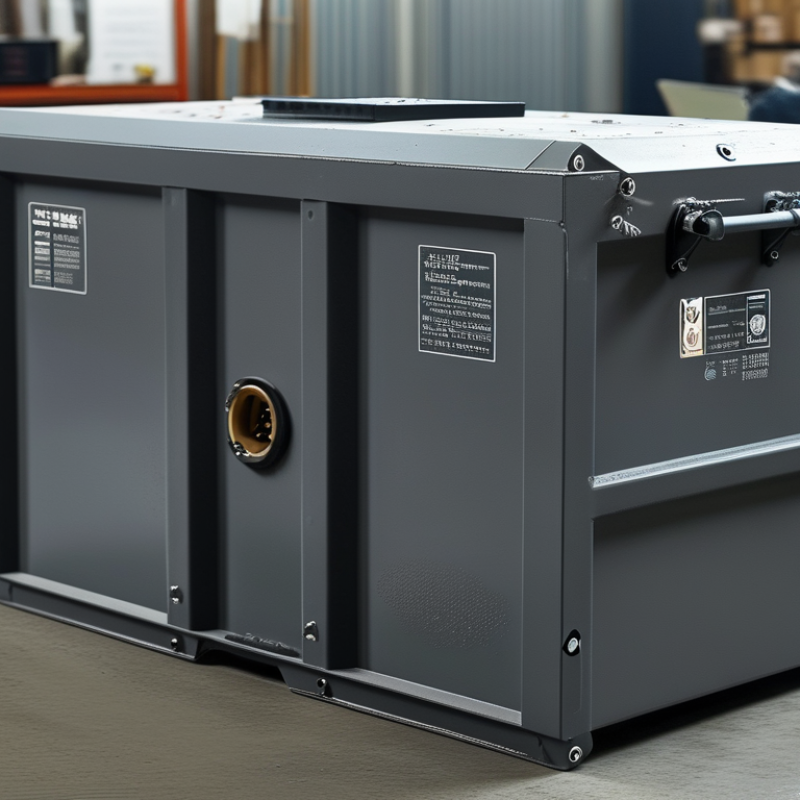
A cold plunge cooling unit is a compact refrigeration system designed to reduce and maintain water temperature. It normally combines a compressor, condenser, heat exchanger, circulation pump, filter, and digital thermostat. Water leaves the tub, passes through the heat exchanger, then returns colder and cleaner. The process resembles a small commercial chiller, not simply an oversized household air conditioner.
Performance depends on measurable conditions. Water volume, starting temperature, room heat, insulation, and user frequency all affect cooling time. The ASHRAE Handbook—Refrigeration explains that refrigeration load includes heat entering through walls, piping, water, and surrounding air. Therefore, a unit rated for 500 liters may perform differently in a warm, uncovered room. A lower temperature setting does not prove better efficiency.
Industry demand is also expanding. The Global Wellness Institute’s 2023 report valued the global wellness economy at 5.6 trillion dollars in 2022, supporting broader interest in recovery and thermal experiences. However, cold plunge equipment remains highly application-specific. A reliable supplier should provide cooling capacity, recommended water volume, operating temperature range, noise data, electrical requirements, and sanitation guidance. Look for clear test conditions.
Small details matter. A well-insulated tub can reduce compressor runtime. Automatic filtration helps maintain water clarity. An oversized unit may cool quickly but consume more power and cycle inefficiently. An undersized unit may struggle overnight. I would still question marketing claims that show only the lowest temperature. Real performance should be checked with water volume, ambient temperature, pull-down time, and energy use recorded together.
Key Features of a High-Performance Cooling System
China Best Cold Plunge Cooling Unit Supplier?
A high-performance cooling system starts with stable temperature control. The unit should maintain the selected water temperature during repeated sessions, not only during factory testing. Ask for cooling-capacity curves, inlet-water conditions, and energy-use data. These details reveal more than a brochure claim.
The Global Wellness Institute reported that the global wellness economy reached about 6.3 trillion US dollars in 2023. This growth increases demand for reliable recovery equipment. A serious supplier should provide documented testing, clear wiring diagrams, and traceable quality inspections. Look for corrosion-resistant heat exchangers, insulated water lines, and washable filtration. Effective circulation matters too. Stagnant water can reduce cooling consistency and complicate maintenance.
Noise also deserves attention. A loud compressor can make a compact recovery room uncomfortable. Request sound measurements taken at a stated distance. Electrical protection, leakage prevention, and automatic shutdown functions should be clearly explained. Refrigerant selection must follow the destination market’s safety requirements. Certification alone is not enough.
I would also question impressive cooling times. They may depend on warm starting water, low ambient temperatures, or an empty tub. Independent testing is more useful. The supplier should disclose test conditions, replacement-part availability, service response times, and warranty limits. A lower purchase price may hide higher electricity and maintenance costs. This is where many comparisons become incomplete.
China Best Cold Plunge Cooling Unit Supplier? - Key Features of a High-Performance Cooling System
| Category | Key Feature | Recommended Technical Specification | Why It Matters |
|---|---|---|---|
| Cooling Performance | Adjustable Water Temperature | Approximately 3–15 °C | A broad adjustment range supports different cold-exposure preferences and helps maintain a stable setpoint during use. |
| Cooling Performance | Cooling Capacity | Typically 0.8–2.5 kW for compact and medium-size plunge systems | Adequate cooling capacity helps offset heat entering from the surrounding environment, bathers, pump operation, and uncovered water. |
| Temperature Control | Digital Temperature Controller | Setpoint control with approximately ±1 °C practical stability | A digital controller improves usability and reduces temperature fluctuations compared with manual operation. |
| Water Circulation | Circulation Flow Rate | Approximately 20–40 L/min, depending on plumbing and pump selection | Consistent circulation distributes chilled water evenly and allows the filtration and sanitation stages to work effectively. |
| Water Quality | Mechanical Filtration | Replaceable cartridge filter, commonly 20–50 microns | Mechanical filtration captures suspended particles and helps protect the heat exchanger and circulation pump. |
| Water Quality | Sanitation Compatibility | Designed for use with compatible ozone, UV, or controlled chemical treatment systems | Sanitation reduces microbial growth, although water treatment must still follow local health guidance and the equipment manual. |
| Refrigeration | Refrigerant Option | Low-GWP refrigerant options such as R290, where permitted by local regulations | The refrigerant choice affects environmental impact, service requirements, safety procedures, and regulatory compliance. |
| Energy Efficiency | Electrical Input | Common configurations include 220–240 V at 50/60 Hz; regional versions may differ | The electrical configuration must match the installation site and should be protected by correctly rated electrical equipment. |
| Energy Efficiency | Insulated Water Circuit | Insulated hoses, tank connections, and cold-water lines | Insulation limits heat gain from the surrounding air and can reduce compressor runtime and operating energy. |
| Noise Control | Operating Noise | Approximately 45–65 dB(A), depending on compressor, fan, pump, and installation | Lower operating noise is more suitable for homes, gyms, studios, and recovery areas where quiet surroundings are preferred. |
| Protection | Safety Monitoring | High-temperature, low-flow, overload, leakage, and sensor-fault protection | Multiple protection functions help prevent equipment damage and provide safer operation when water flow or temperature conditions change. |
| Installation | Plumbing Connections | Common hose or pipe sizes include 25–32 mm, subject to the selected model | Standardized connections simplify installation, replacement, and maintenance while reducing the risk of incompatible fittings. |
| Installation | Ventilation Clearance | Allow clear airflow around the condenser; exact clearance must follow the equipment manual | Restricted airflow can increase condensing temperature, reduce cooling performance, and shorten compressor life. |
| Maintenance | Filter Serviceability | Tool-free or quick-access filter replacement with visible service access | Easy filter maintenance encourages regular cleaning and helps preserve water flow and heat-transfer efficiency. |
| Durability | Heat Exchanger Construction | Corrosion-resistant materials selected for the intended water-treatment method | Material compatibility is important because disinfectants, salt, and water chemistry can accelerate corrosion in unsuitable components. |
| User Experience | Display and Controls | Clear temperature display, status indicators, alarm codes, and simple setpoint adjustment | Straightforward controls make daily operation easier and help users identify maintenance or protection alerts quickly. |
| Service Support | Replacement Parts Availability | Accessible filters, pumps, sensors, controllers, fans, and refrigeration service components | A reliable parts supply can reduce downtime and make long-term ownership more predictable. |
| Compliance | Documentation | Installation guide, wiring information, maintenance schedule, safety instructions, and test documentation | Complete technical documentation supports correct installation, routine maintenance, and evaluation against applicable local requirements. |
Selection note: Actual performance depends on water volume, ambient temperature, insulation, bather load, plumbing layout, filtration condition, and electrical configuration. Confirm tested performance and applicable certifications for the intended installation before purchase.
How to Evaluate Chinese Cooling Unit Suppliers
Choosing a Chinese cold plunge cooling unit supplier requires more than comparing online prices. In practical sourcing, the useful questions are technical and specific. Ask for cooling capacity at your intended water volume, ambient temperature, and target water temperature. A unit rated at 2°C in a cool showroom may perform differently beside a sunny gym window. Request test records, wiring diagrams, pump specifications, and refrigerant details. Small details matter.
Evaluate the factory, not only the trading office. Confirm its registered company name, production address, quality procedures, and export experience for your destination market. A video tour helps, but an independent inspection offers stronger evidence. Check whether each unit receives leak testing, electrical safety testing, and documented final inspection. Ask for serial-number tracking and clear acceptance criteria. If answers remain vague, treat that as a risk.
A reliable supplier should explain installation, water filtration, drainage, maintenance, and winter storage clearly. Discuss replacement pumps, sensors, controllers, and delivery times before placing an order. Read the warranty carefully; response time and excluded parts can matter more than its length. Request a sample unit or paid pilot batch when possible. I have seen specifications change during negotiation, so record every promise in the contract. That uncomfortable step prevents expensive assumptions. Leave room for doubt. A confident sales reply is not engineering proof.
Comparing Manufacturing Quality, Certifications, and Support
Choosing a China-based cold plunge cooling unit supplier requires more than comparing prices. Manufacturing quality appears in weld consistency, insulation thickness, compressor testing, and water-flow protection. Ask for batch records, pressure-test results, noise readings, and photographs from production lines. A clean sample can mislead.
Certification claims need careful checking. ISO 9001 registration supports process control, but it does not guarantee cooling performance. The ISO Survey reports more than one million ISO 9001 certificates worldwide, so the certificate alone proves little. Request the registration number, issuing body, and current scope. For electrical exports, verify applicable CE, RoHS, EMC, and safety documentation. Requirements vary by destination. They really do.
Energy use also deserves attention. The International Energy Agency’s The Future of Cooling report warns that global cooling demand could more than triple by 2050. Efficient compressors, accurate thermostats, and strong heat exchangers can reduce operating costs. Ask for tested power consumption at your expected water temperature, not only laboratory conditions. Support is equally practical: confirm spare-part availability, response times, wiring diagrams, and remote troubleshooting procedures. A two-year warranty sounds attractive, but unclear exclusions can create expensive delays. I would still test a pilot unit for leaks, recovery speed, and overnight stability before placing a large order. No supplier is perfect. A transparent one shows weaknesses early.
How to Choose the Best Supplier for Your Cold Plunge Project
Choosing the best supplier for a cold plunge project requires more than comparing factory prices. McKinsey’s 2024 Future of Wellness report estimates the global wellness market at $1.8 trillion, increasing competition among equipment manufacturers. Ask each Chinese supplier for cooling capacity, water-flow data, operating noise, refrigerant details, and filtration specifications. A clear technical sheet matters.
Request a live factory video, sample testing, and documented quality procedures. Check whether the unit reaches your target temperature within a defined time, even in a warm installation room. Confirm electrical safety testing, enclosure protection, water-contact materials, and compliance documents for your destination market. Independent inspection before shipment adds useful evidence. It does not replace technical judgment.
Review warranty coverage, spare-part availability, installation guidance, and remote troubleshooting. A supplier with engineers can explain compressor protection, drainage, sanitation, and winter storage. The Global Wellness Institute reported that the wellness economy reached $5.6 trillion in 2022, but rapid growth can attract inexperienced vendors. Be careful. A low quotation may hide weak insulation or expensive maintenance. I once treated a short lead time as proof of efficiency; it was not. Ask for production photos, batch records, and references from comparable commercial projects. Put cooling performance, response times, and replacement responsibilities into the contract.