10 Best Car Perfume Diffusers for Wholesale Buyers
Choosing a Car Perfume Diffuser for wholesale is not just a matter of picking an attractive scent. Buyers need to compare refill options, materials, fragrance consistency, packaging, and minimum order quantities. Small details matter. A loose cap can leak during shipping, while a strong fragrance may not suit every driver. These practical issues deserve attention before a large order is placed.
This guide reviews ten diffuser types and product options through a buyer-focused lens. It highlights features to check, including adjustable scent output, vent-clip strength, bottle capacity, and the clarity of supplier specifications. Ask for samples when possible. Test them in real vehicles, where temperature and airflow can change how a fragrance performs. Supplier photos can help, but they cannot show every finish or fit. That is a limitation worth remembering.
Wholesale buyers should also review packaging durability, available scent choices, customization terms, and estimated lead times. Compare like with like. A low unit price may not tell the full story if refills are difficult to source or product details are unclear. No single diffuser will fit every customer or retail channel. The best choice depends on your target market, budget, and quality expectations. Even a careful shortlist may need revision after sample testing. That is normal. Use the rankings as a starting point, then verify each supplier’s current specifications before ordering.
Define the 10 Diffuser Types by Power Source, Format, and Scent Delivery
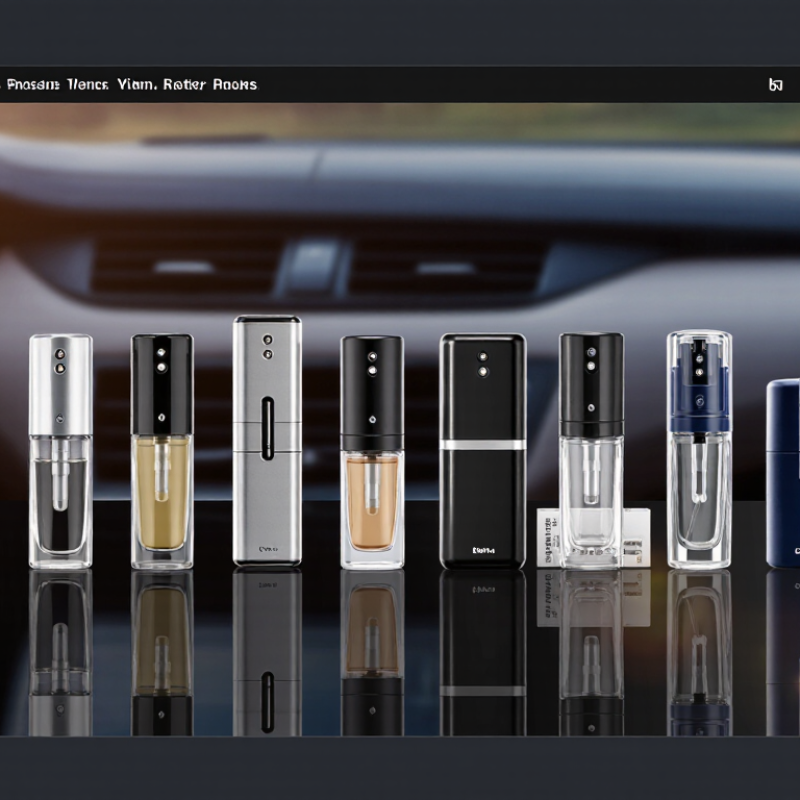
For wholesale buyers, diffuser type affects cost, packaging, refill options, and fit across vehicle interiors. Five formats work without electrical power: vent clips release fragrance as air passes over a scented pad; hanging cards disperse scent from absorbent paper; porous wood slowly releases applied oil; gel cups evaporate fragrance from a semi-solid base; and liquid-wick bottles draw fragrance upward through a small wick. Their output depends on airflow, temperature, and exposed surface area. Simple, yes—but performance can vary between a cool morning and a sunlit dashboard.
Powered options include battery-operated fan diffusers, which push air across a fragrance pad; USB fan units, which offer similar delivery while plugged into a compatible port; USB mist diffusers, which disperse fine droplets from a reservoir; 12-volt heated diffusers, which use warmth to increase evaporation; and 12-volt atomizers, which mechanically break fragrance liquid into a fine spray. These formats differ in operating noise, power demand, refill design, and spill risk. A useful detail: mist and atomizer products need secure reservoirs, especially on bumpy roads.
Tips: Test scent strength in a parked vehicle before choosing wholesale quantities. Ask suppliers for refill dimensions, material details, and operating instructions. Compare samples in warm and cool conditions; one test is rarely enough. Also check that packaging clearly explains placement and care, since buyers may not know how airflow affects a passive diffuser.
Compare Fragrance Performance Using Output Rate, Runtime, and Refill Capacity
For wholesale buyers, fragrance strength is not just a matter of scent choice. Compare each car diffuser’s output rate, runtime, and refill capacity under similar conditions. A unit releasing too much fragrance may overwhelm a compact cabin, while a low output can disappear during a commute. Small differences matter.
Check output settings in milliliters per hour, or use a timed test if suppliers provide no clear rate. Run samples in comparable vehicles and note the cabin size, temperature, and ventilation. Warm air can change how quickly a fragrance disperses. Keep simple logs. They are useful. A strong first impression does not prove steady performance over several days.
Runtime depends on both the reservoir and the selected output level. Ask how long a refill lasts at low and high settings, then compare that estimate with refill capacity. A large tank may reduce replacement frequency, but it can also add bulk to a dashboard unit. Weigh convenience against fit. One assumption worth revisiting: longer runtime is not always better if the scent fades before the liquid runs out. For purchasing decisions, request refill specifications and repeatable test results, not only advertised hours. Slight variation between samples is normal, but unexplained variation deserves a closer look.
How to read this: Scores are illustrative, normalized comparisons—not verified product specifications. Output rate, runtime, and refill capacity are scored separately on a 0–100 scale; request supplier test data and specifications before making purchasing decisions.
Assess Wholesale Value Through MOQ, Unit Cost, Packaging, and Reorder Lead Time
For wholesale buyers, a car perfume diffuser is only a strong purchase when the numbers work beyond the sample stage. Check the minimum order quantity (MOQ) against realistic sales, not an optimistic forecast. A low MOQ can help test a new design, while a larger order may reduce the quoted unit cost. Ask whether that price includes the fragrance refill, cap, and basic packaging. Small exclusions add up.
Compare the Full Cost
Compare unit costs on equal terms. Request a written breakdown for the diffuser body, scent components, assembly, and carton. Then estimate the landed cost, including freight and any handling fees. Test samples in warm and cool conditions, and note how quickly the scent fades. One sample is not enough. A fragrance that performs well for a week may disappoint after a month; suppliers’ stated duration should be treated as an estimate, not a guarantee.
Packaging affects both shelf appeal and shipping damage. Ask for dimensions, carton quantity, protective inserts, and clear labeling options. A neat box means little if glass components arrive chipped. Reorder lead time matters just as much: confirm production days, shipping estimates, and what happens during peak seasons. Keep a small buffer if sales are seasonal. I have seen buyers focus on unit price and miss this detail. It is an easy mistake to repeat. Compare suppliers using the same checklist, and record actual delivery dates after each order.
Rank the 10 Best Options by Safety Documentation, Durability, and Buyer Fit
For wholesale buyers, ranking should start with paperwork, not fragrance strength. A supplier’s safety data sheet, ingredient disclosure, batch traceability, and clear use instructions make review easier. Actual requirements vary by market, so confirm them with qualified local advisers. The options below reflect common purchasing priorities, not laboratory test results.
Ranked by documentation, durability, and buyer fit: 1. Passive vent clip with replaceable pad—simple, low-cost, and easy to inspect. 2. Refillable glass vent bottle—neat presentation, but fragile in transit. 3. Sealed gel cup—steady output; check heat-performance data. 4. Hanging absorbent card—lightweight and economical, though its lifespan can vary. 5. Refillable felt diffuser—less packaging waste, but refill controls matter. 6. USB-powered fan diffuser—adjustable output, with more parts to fail. 7. Ceramic vent diffuser—durable surface, yet vulnerable to drops. 8. Solid wax-style diffuser—compact, but performance may shift in hot cabins. 9. Wooden-cap bottle—appealing natural texture; verify leakage resistance. 10. App-controlled electronic diffuser—feature-rich, but harder to service and document.
For any shortlist, request sample units and test them in parked vehicles through warm and cool conditions. Record leakage, odor consistency, packaging damage, and how quickly instructions answer basic questions. A polished sample can hide weak production controls. That is easy to overlook. Lower-ranked designs may still suit a niche buyer, while a top-ranked option can disappoint if replacement parts are unavailable.