2026 Top Arc Floor Lamps for Modern Homes and Offices
Arc Floor Lamps bring overhead-style light into rooms where ceiling fixtures may be inconvenient. Their curved arms can reach over a sofa, reading chair, or conference table, while the base stays near a wall. In 2026, the strongest options balance reach, stability, glare control, and a footprint suited to the room. Looks matter, too.
Italian designer Achille Castiglioni, co-creator of the iconic Arco lamp, is often credited with the advice, “If you are not curious, forget it.” That spirit suits choosing an arc lamp: inspect how the arm adjusts, where the shade directs light, and whether the base feels secure on your floor. A marble base may look striking, but it can be difficult to move. A slim metal model may save space, yet feel less substantial.
This guide compares designs for modern homes and offices, with attention to practical details: measured reach, dimming options, bulb compatibility, assembly, and care. It also considers how warm light falls across a book or laptop, and whether the shade creates distracting glare on a screen. Small differences matter.
Specifications cannot predict every room. Ceiling height, furniture placement, and personal comfort change the result. Use the shortlist as a starting point, then check dimensions against your own space before buying. A beautiful lamp can still land awkwardly.
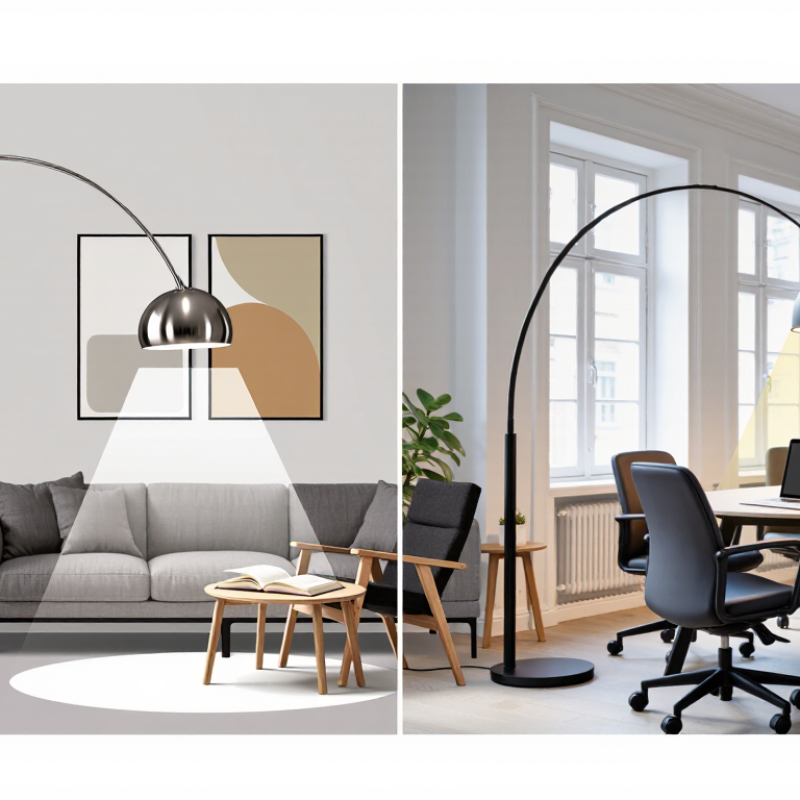
What Defines an Arc Floor Lamp in 2026
In 2026, an arc floor lamp is defined by its curved arm, offset shade, and freestanding base. The arm reaches over a sofa, reading chair, or desk, bringing light where a ceiling fixture may not. Unlike a straight pole lamp, its shade can sit above a surface without a table taking up floor space. A broad, stable base matters; a dramatic curve is less useful if the lamp feels easy to bump.
The light source shapes how the lamp performs. The U.S. Department of Energy’s LED Lighting overview reports that LEDs use at least 75% less energy and last up to 25 times longer than incandescent lighting. That comparison concerns light sources, not arc lamps specifically, but it helps explain why many current designs pair curved frames with efficient LEDs. Check whether the shade directs light downward, diffuses it, or does both. Small details show up at night.
A useful arc lamp should fit the room’s actual dimensions. Measure the arm’s reach and shade height against your seating or work surface; product photos can make both look smaller than they are. Dimming is helpful, but not every dimmer works with every LED. A lamp may look sculptural and still cast glare on a screen. That deserves a second look.
2026 Top Arc Floor Lamps for Modern Homes and Offices
What Defines an Arc Floor Lamp in 2026?
An arc floor lamp is defined by its freestanding base and curved arm, which positions a shade away from the base to illuminate a seating or work area from above. These defining features are structural characteristics, not market-share or performance statistics.
The chart marks each core feature as present in the basic arc-lamp design. Adjustable arms, dimming, and smart controls are optional features and are not included.
Key Features That Distinguish Leading Arc Floor Lamps
In 2026, the best arc floor lamps stand out through reach, balance, and controlled light—not just a dramatic curve. A long, well-positioned arm can illuminate a reading chair or desk without placing a bulky base beside it. Check the base carefully. Thick rugs and narrow walkways can make an elegant lamp feel awkward or unstable. A swiveling shade and adjustable arm help direct light onto a book while keeping glare away from a screen. Small details matter.
Light quality deserves equal attention. The Illuminating Engineering Society’s guidance emphasizes matching illumination to the task and managing glare; for home offices, that means a focused beam with comfortable surrounding light. Look for dimming, a high color-rendering index, and a warm-to-neutral color-temperature range. Not every room needs the same setting. The U.S. Department of Energy reports that LEDs use at least 75% less energy and last up to 25 times longer than incandescent lighting. That makes efficient LED compatibility a practical feature, not merely a specification. Still, a lamp can be efficient and disappoint if its shade creates a bright hotspot on the desk. Check the beam before you buy.
Arc Floor Lamp Styles for Modern Homes and Offices
Arc floor lamps add height and reach without taking up the space of a side table. A classic single-arm style curves over a sofa, placing light near a book or knitting project. Choose a narrow stem and compact shade for smaller rooms; a wide dome can dominate a tight corner. The curve matters.
For modern offices, an adjustable arc lamp can direct light toward a desk or reading chair. Multi-arm designs spread light across a shared area, but their extra visual weight may compete with monitors and shelving. A heavy base, often in stone or metal, helps stabilize the long arm. Check its footprint before buying.
Light quality deserves equal attention. The U.S. Department of Energy’s Energy Saver guidance says LED bulbs use at least 75% less energy and last up to 25 times longer than incandescent bulbs. That comparison concerns the light source, not the lamp’s shape or build. Use a compatible warm-white LED for a softer living-room glow, or a brighter task bulb for close work. Still, even a well-chosen arc lamp can create glare if its shade points toward the screen. A small adjustment can make a big difference.
2026 Top Arc Floor Lamps for Modern Homes and Offices - Arc Floor Lamp Styles for Modern Homes and Offices
| Arc Lamp Style | Typical Overall Height | Typical Horizontal Reach | Common Base Type | Typical Light Source | Best Suited For | Practical Consideration |
| Compact Arc | 150–175 cm (59–69 in) | 90–130 cm (35–51 in) | Weighted steel or cast-metal base | Replaceable LED or compatible screw-base bulb | Reading corners, apartments, and smaller living rooms | Check the shade position and base footprint against nearby seating and walkways. |
| Classic Large Arc | 175–210 cm (69–83 in) | 130–190 cm (51–75 in) | Broad weighted base, sometimes with a stone cover | Usually a replaceable LED bulb | Living-room seating areas and spaces where overhead wiring is unavailable | Its long arm needs enough clearance, and the base should sit on a stable, level floor. |
| Adjustable-Arm Arc | 160–205 cm (63–81 in) | Typically adjustable within about 100–180 cm (39–71 in) | Weighted metal base | Replaceable bulb or integrated LED, depending on design | Multi-use rooms, desks, and flexible seating layouts | Confirm the adjustment range and whether the joints can be locked securely. |
| Marble-Base Arc | 175–210 cm (69–83 in) | 130–185 cm (51–73 in) | Natural or engineered stone base | Commonly a replaceable LED bulb | Living rooms and interiors that benefit from a substantial decorative base | Stone bases can be heavy; protect flooring during assembly and repositioning. |
| Integrated LED Arc | 160–200 cm (63–79 in) | 110–175 cm (43–69 in) | Weighted metal base | Built-in LED module | Home offices, modern interiors, and spaces needing low-maintenance lighting | Check whether brightness and color temperature are adjustable and whether the LED module is replaceable. |
| Multi-Light Arc | 175–215 cm (69–85 in) | 130–190 cm (51–75 in) | Wide weighted base | Multiple replaceable bulbs or integrated LED heads | Wider seating groups and rooms requiring light across several spots | Multiple heads can increase light coverage, but also require suitable bulb and dimmer compatibility. |
Dimensions and features are representative ranges for common arc floor lamp designs, not specifications for a particular model. Actual measurements, bulb requirements, and adjustment ranges vary by manufacturer and design.
How to Choose a Lamp for Your Space and Lighting Needs
An arc floor lamp can bring light over a sofa or desk without taking up table space. Start by measuring the area, including the ceiling height and the lamp’s full reach. A shade that clears the sofa on paper may still feel intrusive when people walk past it. Leave a comfortable path around the base. Small detail, big difference.
Match the light to what happens beneath it. For reading or detailed work, choose a lamp with enough brightness and a shade that directs light onto the page without shining into your eyes. A dimmer can help when the same room shifts from office hours to evening rest. Warm light often feels gentler in living areas, while a more neutral tone can make desk tasks easier to see. Check bulb compatibility before buying. Stability matters too, especially on thick rugs or near active walkways.
Think about nearby windows, wall colors, and existing ceiling lights. Pale walls reflect more light; dark finishes can absorb it, so the same lamp may feel quite different. I’d also test the lamp’s reach in the actual room, rather than trusting a floor plan alone. Measurements miss awkward corners sometimes. And an elegant arc is not always practical if the base blocks a cabinet or chair. Make the choice around daily use, not just the first impression.
Placement, Safety, and Care for Arc Floor Lamps
An arc floor lamp can bring light over a sofa or desk without taking up table space, but its curved arm needs room. Place the base on a flat, stable surface and check that the shade clears shelves, doorways, and seated heads. Keep the lamp out of busy walking paths. A layout that looks balanced in a photo may feel awkward once people move through the room. Adjust it in place before settling on a spot.
Safety and care matter as much as appearance. Route the cord along a wall, not across a walkway, and avoid pinching it beneath rugs or furniture. Keep the shade away from curtains and other materials that could be affected by heat. Use a bulb within the fixture’s stated limit, and unplug the lamp before cleaning. Dust the shade and arm with a soft, dry cloth; harsh cleaners may damage finishes. Check the base and cord occasionally for looseness or wear. Small checks help.
Tips: If the lamp wobbles, reposition it rather than adding weight to the base. Leave enough clearance to walk past comfortably. Test the light at night, too; daytime placement can hide glare on screens or bright spots in a room.