

2026 How to Choose the Best Tiffin Lunch Box?
Choosing the best Tiffin Lunch Box in 2026 requires more than comparing colors, compartments, and online ratings. It means examining materials, sealing performance, insulation, cleaning effort, and daily habits. A shiny box may look impressive. It may still leak curry through a work bag.
The market context is changing. Grand View Research estimates that the global reusable food container market reached approximately USD 1.7 billion in 2023. Its report also projects continued growth through 2030. Meanwhile, the UNEP Food Waste Index Report 2024 estimates that households generated 631 million tonnes of food waste in 2022. These figures do not prove that one lunch box solves waste. They do show why durable, reusable meal storage deserves careful attention.
Food-safety specialist Dr. Donald W. Schaffner has repeatedly stressed a practical principle: “Time and temperature control are critical.” That advice should guide every Tiffin Lunch Box decision. Look for food-grade stainless steel, secure clips, rounded interiors, and removable seals. Check whether the box keeps hot food hot or cold food cold long enough for your commute. A leak-resistant design matters more than extra compartments.
There is no perfect model. My first choice could still be inconvenient to wash. A larger box may carry more food but feel heavy on crowded trains. This guide compares real-world details, including portion size, cleaning time, durability, and insulation. It also questions marketing claims. The best Tiffin Lunch Box is not always the most expensive one. It is the box that remains safe, practical, and useful after repeated weekday use.
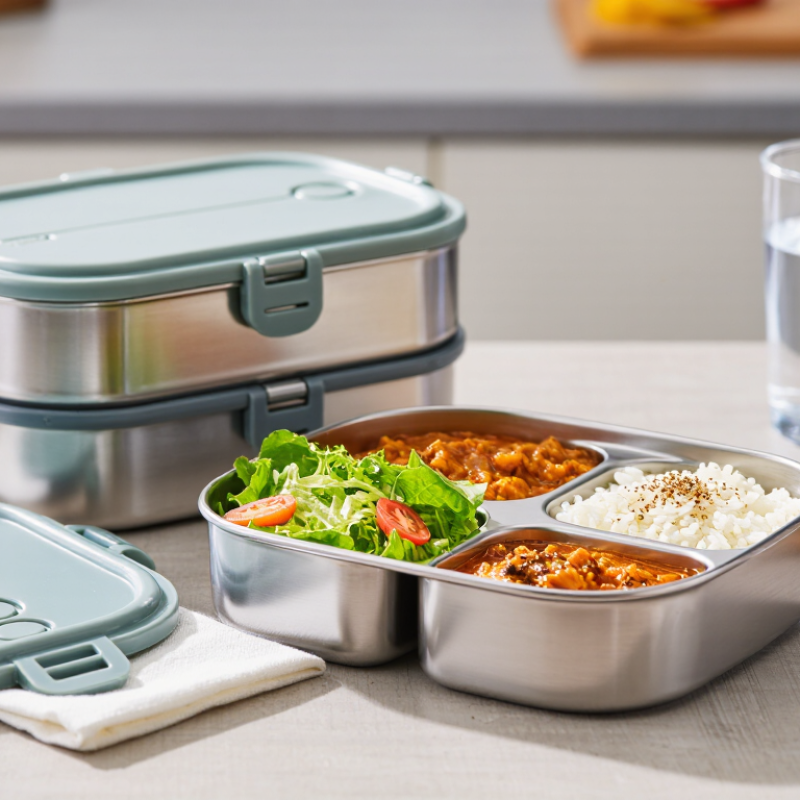
What Is a Tiffin Lunch Box and How Does It Work?
A tiffin lunch box is a reusable container with separate stacked compartments. It usually has two or more metal or food-safe plastic tiers. Each tier holds a different dish without mixing flavors. A fitted lid, clips, or a central handle keeps the stack together. Some models include small inner cups for sauces, fruit, or snacks.
The working principle is simple. You fill each compartment, place the lids correctly, and secure the stack before carrying it. Dry foods usually belong in the upper tiers. Watery foods need a tightly sealed compartment. Rice, vegetables, and grilled foods travel well this way. Soups can spill if the seal is weak. I have made that mistake.
Clean every part after use, including hidden grooves around the seals. A narrow brush helps remove oil and food particles. Stainless steel resists odors, but it may not keep food warm for many hours. Insulated designs work better for temperature control. Still, they need careful checking before purchase.
Look for sturdy hinges, smooth edges, and replaceable seals. The box should open without excessive force. A heavy stack can become uncomfortable in a work bag. In 2026, choosing the best tiffin lunch box means matching its structure to your meals, travel time, and cleaning habits. A compact three-tier box may suit office lunches, while a wider two-tier box may serve larger portions. Your daily routine matters more than appearance.
2026 How to Choose the Best Tiffin Lunch Box? - What Is a Tiffin Lunch Box and How Does It Work?
A tiffin lunch box is a reusable food container made of stacked compartments or separate tiers. It is designed to carry different foods in one compact unit, while removable layers help keep portions organized and reduce the need for disposable packaging.
| Evaluation Dimension | Typical Options or Facts | What It Means in Daily Use | Recommended Choice |
|---|---|---|---|
| Basic structure | Single container, two-tier, three-tier, or four-tier design | Each tier can hold a separate food, such as rice, vegetables, fruit, or snacks. | Choose two or three tiers for most work, school, and travel meals. |
| How it works | Stackable containers are secured by a lid, clips, screw connection, or carrying strap. | The stacked format saves space and allows foods to be portioned separately. | Select a locking system that is easy to close and remains secure when carried vertically. |
| Material | Food-grade stainless steel, BPA-free plastic, glass, or a combination of materials | Stainless steel is durable and odor-resistant; plastic is lightweight; glass is useful for reheating but is heavier and more fragile. | Choose stainless steel for durability, plastic for low weight, or glass for microwave use. |
| Capacity | Common total capacities range from about 700 ml to 2,000 ml, depending on the number and size of tiers. | Capacity determines whether the box is suitable for a snack, one meal, or a full meal with multiple dishes. | Use approximately 700–1,000 ml for a light meal and 1,200–1,800 ml for a larger meal. |
| Tier capacity | Individual tiers commonly hold approximately 250–700 ml. | Smaller tiers suit snacks or side dishes, while deeper tiers are better for rice, pasta, or salads. | Choose tier sizes according to actual portions rather than the total number of compartments. |
| Leak resistance | Some designs use silicone or rubber sealing rings; others are intended mainly for dry foods. | A seal can reduce spills, but stacked joints and lids may still leak if overfilled or tilted. | For soups and sauces, choose a model specifically tested for leak resistance and keep it upright. |
| Insulation | Single-wall containers provide little temperature protection; vacuum-insulated containers retain heat or cold for longer. | Insulation slows temperature change but does not replace safe food handling or refrigeration. | Choose insulated construction when there is a long delay between packing and eating. |
| Microwave compatibility | Many metal containers cannot be used in a microwave; some plastic and glass containers are microwave-safe when labeled. | The lid, seal, clips, and container material must all be checked before heating. | Use a clearly labeled microwave-safe glass or plastic container and remove metal parts before heating. |
| Food compatibility | Dry foods, rice, vegetables, fruit, sandwiches, noodles, and snacks are generally suitable; liquid foods require stronger seals. | Moisture, oil, acidity, and strong spices may affect seals, odors, or cleaning requirements. | Use dedicated leak-resistant tiers for curries, dressings, and soups. |
| Portability | A compact stacked shape saves bag space, while multiple metal tiers can add weight. | The filled weight matters as much as the empty weight when commuting or traveling. | Choose a smaller, lightweight model for daily transport and a larger one only when the meal requires it. |
| Cleaning and hygiene | Removable seals and separate tiers are easier to wash thoroughly; narrow joints can trap food residue. | Parts should be washed after use and dried fully before reassembly to reduce odors and microbial growth. | Prefer dishwasher-safe parts only when the care instructions allow it, and remove seals for cleaning. |
| Durability | Stainless steel resists breakage; plastic can be lighter; glass may crack or break when dropped. | Durability depends on material thickness, hinges, clips, seals, and repeated washing. | For frequent commuting, prioritize strong closures, replaceable seals, and impact-resistant construction. |
| Food safety | Use containers made from materials intended for food contact and follow the manufacturer’s temperature instructions. | Perishable foods should not remain in the temperature danger zone for extended periods. | Use an insulated carrier with a cold source for chilled foods when refrigeration is unavailable. |
| Best use case | Office lunch, school meal, picnic, travel, portion control, or multi-dish home cooking | The best design depends on meal type, transport time, available storage, and reheating access. | Choose the simplest design that matches your food, portion size, cleaning routine, and daily travel needs. |