2026 Best Round Cooler Bag for Wholesale Buyers
A Round Cooler Bag can look simple on a product sheet. In wholesale, its value depends on details buyers can verify: usable capacity, insulation performance, fabric strength, zipper quality, and packing efficiency. A neat circular shape is not enough. The bag must keep food and drinks organized through a picnic, market visit, or short road trip.
Demand has a broader outdoor context. The Outdoor Industry Association’s 2024 Outdoor Participation Trends Report estimated that 175.8 million Americans participated in outdoor recreation during 2023. This figure does not measure cooler-bag purchases. It does, however, show the scale of activities where portable food storage may be useful. Buyers should treat it as context, not a sales forecast.
Small details matter. A leaking seam can undo a strong insulation claim. A stiff handle may feel uncomfortable after a walk from the car to a park table. So can an awkward lid. For wholesale buyers, comparing samples under consistent conditions is more useful than relying on promotional wording alone. Check dimensions, stitching, lining, and cleaning instructions. Ask suppliers how performance claims were tested, and request documentation where available.
There is no perfect model. A compact bag may travel easily but hold less than shoppers expect. This guide reviews the features, sourcing questions, and trade-offs that help buyers assess the best Round Cooler Bag options for 2026. The goal is practical selection, not a promise that one design suits every customer.
What Is a Round Cooler Bag and Who Needs It?
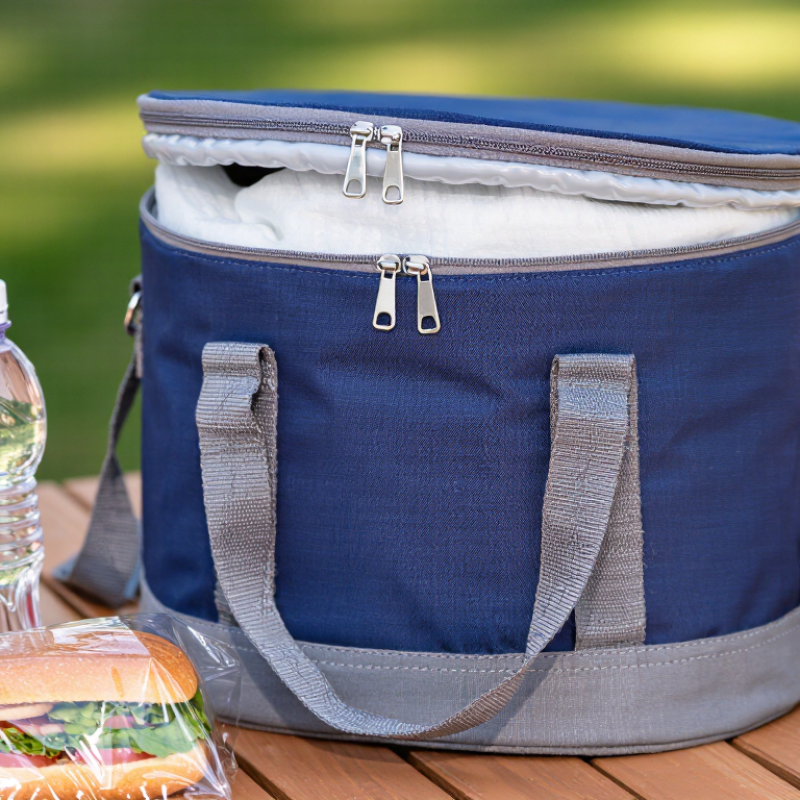
A round cooler bag is an insulated carrier with a circular base and a soft-sided body. Its shape can fit cans, snack containers, or a compact lunch box without leaving awkward corners. Many designs use a zippered top, washable lining, and short handles. Insulation helps slow temperature changes, but it does not replace proper cold packs or safe food handling.
It suits people carrying food for short outings: families heading to a park, event staff serving chilled drinks, and commuters packing a small lunch. The broad base can sit steadily on a picnic blanket or car floor. That matters. A narrow bag may tip when filled unevenly. Still, round bags are not ideal for every load; flat meal trays can be difficult to arrange, and capacity claims should be checked against real container sizes.
For wholesale buyers, the intended user matters more than appearance alone. Ask suppliers for interior measurements, insulation details, fabric specifications, and care instructions. Test a sample with ice packs and the containers customers are likely to carry. Check whether the zipper opens widely enough for easy access. A small opening gets frustrating fast. Also consider handle stitching and how the bag feels when fully loaded. There is no perfect shape for everyone, and round styles can sacrifice packing flexibility for a compact footprint.
2026 Best Round Cooler Bag for Wholesale Buyers
What Is a Round Cooler Bag and Who Needs It?
A round cooler bag is an insulated soft cooler with a circular or cylindrical shape. It is designed to carry chilled beverages, snacks, lunch items, or compact meal portions while remaining lightweight and easy to transport.
Capacity reference: The chart uses a standard 355 mL beverage can as the reference unit. Beverage volume is calculated before adding ice, insulation, or packaging space. Smaller round cooler bags are suitable for individual users and short outings, while larger capacities are more practical for families, outdoor groups, events, and wholesale buyers planning promotional or seasonal assortments.
Which Features Matter Most for Wholesale Buyers in 2026?
For 2026, wholesale buyers should judge a round cooler bag by measurable performance, not attractive stitching alone. Grand View Research valued the global insulated packaging market at about US$16.3 billion in 2023 and forecasts 5.9% annual growth through 2030. That expansion increases competition, but it also raises quality expectations. A useful sample should hold its shape, close smoothly, and fit common bottle diameters. Ask suppliers for thermal-retention test conditions, usable volume, empty weight, and seam-leak results. Numbers make comparisons less subjective.
Thermal control remains central, especially for buyers serving picnics, delivery kits, and outdoor events. The Outdoor Industry Association reported 175.8 million U.S. outdoor participants in 2023. That figure signals broad demand for portable cooling, but not every user needs maximum insulation. A thick foam wall may preserve temperature longer, yet reduce interior space and increase freight cost. Wholesale teams should compare temperature retention against packed dimensions, carton quantity, and landed cost. It is easy to admire performance and miss margin.
Material safety and maintenance matter at scale. Request food-contact documentation, lining specifications, wash guidance, and independent testing where available. A wipe-clean interior with a wide opening can reduce handling time between uses. Reinforced handles and abrasion-tested fabric deserve attention when bags are loaded daily. Recycled content may support sustainability goals, but buyers should verify percentages and supply consistency. I would also test a small batch in real conditions. Lab results help, but one awkward zipper or unstable base can still create returns. Perfect specifications are not enough.
How to Compare Insulation, Capacity, Materials, and Durability
For wholesale buyers, a round cooler bag should match its intended use, not just look spacious in a product photo. Check insulation by reviewing the foam thickness, lining construction, and test conditions behind any temperature claims. A sample filled with chilled cans can reveal weak seams or a lid that does not close evenly. Real use matters.
Capacity figures can be misleading. Compare the stated volume with the number and size of containers your customers typically carry, then check whether ice takes up useful space. A wide opening makes loading easier, but a shallow shape may limit taller bottles. Ask suppliers for internal measurements and a filled sample before placing a large order. Even then, packing habits vary.
Material choices affect weight, cleaning, and service life. A wipe-clean inner liner is practical after condensation or small spills, while reinforced handles help when the bag is fully loaded. Inspect stitching where handles meet the body, zipper movement, and the base after repeated placement on rough surfaces. These details are easy to overlook. They also influence returns. Request samples from the same production specification planned for bulk orders, and compare them after several days of ordinary handling. A single sample cannot prove long-term durability, so keep that uncertainty in your purchasing notes.
What Customization and Branding Options Are Available?
2026 Best Round Cooler Bag for Wholesale Buyers
What Customization and Branding Options Are Available?
A round cooler bag offers useful branding space without looking like a flat advertising panel. Wholesale buyers can choose screen printing for simple, bold artwork, or embroidery for a textured logo on compatible fabric. Heat-transfer printing can reproduce finer color details, though frequent folding and rough handling may affect its appearance over time. Ask for a physical sample before approving a large order.
Placement matters. A logo on the front panel is easy to notice when the bag sits on a picnic table. A smaller mark on the lid can be visible from above, while a printed strap adds another touchpoint. Keep artwork away from seams, zippers, and curved edges, where distortion may occur. Small text often becomes hard to read. Less can work better.
Color choices can match an event, store theme, or seasonal collection. Buyers may also customize lining color, zipper pulls, handles, and hang tags, depending on the supplier’s capabilities and order quantity. Confirm whether these options change production time or minimum quantities. Request artwork proofs that show scale and position, not just a logo on a screen. Samples can reveal surprises. A pale lining may show stains more easily, and a bright exterior can look different under indoor lighting. I would not assume every customization is worth the added cost. Test the details that customers will actually see and use.