

2026 Best Types of Canned Pork for Global Buyers
Global buyers rarely choose canned pork by price alone. The right product must fit local recipes, retail habits, transport conditions, and customer expectations. A familiar label can still hide meaningful differences in texture, cut, seasoning, and packing liquid.
Common options include luncheon-style pork, diced or chunked meat, shredded pork, and products made with ham cuts. Luncheon-style varieties slice neatly for sandwiches and meal kits. Chunks work well in stews, rice dishes, and institutional kitchens. Shredded pork can save preparation time, though its texture may vary between suppliers. Small details matter. A can opened for testing reveals more than a product photo: buyers can assess aroma, meat-to-liquid ratio, firmness, and how easily the contents separate.
This guide compares the main types of Canned Pork and explains where each may suit global purchasing needs. It also outlines practical checks for ingredient lists, net weight, packaging integrity, stated shelf life, and supplier documentation. Import rules and labeling requirements differ by destination, so buyers should confirm current requirements with qualified local authorities before placing an order. Product samples and clear written specifications can reduce surprises. They cannot remove every risk. Even experienced buyers may find that a preferred recipe performs differently after shipping or in a new market. That is worth testing early.
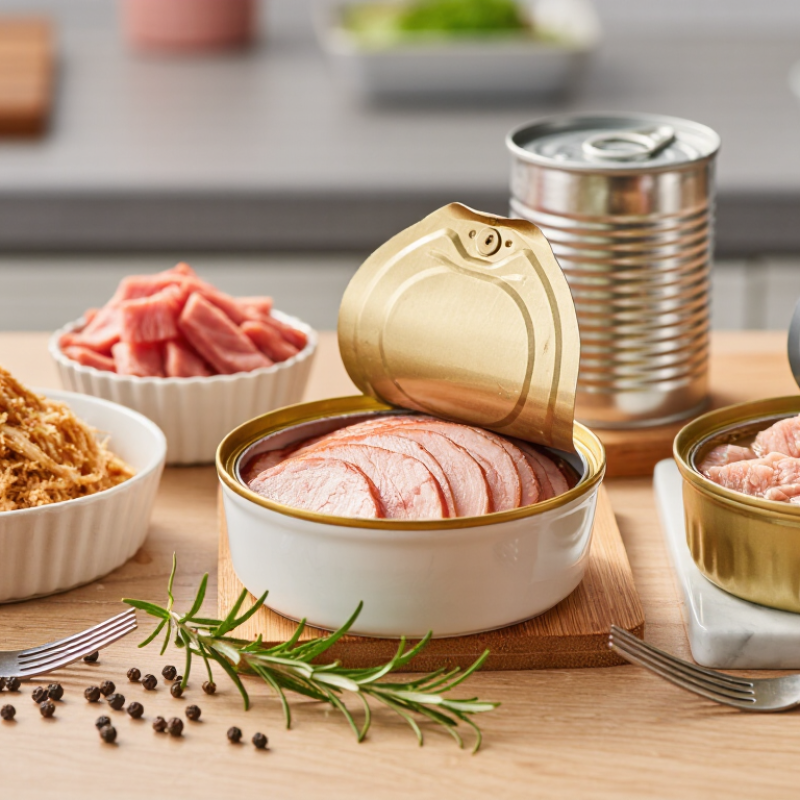
What Canned Pork Is and How It Is Classified
Canned pork is pork packed in a sealed container and heat-processed to limit microbial growth. It may be sold ready to eat or intended for heating, so buyers should check the preparation instructions. An unopened can is usually shelf-stable when stored as directed; after opening, refrigerate the contents promptly. A bulging, leaking, or badly rusted can should not be used.
Products can be classified by meat form: whole pieces, chunks, slices, shreds, or minced pork. A second useful category is the recipe: plain cooked pork, seasoned pork, or pork combined with broth, gravy, or another sauce. Packing liquid affects both flavor and drained weight. For example, a can of pork chunks in gravy may suit a stew, while shredded pork can be easier to portion for sandwiches.
For purchasing comparisons, record net weight, drained weight, ingredient list, cut or texture, and storage instructions. Check whether the meat is described as shoulder, ham, or another cut, when that detail is provided. These labels help, but classification is not always perfectly consistent across suppliers. That distinction matters. I would also compare the actual texture after opening; descriptions alone can leave room for surprise.
The Main Types of Canned Pork Available to Global Buyers
Canned pork is sold in several practical forms, and the texture matters as much as the cut. Luncheon-style pork is finely ground and formed, making it easy to slice for sandwiches or catering trays. Chunked pork keeps larger pieces intact and works well in rice dishes, stews, and ready meals. Shredded or pulled pork is tender and convenient, though its sauce can limit use in recipes with distinct seasoning. Some cans contain ham-style portions, while others combine pork with beans or vegetables. Check the ingredient list: “pork” does not always mean a single cut. Small details matter.
For sourcing context, the OECD-FAO Agricultural Outlook 2024–2033 projects global meat consumption to grow by 12% over the decade, with poultry accounting for much of the increase. This is a broader meat-demand forecast, not a canned-pork market estimate. Buyers should compare drained weight, meat-to-liquid ratio, salt content, and can dimensions alongside price. Whole-muscle pieces often suit premium meal applications; finely processed products can offer steadier portions and easier kitchen handling. Yet labels and product names are not perfectly consistent across markets. Request specifications, sample cans, and storage guidance before placing a large order. Small discrepancies can matter.
2026 Best Types of Canned Pork for Global Buyers - The Main Types of Canned Pork Available to Global Buyers
| Product type | Typical form and texture | Common packing style | Common uses | Buyer considerations |
|---|---|---|---|---|
| Pork luncheon meat | Finely minced or comminuted pork formed into a sliceable loaf; texture is generally uniform. | Usually packed in its own juices or a seasoned mixture; sold in cans that may be opened at either end or with a ring pull. | Sandwiches, breakfast dishes, fried slices, and quick-service meals. | Check the ingredient list, pork content, sodium level, sliceability, and local requirements for product naming and labeling. |
| Canned ham | Cured pork, commonly presented as a compact boneless piece or formed loaf; the exact cut and texture vary by product. | Packed in a sealed can, sometimes with natural juices or a small amount of gelatinous cooking liquid. | Sliced for sandwiches, cold platters, or heated main dishes. | Confirm whether it is ready to eat or requires heating, and review curing ingredients, net weight, and drained weight where declared. |
| Pork chunks or pieces | Visible pieces of cooked pork, with size and tenderness depending on the cut and preparation. | Often packed in broth, gravy, or cooking juices; some products are seasoned. | Stews, soups, rice dishes, casseroles, and prepared sauces. | Compare the proportion of solid meat to liquid, piece size, seasoning, and suitability for the intended recipe. |
| Pulled or shredded pork | Cooked pork separated into strands; may be plain or seasoned with a sauce. | Packed with cooking juices, broth, or sauce, depending on the product. | Sandwiches, wraps, tacos, noodles, and quick meal preparation. | For flavored versions, review sauce ingredients, sugar and sodium levels, and whether the seasoning suits local tastes. |
| Pork pâté or spread | A smooth or coarse, spreadable pork mixture; recipes may include liver, fat, seasonings, or other ingredients. | Sealed in cans or other shelf-stable containers, according to the product format. | Bread, crackers, snack platters, and appetizers. | Check whether liver is included, the declared allergens, texture, and storage instructions after opening. |
| Pork with beans or vegetables | A prepared mixed meal containing pork with beans, vegetables, or both in a sauce or broth. | Ingredients are packed together in a seasoned liquid or sauce. | Convenience meals, camping provisions, and food-service applications. | Assess the pork-to-accompaniment ratio, serving size, allergen statement, and preparation directions. |
Product composition, processing, storage instructions, and labeling rules vary by product and destination market. Buyers should verify specifications and import requirements with the relevant supplier and authorities.
How Ingredients, Cuts, and Processing Shape Each Type
Canned pork is not one uniform product. Its character starts with the cut and recipe. Shoulder often gives a moist, softly fibrous texture, while leaner leg meat can produce firmer slices. Some products use minced or chopped pork, which holds together evenly but may feel less like a whole cut. Small differences matter when the meat is served cold, warmed in a pan, or added to stew.
Ingredients shape both flavor and use. Salt and water are common, while broth, starch, or seasonings may also appear. Check the ingredient list and drained weight, not only the net weight. A can with visible slices suits portioned meals; finely chopped pork works better in fillings. The distinction is useful, though not always clean. Recipes and terminology vary among suppliers.
Processing affects texture and storage. Heat treatment in a sealed can supports shelf stability, but the result depends on the recipe, pack, and validated process. Look for intact seams, clear lot coding, and consistent meat pieces across sample cans. Ask suppliers for product specifications and storage guidance. A glossy surface can be normal; an unusual odor or a swollen can is not. I would compare samples after opening, too—paper specifications cannot fully predict the bite.
How Canned Pork Types Differ in Flavor, Use, and Shelf Life
Canned pork differs most in cut, seasoning, and texture. Luncheon-style pork is finely ground and compact, with a salty, savory profile. It slices neatly for sandwiches or fries into crisp-edged cubes. Chunked pork has a more distinct bite and works well in stews, rice dishes, and casseroles. Shredded pork is softer and easier to mix into sauces or fillings. Not quite interchangeable.
Seasoning changes the flavor considerably. Some products lean smoky or peppery; others taste mild enough to pair with beans, vegetables, or noodles. For global buyers, compare the ingredient list and sodium level, not just the product name. Texture, though, is where written specifications can disappoint. A sample may hold its shape cold but soften after heating, so test it in the intended recipe.
Shelf life depends on processing, packaging, and storage conditions. Commercially canned pork is generally shelf-stable unopened, but buyers should follow the printed date and storage directions. Avoid cans that are swollen, leaking, badly dented, or rusted. After opening, transfer leftovers to a clean covered container, refrigerate promptly, and use them within the guidance on the label. Storage details matter. A longer printed shelf life is useful, but it does not guarantee the same flavor or texture across every batch.
2026 Best Types of Canned Pork for Global Buyers
How shelf-stable canned pork types differ in flavor, use, and storage life
Flavor and use: Canned ham is typically savory and well suited to sandwiches or breakfast dishes; luncheon meat is seasoned and convenient for slicing or frying; pulled pork is commonly tender and useful in sandwiches or tacos; pork in gravy is suited to quick hot meals with rice or potatoes.
Reading the chart: The 2–5 year range is general USDA guidance for the best quality of commercially canned, shelf-stable meat. It is not a product-specific guarantee: packaging, processing, storage conditions, and the manufacturer’s date and instructions matter. Refrigerate promptly after opening and follow the product label.
How Global Buyers Can Match Canned Pork Types to Market Needs
Matching canned pork to a market starts with how people will use it.
Pork chunks in brine or gravy suit meals where buyers want visible pieces, such as rice dishes, stews, or quick-service kitchens. Shredded pork blends more easily into fillings and sandwiches. Luncheon-style pork offers uniform slices, which can help food-service operators control portions. Small details matter.
Then check the buying conditions, not just the recipe.
In hot regions or areas with limited refrigeration, ambient-stable products can simplify distribution, provided the can remains intact and storage guidance is followed. Compare drained weight, can size, opening method, and case quantity against local retail shelves or kitchen equipment. A large can may lower packaging costs, but it can create waste where daily demand is unpredictable.
Taste and labeling need local review.
Salt levels, sauce thickness, texture, and cut size can feel different from one market’s expectations to another’s. Ask for samples and test them in an actual dish, rather than relying on a tasting spoon. I would not assume that one specification works across neighboring countries; even familiar meals vary. Buyers should also verify ingredient declarations, production records, shelf-life data, and shipment conditions with suppliers before placing orders. These checks are ordinary, but easy to rush.